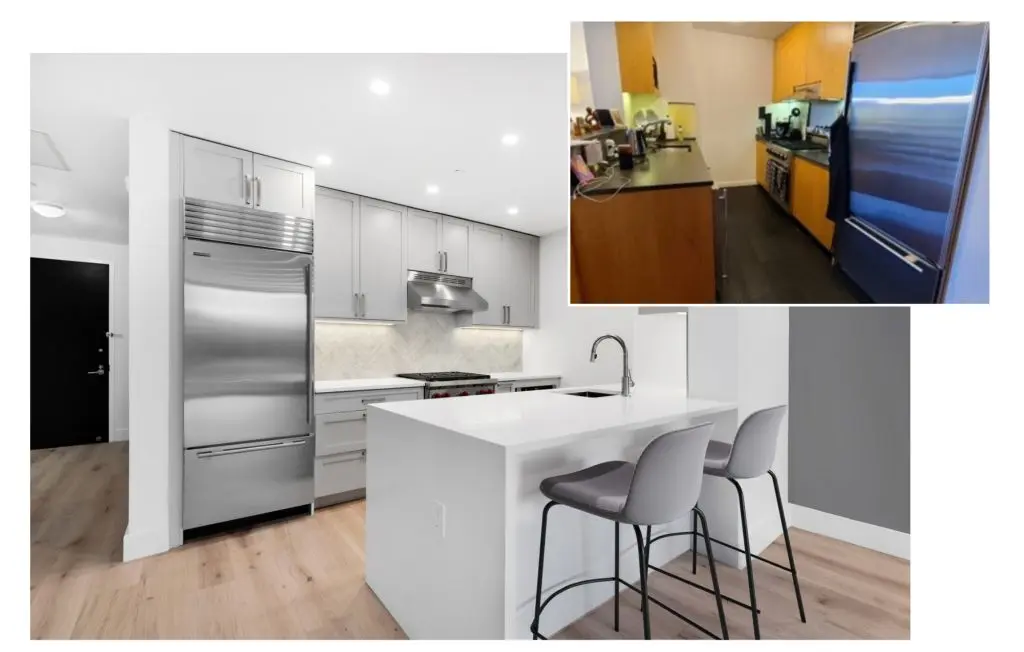
When To Gut Renovate Your NYC Apartment

12 Signs It’s Time to Gut Renovate Your NYC Apartment
There is a specific kind of frustration that sets in when you have repaired the same leak three times, when your circuit breaker trips every time you run the dishwasher and the AC together, when guests have to shuffle sideways through your kitchen because the layout was designed in 1962. You know something is wrong. You just are not sure if the answer is another targeted fix or something more decisive.
For many Manhattan and Brooklyn apartment owners, the answer is a full gut renovation. Not because it is the easiest option, but because it is the only option that actually resolves what is happening.
This Star Renovations NY guide walks through the 12 clearest signs that suggest a NYC apartment gut renovation is the smarter long-term move. We focus on the building bones you cannot ignore: plumbing, electrical, mechanical, structure, and layout. When you understand these signs, you can protect your home, your comfort, and your investment’s value.
If you want to understand the cost side before diving in, our NYC gut renovation cost guide is a good companion read.

What “Gut Renovation” Actually Means in a New York City Apartment
A gut renovation strips the apartment down to its structural shell: concrete slab, load-bearing walls, and building frame. Everything else — plumbing, electrical, HVAC, framing, finishes, fixtures — is replaced. It is the most comprehensive type of renovation, and in New York City, it is also the most regulated.
Gut renovations in NYC require DOB permit filings, board or management approval in co-op and condo buildings, and coordinated construction logistics within buildings that have strict rules about work hours, elevator access, and noise. The process is involved, but when managed by an experienced team, it is also the most reliable way to reset a home that has outgrown its bones. Learn more on our apartment gut renovations page.
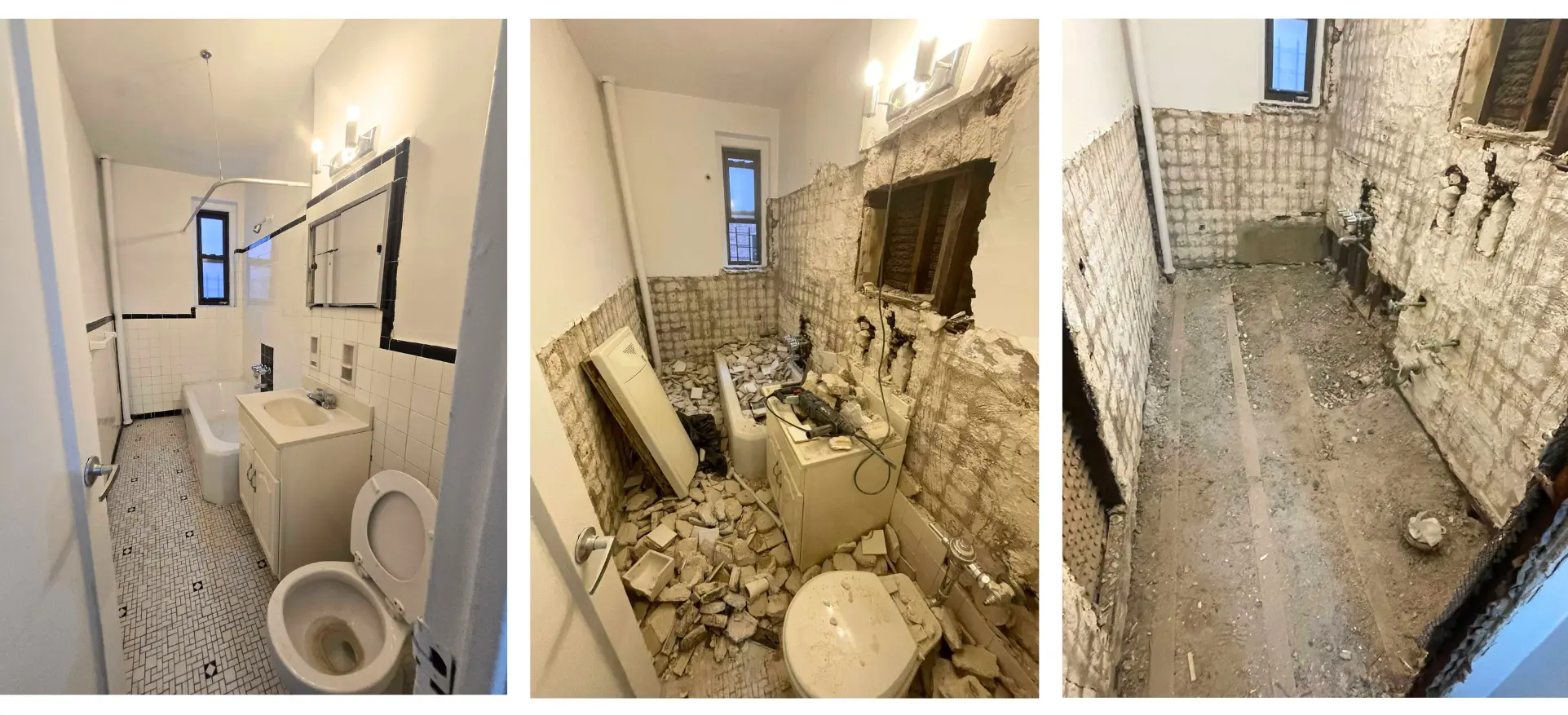
Part 1: How Your Home Feels Day to Day
Sign #1: You’re Constantly Calling Repair People
If your calendar has more service calls than dinner plans, that pattern is telling you something. A plumber for the slow drain. An electrician for the flickering bathroom light. A handyperson for the crack that keeps coming back. Each visit means time off work, cleared furniture, dust, and disruption — and the problem returns within months.
When repairs stop holding, you are no longer dealing with isolated issues. You are managing a home whose core systems are at the end of their useful life. One coordinated gut renovation replaces that cycle with a single, planned construction window that resolves everything at once.
A comprehensive renovation replaces this cycle with:
• One planned schedule instead of repeated disturbances
• One team coordinating all trades from start to finish
• A single, well-managed construction window that respects your building’s rules
Sign #2: Your Layout No Longer Matches the Way You Live
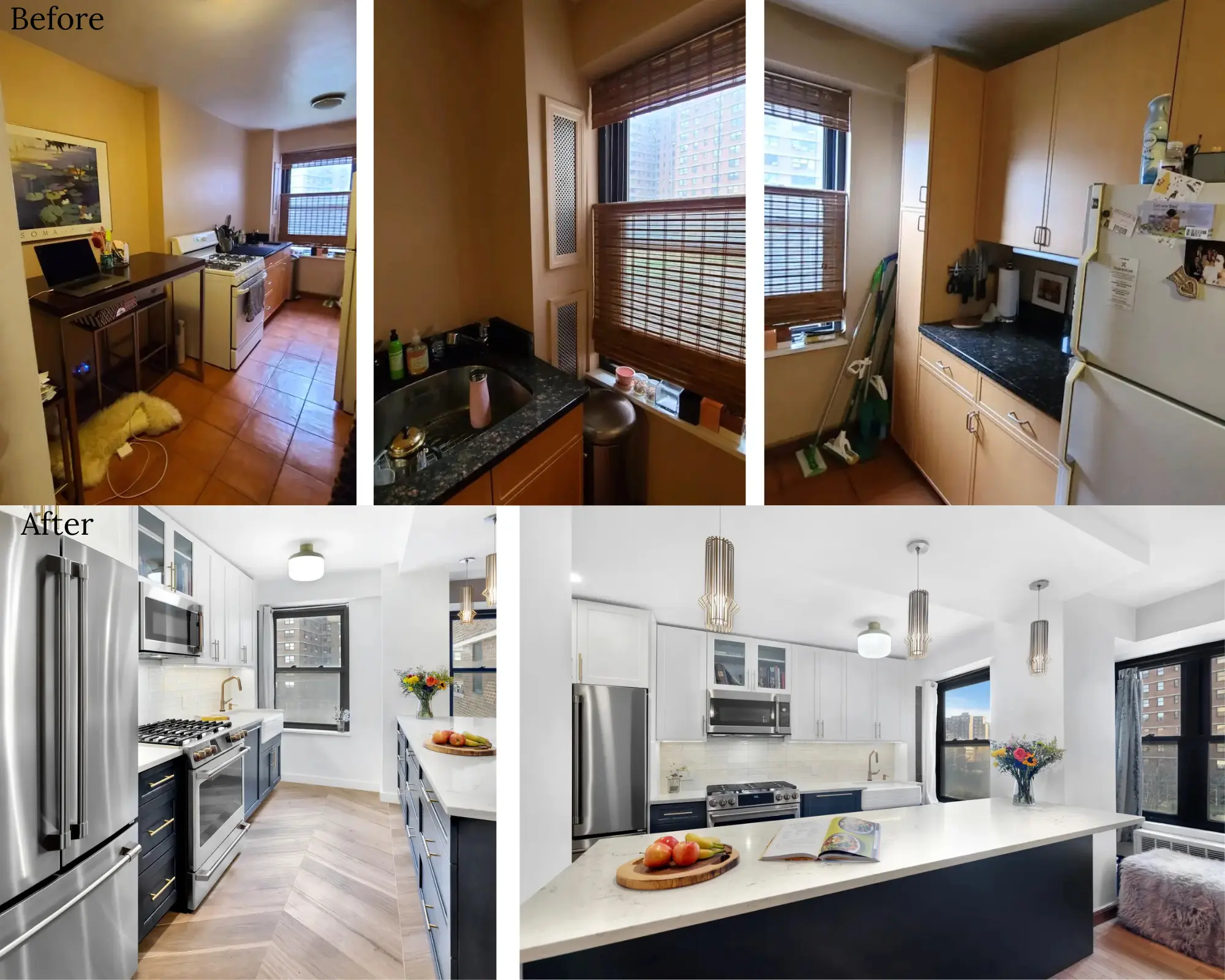
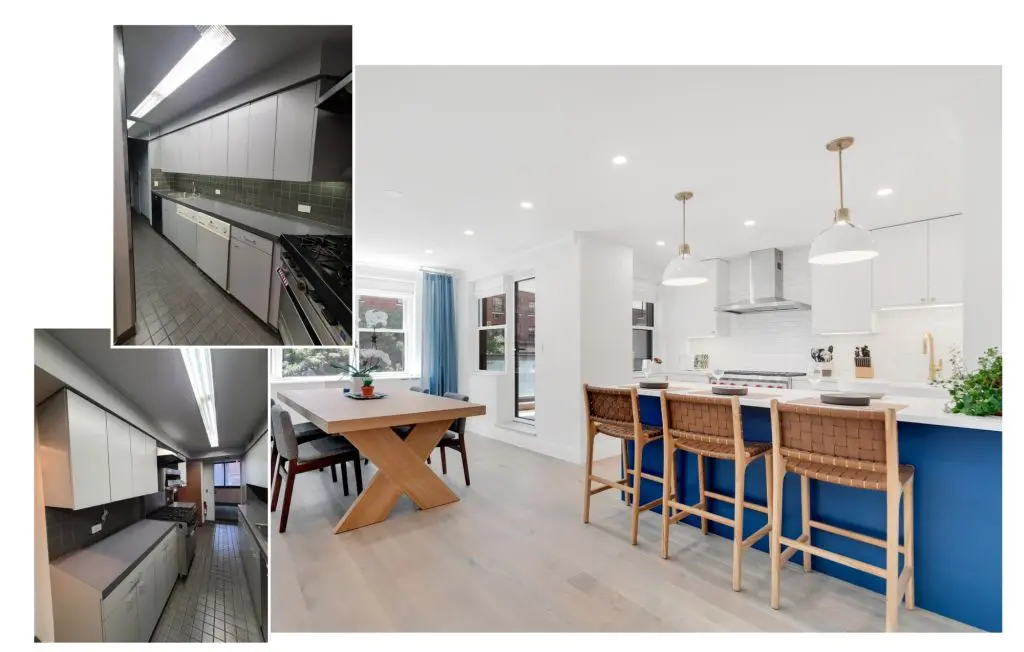
Most pre-war and mid-century Manhattan and Brooklyn apartments were designed around a lifestyle that no longer exists: formal dining rooms, galley kitchens meant for household staff, bedrooms too small for a modern platform bed. If you have been pushing furniture around trying to make it work, or if your home office is a desk shoved into a closet, the problem is structural, not stylistic.
Older NYC layouts were not designed for:
• Open entertaining and larger gatherings
• Work-from-home setups with dedicated storage and power
• Integrated storage that keeps everyday clutter out of sight
A gut renovation allows you to:
• Rethink walls, flow, and circulation
• Integrate built-ins and storage that feel custom and streamlined
• Create open, elegant spaces that support modern living
A gut renovation is the only point at which you can meaningfully reconfigure walls, open up layouts, and build storage that actually fits how your household uses the space. Cosmetic updates cannot fix a floor plan.
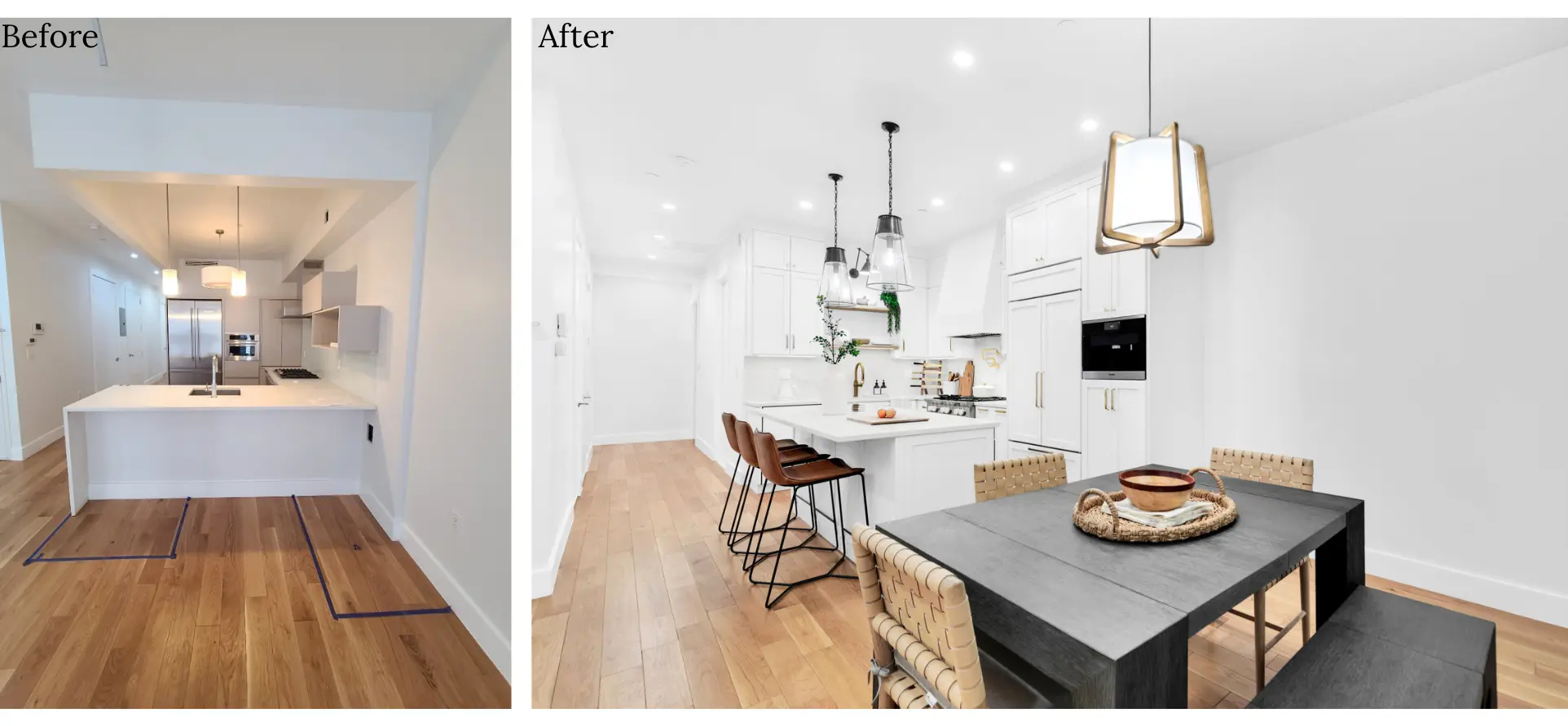
Sign #3: You’re Tired of Repeating the Board Approval Process
Every time you bring a contractor into a co-op or condo, you deal with alteration agreement reviews, insurance certificates, elevator reservations, and building management sign-offs. For multiple small projects over several years, that process repeats, your neighbors are disrupted repeatedly, and the super gets tired of your crew.
Consolidating everything into one well-planned gut renovation means one board submission, one construction window, and one set of logistics. It is better for your building relationships and better for your budget. See how we handle this on our co-op renovation page.
Not sure if your apartment needs a gut renovation?
Our team reviews your space, your building’s rules, and your goals, then tells you exactly what scope makes sense. No pressure, no guesswork.
Part 2: Plumbing Red Flags
Sign #4: The Same Leak Keeps Coming Back
A leak that returns after repair is not bad luck. It is a sign that the underlying pipe, joint, or drainage path has failed in a way that surface fixes cannot address. In older Manhattan and Brooklyn buildings, cast iron drain stacks, galvanized supply lines, and lead-caulked connections were never designed to last a century. When one spot starts going, others are not far behind.
If you see:
• New ceiling spots after each “repair”
• Bubbling paint or peeling tile
• Low shower pressure in certain lines
You may be dealing with old, corroded, or poorly installed pipes. Fixing one leak at a time rarely solves what is happening behind the walls.
A gut renovation of a Bathroom and kitchen makes it possible to:
• Open floors and walls in a controlled, coordinated way
• Replace and reroute lines to current standards
• Properly protect pipes to reduce future risk and damage
Opening walls and replacing piping comprehensively is cleaner, more cost-effective, and more protective of your home long-term than patching one leak at a time. A gut renovation makes that possible because everything is already open.
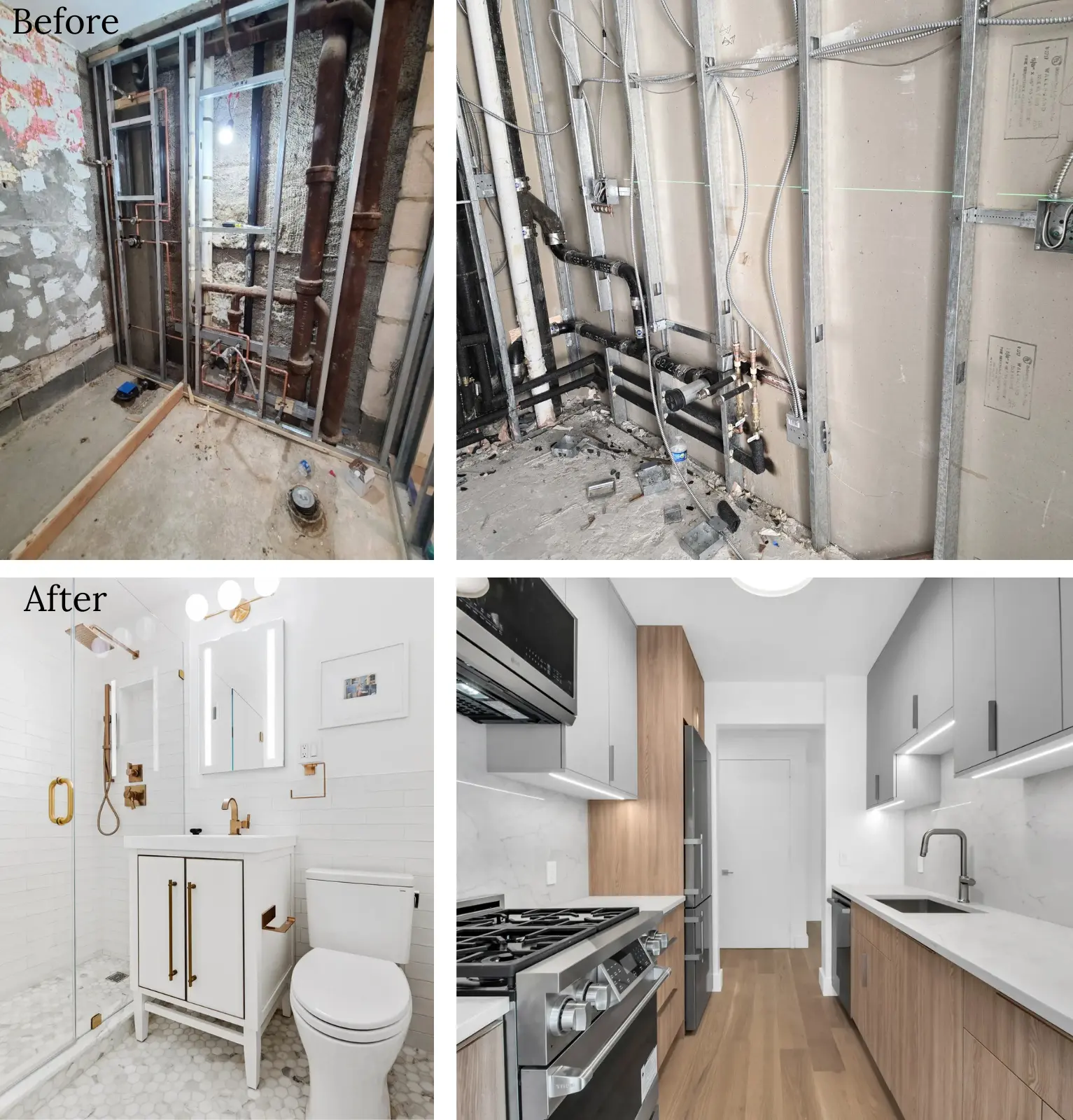
Sign #5: Kitchens and Bathrooms Are Hiding Failing Pipes
Original or very old kitchens and bathrooms in NYC apartments are often the last place owners look for plumbing problems — and the first place those problems originate. Slow drains, gurgling sounds when a neighboring unit flushes, and persistent odors under the kitchen sink are early signals that your drain lines, venting, or stack connections are deteriorating.
These are clues that your plumbing system needs a full rebuild to meet current code and performance standards. When everything is opened in a gut renovation, experienced professionals can correct slopes, venting, and waterproofing so fixtures work reliably and feel luxurious to use.
In pre-war buildings especially, the plumbing infrastructure behind those original tiles can be decades past its recommended service life. Our guide on pre-war vs. post-war apartment renovation covers what to expect when you open those walls.
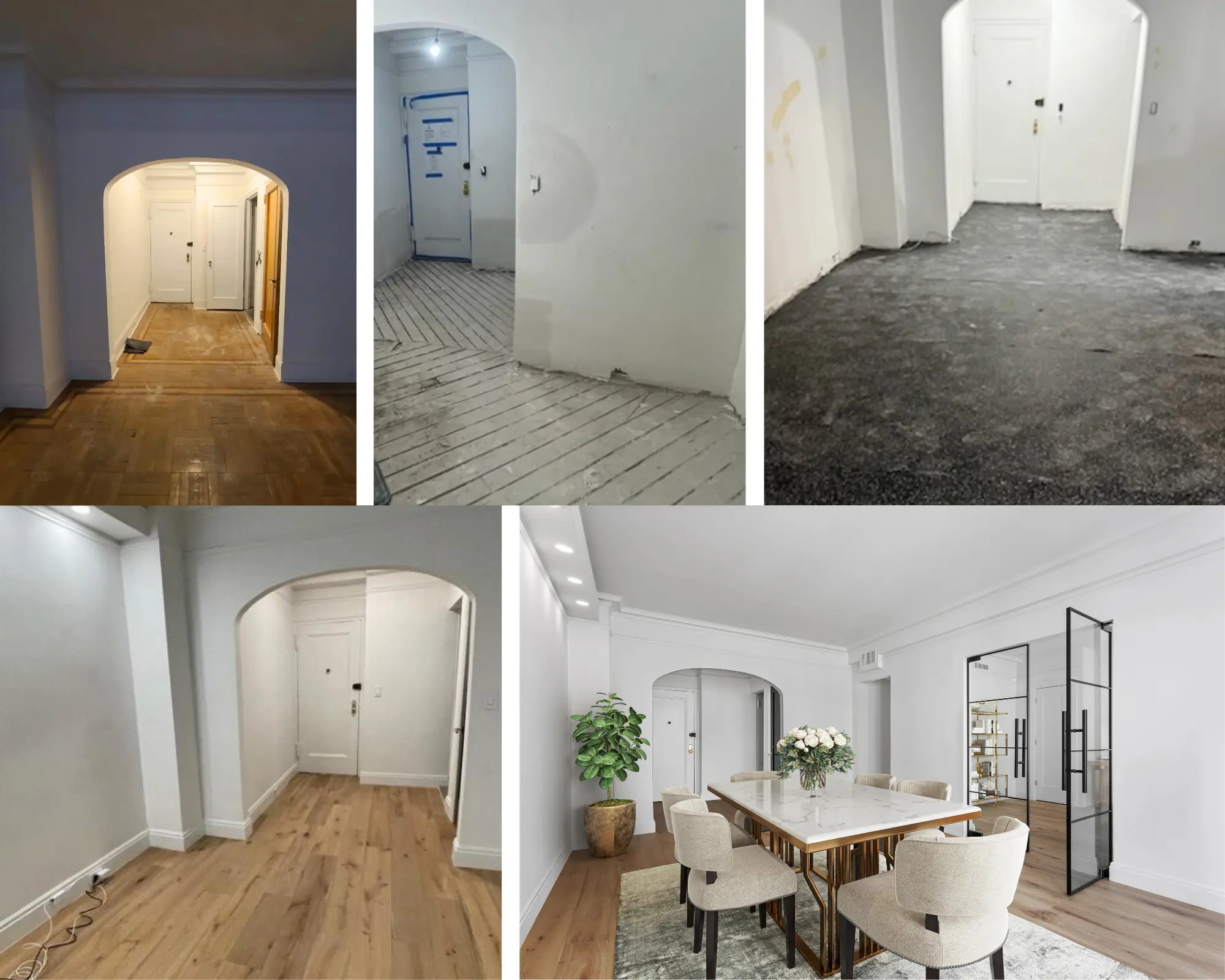
Take a look at our completed pre-war renovation on West End Ave https://srny.nyc/project-gallery/west-end-ave-co-op-gut-renovations
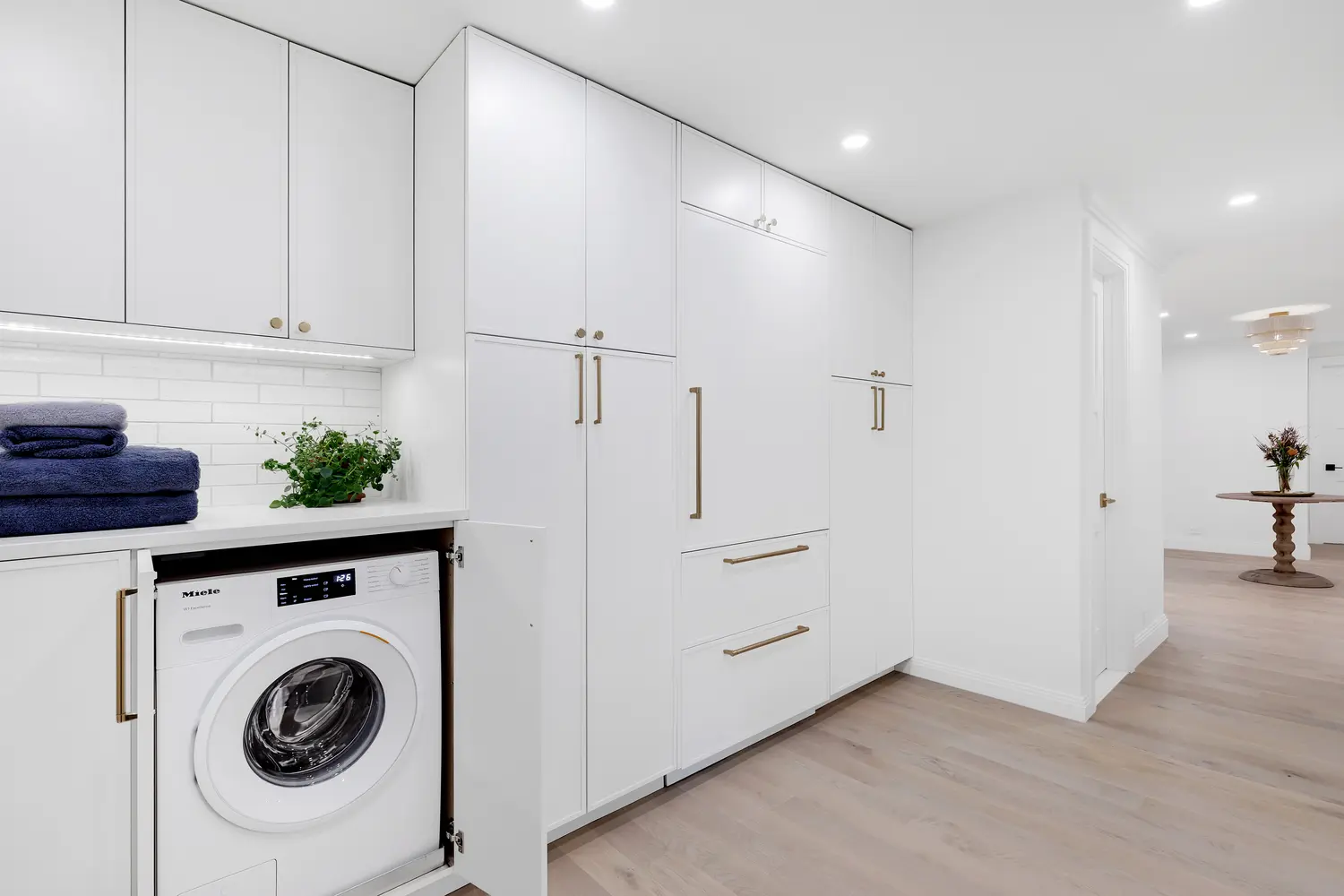
Sign #6: You Want to Add a Bathroom or In-Unit Laundry
Adding a second bathroom or installing an in-unit washer/dryer is one of the highest-value moves a Manhattan or Brooklyn apartment owner can make. It also requires meaningful plumbing work: new drain lines, proper venting, wet-area waterproofing, and in co-op buildings, specific board review of any wet-over-dry implications.
If you want:
• An extra full bath or powder room
• An in-unit washer and dryer
• A more functional primary suite
You are usually looking at significant plumbing changes.
That kind of upgrade works best inside a coordinated gut renovation, with:
• Detailed planning for building approvals and Board reviews
• Robust waterproofing and sound control
• Careful routing of new penetrations and riser connections
During an apartment gut renovation walls are already open, approvals are already in process, and the full scope of the work can be engineered and coordinated correctly from the start.
Part 3: Electrical and Mechanical Warning Signs
Sign #7: Your Breakers Trip When You Use Normal Appliances
If running the dishwasher, microwave, and window AC at the same time trips your breaker, you do not have a breaker problem — you have a capacity problem. Most pre-war and mid-century NYC apartments were wired for a fraction of the electrical load that modern households generate. 60-amp service, which was standard for decades, is inadequate for contemporary kitchens, home offices, home theater setups, and EV charging.
Common warning signs include:
• Breakers that pop when AC and kitchen appliances run together
• Power strips everywhere because there are never enough outlets
• Extension cords snaking across rooms
During a gut renovation, the electrical layout can be rebuilt so you have:
• Sufficient capacity for modern appliances and technology
• Dedicated circuits where you need them
• Outlets and lighting carefully placed to support the way you live
Rewiring an apartment for modern capacity requires walls and ceilings to be open. Doing it as part of a gut renovation is far more efficient and far less disruptive than trying to upgrade electrical service in a finished apartment.
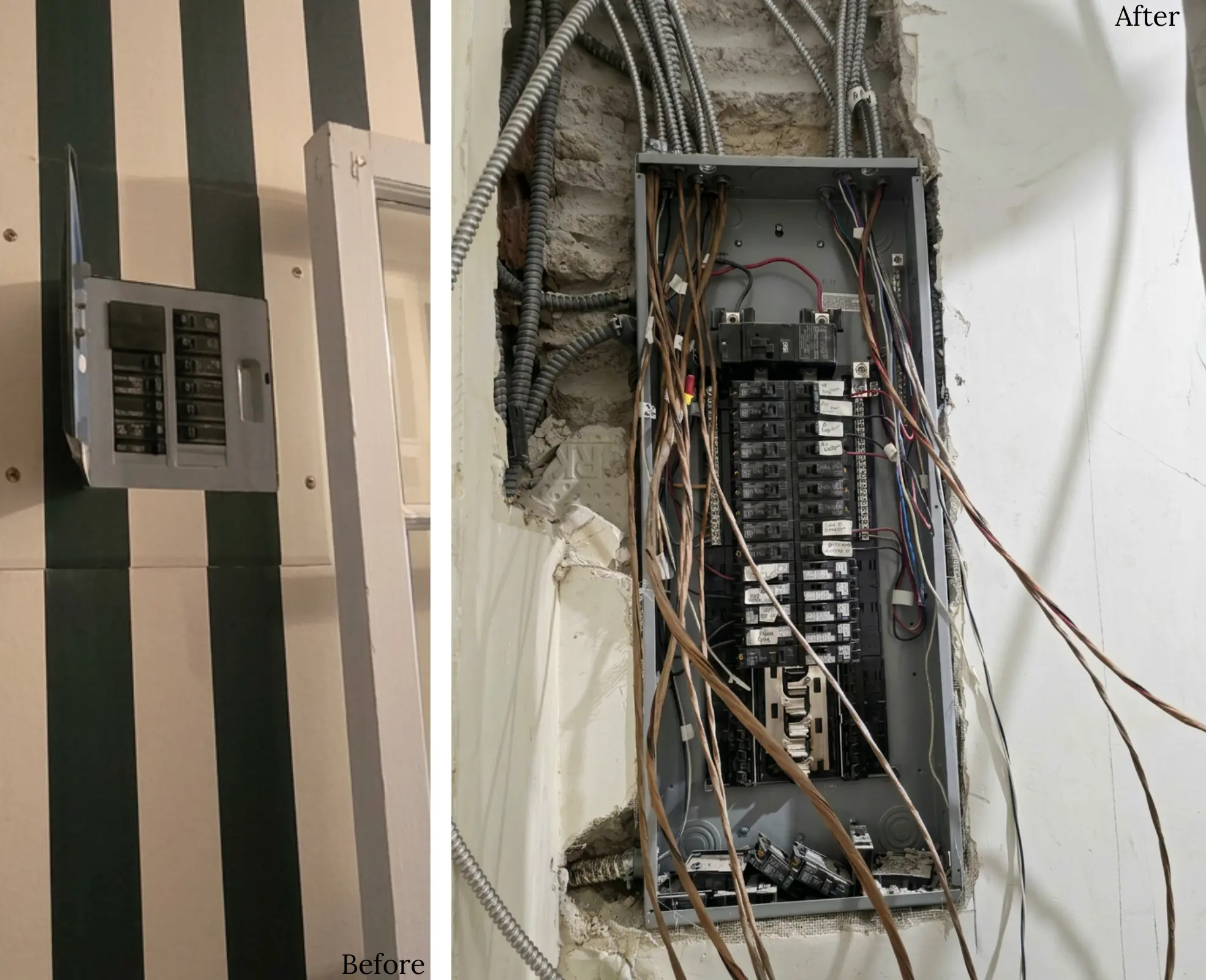
Sign #8: Your Wiring Has Not Been Updated in Decades
Two-prong outlets throughout the apartment, cloth-wrapped wiring visible in the basement or utility areas, or a panel that has not been touched since the building was constructed are not just inconveniences — they are insurance and safety concerns. Outdated wiring is one of the most common reasons NYC apartment owners face complications at refinancing and resale.
Upgrading to modern grounded wiring, dedicated circuits for kitchen appliances, and a code-compliant panel is most practical when walls are already open for a full apartment gut renovation.
Sign #9: Your Heating, Cooling, and Ventilation Are Inconsistent
Hot bedrooms and cold living rooms, bathroom exhaust that barely moves air, or PTAC units that rattle through the night are all signs that your HVAC and ventilation systems are not performing. In many older NYC buildings, the mechanical infrastructure was never designed for modern comfort standards.
A gut renovation creates the opportunity to:
• Plan new AC and heating options that fit your building’s guidelines
• Improve exhaust, ventilation, and indoor air quality
• Add smarter, more discreet controls for a quieter, more comfortable home
Outdated systems? Let’s talk about what a reset looks like.
Star Renovations NY handles electrical, plumbing, HVAC, and design under one roof. We coordinate all DOB filings and building approvals so you don’t have to.
→ Explore our full-service gut renovation approach → srny.nyc/apartment-gut-renovations-in-manhattan