
Prewar vs Postwar Apartments Manhattan | Renovation Guide
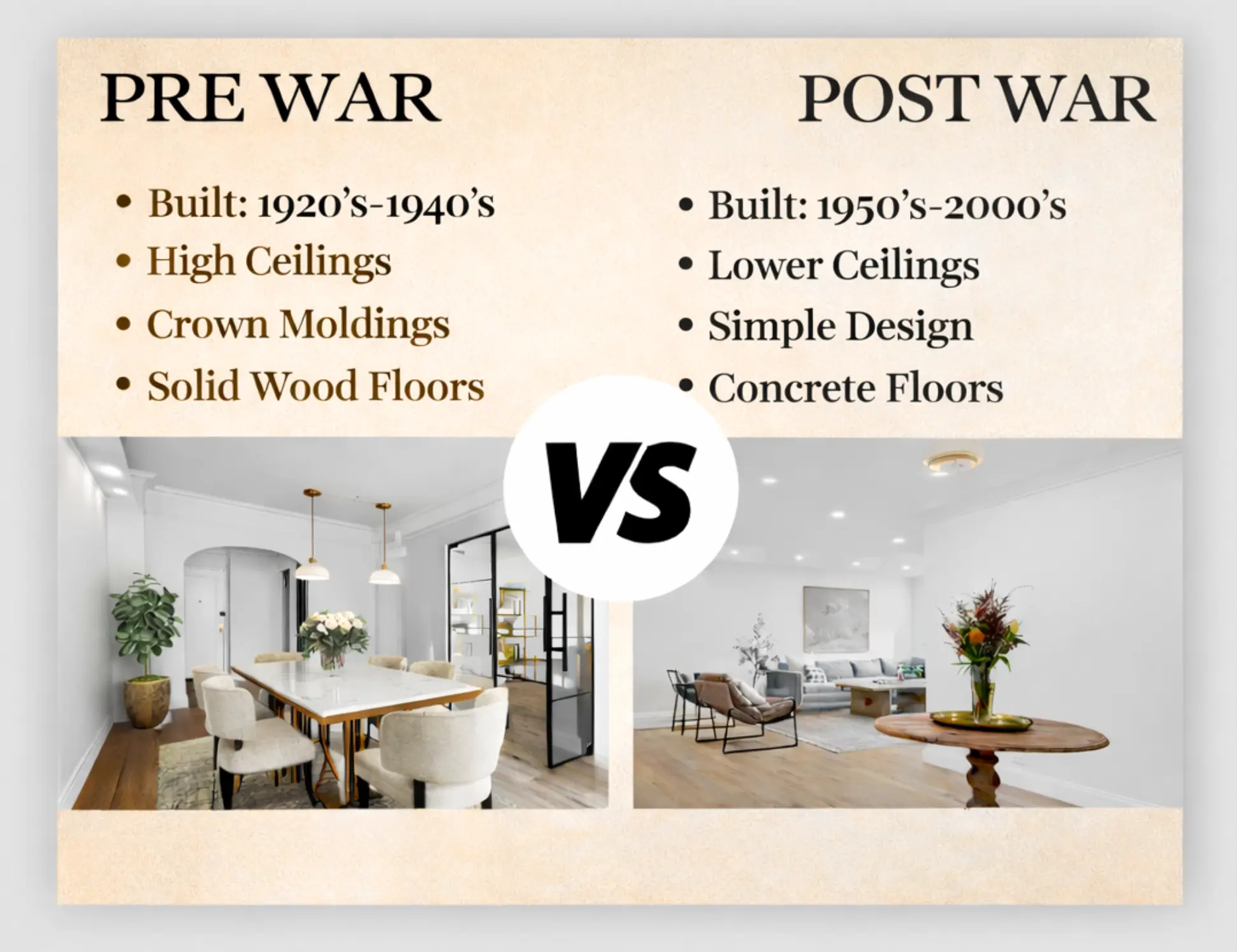
Prewar vs Postwar Apartments Manhattan Renovation Guide
Prewar vs. Postwar Apartments in NYC Everything Manhattan and Brooklyn Buyers Need to Know
Buying or renovating an apartment in Manhattan or Brooklyn almost always comes with one big question:
Is it prewar or postwar—and what does that actually mean for me?
In New York City real estate, the difference between a prewar and postwar apartment goes far beyond aesthetics. It affects renovation costs, plumbing systems, flooring conditions, kitchen and bathroom layouts, co-op approvals, and long-term maintenance.
At Star Renovations NY, we specialize in renovating Manhattan co-ops, Brooklyn brownstones, and NYC condos, and this guide is designed to give buyers and homeowners a clear, realistic understanding of what to expect before starting a renovation.

What Is a Prewar Apartment in Manhattan and Brooklyn?
A prewar apartment is any residential building constructed before 1939, and NYC has more of them than almost any city in the country.
In Manhattan, prewar buildings dominate neighborhoods like:
• Chelsea
In Brooklyn, prewar apartments are common in:
• Fort Greene
• Carroll Gardens

Common Prewar Apartment Features
• 9–12 ft ceilings
• Thick plaster walls
• Original hardwood floors
• Decorative moldings and trim
• Radiator heat
• Smaller kitchens
• Formal layouts
• Old plumbing risers
• Clothesline pulleys or wall drying racks
These apartments are loved for their craftsmanship and character, but they almost always require careful renovation planning.
What Is a Postwar Apartment in NYC?
A postwar apartment is generally any building constructed after World War II, typically from the 1940s through the 1970s, with newer developments extending beyond that.
Postwar buildings are common throughout:
• Downtown Brooklyn
Typical Postwar Apartment Features
• Lower ceilings (7.5–8.5 ft)
• Concrete slab floors
• Larger kitchens
• Simpler trim
• Modern plumbing layouts
• Easier appliance upgrades
• More flexible floor plans
Postwar apartments are often less expensive to renovate and come with fewer structural surprises.

Prewar vs. Postwar Renovation Challenges in NYC
Renovating a Prewar Apartment
Prewar renovations in Manhattan and Brooklyn often involve hidden infrastructure upgrades.
Common Prewar Renovation Challenges:
• Galvanized or cast iron plumbing
• Limited electrical capacity
• Uneven or sloped floors
• Non-standard framing
• Asbestos-containing materials
• Strict co-op alteration agreements
• Limited access to building risers
Most prewar kitchen and bathroom renovations require opening walls and floors to bring systems up to NYC code.
Read our latest blog post Pre-War Renovation NYC: EVERYTHING YOU NEED TO KNOW!
Renovating a Postwar Apartment
Postwar renovations are generally more predictable.
Advantages:
• Concrete subfloors
• Standard wall framing
• Easier plumbing reroutes
• Modern electrical panels
• Fewer co-op restrictions
• Faster renovation timelines
This makes postwar apartments ideal for open kitchens, modern bathrooms, and full apartment renovations.
Kitchen Renovations: Prewar vs. Postwar Apartments
Prewar Kitchens in Manhattan and Brooklyn
Most prewar kitchens were designed to be compact and functional—not social.
What to Know:
• Old pipes often must be replaced
• Limited electrical outlets
• Structural walls may restrict expansion
• Venting may be limited
• Gas lines often need upgrading
Many Manhattan co-ops require board approval for plumbing relocations, which makes working with an experienced NYC renovation contractor critical.

Postwar Kitchens
Postwar kitchens usually allow for:
• Larger layouts
• Island installations
• Easier appliance upgrades
• Better ventilation options
These kitchens are typically faster and less expensive to renovate.

Bathroom Renovations and Old NYC Plumbing
Prewar Bathroom Renovation Considerations
Bathrooms in prewar buildings are where issues most often arise.
Common issues include:
• Original cast iron risers
• Galvanized supply lines
• Old waterproofing methods
• Uneven subfloors
• Mortar-set tubs
In Manhattan and Brooklyn co-ops, plumbing work often requires licensed professionals and building coordination.
Postwar Bathrooms
Postwar bathrooms benefit from:
• Concrete slabs
• Standard drain locations
• Easier waterproofing
• Better ventilation systems
That said, older postwar buildings may still need plumbing inspections before renovation.

Why Prewar Floors in NYC Are Often Uneven
Prewar Flooring Construction
Prewar buildings were built with:
• Wood joists
• Slat or plank subfloors
• Hand-laid materials
Over decades, natural settling causes floors to slope or dip.
Solutions Include:
• Self-leveling compounds
• New plywood subfloors
• Engineered flooring systems
• Strategic transitions between rooms
Not every floor needs to be perfectly level—many homeowners choose to preserve some character.

Postwar Flooring
Postwar apartments typically have concrete slab floors, which are:
• More level
• Better for tile
• Easier for soundproofing
• More predictable for renovation

Prewar vs. Postwar: Pros and Cons for NYC Homeowners
Prewar Apartments – Pros
• Architectural character
• Higher ceilings
• Thick walls
• Strong resale appeal
• Timeless NYC charm
Prewar Apartments – Cons
• Higher renovation costs
• Old plumbing and wiring
• Uneven floors
• Longer timelines
Postwar Apartments – Pros
• Easier renovations
• Modern infrastructure
• Open layouts
• Lower renovation risk
Postwar Apartments – Cons
• Less historic detail
• Lower ceilings
• Simpler finishes
FAQ: Prewar vs. Postwar Apartments
Is it more expensive to renovate a prewar apartment in NYC?
Yes. Prewar renovations typically cost more due to plumbing upgrades, electrical work, floor leveling, and preservation of original details.
Are prewar apartments better built than postwar?
They’re built differently. Prewar apartments use thicker materials and craftsmanship, but postwar buildings are more compatible with modern living.
Should I buy a prewar or postwar apartment in Manhattan or Brooklyn?
It depends on your priorities—character versus convenience, renovation budget, and long-term maintenance expectations.
Do prewar apartments in NYC have asbestos?
Some do. Asbestos was commonly used in older tiles, insulation, and adhesives and must be professionally tested and removed if present.
Insert a slide of images (before, progress and after from Zammit Jason)
Ready to Renovate Your Manhattan or Brooklyn Apartment?
Whether you’re restoring the charm of a prewar co-op on the Upper West Side or modernizing a postwar condo in Downtown Brooklyn, choosing the right renovation team makes all the difference.

At Star Renovations NY, we specialize in Manhattan and Brooklyn apartment renovations, with deep experience navigating:
• Co-op and condo board approvals
• Prewar plumbing and flooring challenges
• Kitchen and bathroom renovations
• Full apartment gut renovations
Let’s Talk About Your Next Renovation
📞 Contact Star Renovations NY today to schedule a consultation and start planning your next renovation project with confidence.