NYC Full Apartment Renovation Guide: Cost, Timeline & Permits

The NYC Full Apartment Renovation Guide: Everything You Need to Know Before You Break Ground
Planning a full apartment renovation in New York City is unlike renovating anywhere else in the country. Whether you own a pre-war co-op on the Upper West Side, a condo in Tribeca, or a brownstone unit in Park Slope, you are navigating a uniquely complex world of board approvals, Department of Buildings filings, building management logistics, and the kind of craftsmanship that New York buyers and residents expect.
This guide is for you, the Manhattan or Brooklyn homeowner who wants a complete picture before committing to a renovation. We will walk you through what a full-service apartment renovation in NYC actually involves: real cost ranges, realistic timelines, permit and approval requirements, what gut renovations entail, and how to choose the right partner so your project does not spiral out of control.
At Star Renovations NY, we have completed hundreds of premium apartment renovations across Manhattan and Brooklyn. We know what it takes, and we wrote this guide to help you feel genuinely prepared.

For more apartment renovation guide read out latest blog post https://srny.nyc/blog/nyc-apartment-renovation-101---everything-you-need-to-know
1. What Is a Full-Service Apartment Renovation in NYC?
A full-service renovation means one team handles everything from concept to completion. That includes:
- Architectural design and space planning
- Interior design and finish selections
- Engineering and structural coordination
- DOB permit filings and inspections
- Board and building management approvals
- Construction management and trades coordination
- Final punch list and project closeout
The alternative is hiring separately: an architect here, a designer there, a general contractor somewhere else. In most parts of the country, that works fine. In New York City, it is a recipe for delays, budget blowouts, and finger-pointing when something goes wrong.
The Pros & Cons of Hiring a Design Build Firm vs. Separate Contractors
New York buildings are layered with rules. Co-op boards, condo boards, building managers, and the DOB all have requirements that need to be coordinated simultaneously. When your architect, designer, and contractor are not working as a single unit, those requirements get missed, communicated late, or translated incorrectly into the drawings.
A design-build model, where one integrated firm manages every phase, eliminates that fragmentation. It is the reason Star Renovations NY structures every project this way. One team, one point of accountability, one contract.

2. Types of Apartment Renovations in NYC
Before diving into costs and timelines, it helps to understand what category your project falls into. NYC apartment renovations generally break down into four tiers:
Cosmetic Refresh
New paint, flooring, fixtures, and finishes. No walls move, no plumbing shifts. Permits may not be required. This is the fastest and most budget-friendly tier, typically approval process is one to two weeks and completed in four to eight weeks of renovation.
Targeted Room Renovations
A kitchen gut, a bathroom overhaul, or a custom home office buildout. These often require permits for plumbing and electrical work but stay within the existing layout. Timelines typically run two to three months depending on scope and board approval time is usually one to two months.
Full Apartment Renovation
Every room is updated. Layouts may shift. Kitchens and bathrooms are gutted and rebuilt. New electrical, plumbing, HVAC, and finishes throughout. This is the most common project type for NYC homeowners making a long-term investment in their space.
Full Gut Renovation
Everything is stripped to the slab and studs. Walls are rebuilt, systems are replaced, and the apartment is essentially rebuilt from scratch. Gut renovations give you the most design freedom but require the most lead time, the most permitting, and the most coordination with your building.
Learn more about apartment gut renovation https://srny.nyc/apartment-gut-renovations-in-manhattan
Apartment Combination
Two adjacent units are merged into one larger residence. These are among the most complex NYC renovation projects because they require structural work, full system alignment across both apartments, and heightened board and DOB scrutiny. Combination renovations are increasingly common as Manhattan and Brooklyn families seek larger footprints without moving.
Learn more about apartment combination process and value guide https://srny.nyc/blog/nyc-apartment-combination-renovation-value-guide
3. How Much Does a Full Apartment Renovation Cost in NYC?
Cost is the question every homeowner asks first, and the honest answer is that ranges are wide because scopes vary so much. That said, here are realistic benchmarks based on current market conditions in Manhattan and Brooklyn:
- Cosmetic refresh: $100 to $150 per square foot
- Kitchen and bathroom gut renovation: $150,000 to $250,000+ depending on finishes and complexity
- Full apartment renovation (updating all rooms, no major structural changes): $300 to $450+ per square foot
- Full gut renovation (strip to slab, rebuild systems): $450 to $600+ per square foot
- Apartment combination: $450 to $700+ per square foot, factoring in structural and system integration
These numbers reflect labor, materials, design, permitting, and project management (All-in). They do not include your purchase of the apartment, furniture, or custom art. High-end finishes, custom millwork, imported stone, and sophisticated lighting systems will push costs toward the upper end of any range.
One important note: in New York City, renovation costs are driven as much by logistics as by materials. Freight elevator reservations, noise restrictions, building protection requirements, debris removal regulations, and the sheer density of the city all add layers of time and expense that you would not encounter in a suburban renovation. A full-service firm like Star Renovation NY builds this into the budget from the start. A lower-cost contractor often does not, and the gap shows up later as change orders.
What Moves the Number Most?
- Building type: Pre-war buildings with plaster walls, aging pipes, and protected facades cost more to renovate than post-war concrete construction. https://srny.nyc/blog/prewar-vs-postwar-apartments-manhattan-renovation-guide
- System condition: If your electrical panel, plumbing stack connections, and HVAC are original to the building, expect replacement costs to factor in.
- Finish level: Builder-grade versus custom is not a small difference. Stone sourcing, custom cabinetry, and architectural hardware alone can shift a project budget by six figures.
- Structural changes: Moving load-bearing walls, capping old risers, or adding new bathroom locations each require engineering and special DOB filings.
- Board and DOB complexity: Projects in co-ops with strict alteration agreements may require additional engineering documentation, insurance riders, or legal review.
Reach out today to learn more about your Apartment renovation guidelines and what to expect
4. NYC Renovation Timelines: What to Realistically Expect
One of the biggest sources of frustration for NYC homeowners is timeline misalignment. Renovation timelines in New York are longer than most people expect, not because contractors are slow, but because the process involves multiple independent entities who each control a piece of the clock.
Here is a realistic breakdown by project type:
Cosmetic refresh: Six to twelve weeks from signed contract to completion.
Targeted room renovation: Three to five months, including board approval time.
Full apartment renovation: Six to ten months from initial design through construction completion.
Full gut renovation: Eight to twelve months, depending on building, scope, and DOB review times.
Apartment combination: Eight to sixteen months, factoring in structural engineering, DOB filings, and board approval.
These timelines assume the project is properly staffed, permits are filed promptly, and the board approval process runs on a normal cycle. Projects stall when drawings are submitted late, when the scope changes after permit filing, or when the communication with building management is longer than the usual.
How Star Renovations NY Manages Timelines
We build the construction schedule before work begins, taking into account your building's specific rules: elevator booking windows, quiet hours, whether there is a freight elevator, and any seasonal restrictions your board has put in place. Clients receive regular written updates and are never surprised by a delay they were not warned about in advance.
5. Permits and DOB Filings: What NYC Renovation Projects Actually Require
Many homeowners do not realize how much permitting is involved in a full NYC apartment renovation. The Department of Buildings regulates nearly every aspect of renovation work that goes beyond cosmetic updates.
When Do You Need a DOB Permit?
Generally, permits are required whenever work involves:
- Plumbing changes: moving a sink, adding a bathroom, relocating a dishwasher drain
- Electrical work: panel upgrades, new circuits, service increases
- Structural changes: removing or modifying walls, altering beams or columns
- HVAC installations: new ducted systems, new exhaust routes, rooftop or facade penetrations
- Combination projects: merging two apartments requires multiple filings across different DOB categories
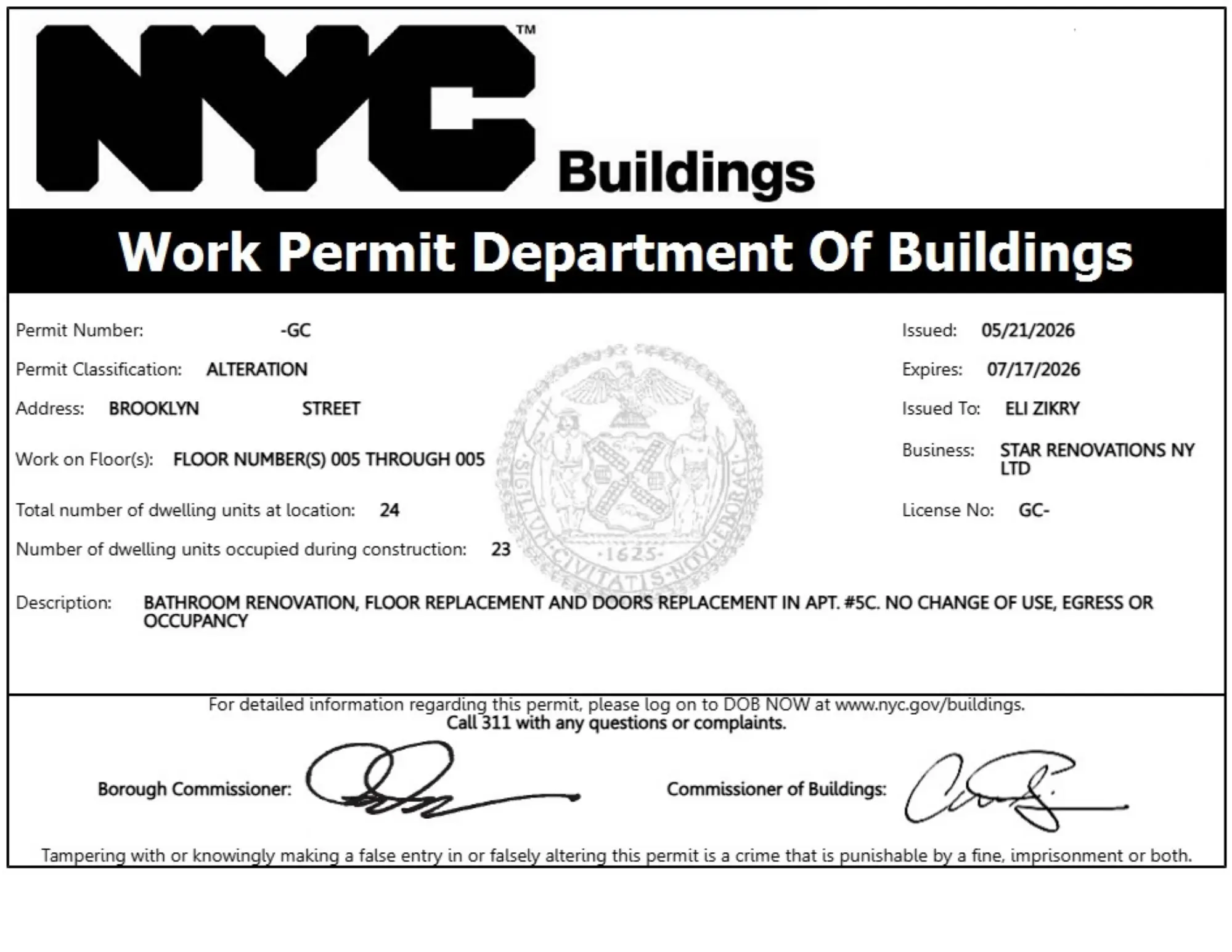
Minor cosmetic work, such as painting, new flooring, or replacing fixtures in the same location, typically does not require a permit. But the line between permit-required and not is not always obvious, and filing incorrectly, or not filing when required, creates serious problems at resale, with insurance, and during building inspections.
ALT1 vs. ALT2: Understanding NYC Permit Types
For residential apartment work, the two most common filing types are:
- ALT2 (Alteration Type 2): Used for multiple work types that do not affect the building's certificate of occupancy. Most full apartment renovations that involve plumbing, electrical, and layout changes fall here.
- ALT1 (Alteration Type 1): Required when work changes the use, egress, or occupancy classification of a space, or when combining two apartments into one. ALT1 filings go through plan examination at the DOB and have longer review timelines.
At Star Renovations NY, our team manages all DOB filings, coordinates with the Expediter when needed, schedules required inspections, and ensures the project receives all sign-offs before closeout. Homeowners never have to navigate that process alone.
6. Board Approvals: Co-ops, Condos, and What Each Requires
If you live in a co-op or condo, your renovation does not begin until your building says it can. Board and management approval is a separate, parallel process from DOB permitting, and it can move faster or slower depending on your building's governance structure.
Co-op Renovation Approvals
Co-ops tend to have the most rigorous approval processes in New York. Expect:
- A detailed alteration agreement that spells out every restriction your renovation must comply with
- Full drawing sets, typically stamped by a licensed architect and engineer
- Proof of contractor licensing and insurance meeting the building's minimums
- Review of any plumbing changes, particularly wet-over-dry concerns where your work could affect the unit below
- Board meetings or written approvals before work can begin
Some co-op boards are straightforward and efficient. Others have backlogs, complex rules, or committee-based reviews that add months. Buildings with older alteration agreements sometimes have outdated restrictions, and navigating those requires experience and relationship management.
Learn more about NYC Co-Op And Condo Renovation Timeline Guide
Condo Renovation Approvals
Condos are generally more flexible than co-ops but still enforce building rules. You will typically need:
- Approval from the managing agent, not the board in most cases
- Certificates of insurance for every trade on-site
- A signed work agreement or alteration agreement depending on the building
- Compliance with work hours, elevator usage, and dust protection requirements
What Star Renovations NY Handles for You
We review your alteration agreement before design begins so that nothing we plan conflicts with your building's requirements. We prepare the full documentation package, coordinate insurance certificates for every trade, handle communication with building management and the super, and stay in contact throughout construction to make sure daily logistics run smoothly.
Our clients consistently tell us that board and management coordination is the part of the renovation they were most dreading, and the part they ended up noticing least because we handled it entirely.
What our clients say about SRNY https://srny.nyc/reviews
Working with Eli and his team was my first experience with NYC Co-op Construction and it was truly a great experience. Construction is intimidating and then you add the NYC co-op factor on top and it can seem overwhelming. Eli and his team are so responsive, so helpful, so organized and so knowledgeable about construction that the process was painless. I am overwhelmingly pleased with the end result, the kitchen is beautiful. The final product speaks for itself. Eli and his team are problem solvers and they work with you until you are happy with your selections. The system they use and their process is fantastic and I was able to undergo full kitchen renovation while living in another country during the entire design and construction process! There are daily logs and photo updates that feel like presents at the end of the day. I really can't say enough positive things about the experience, especially because they made the whole process so approachable and manageable for a first time NYC
7. What Happens During a Full Gut Renovation
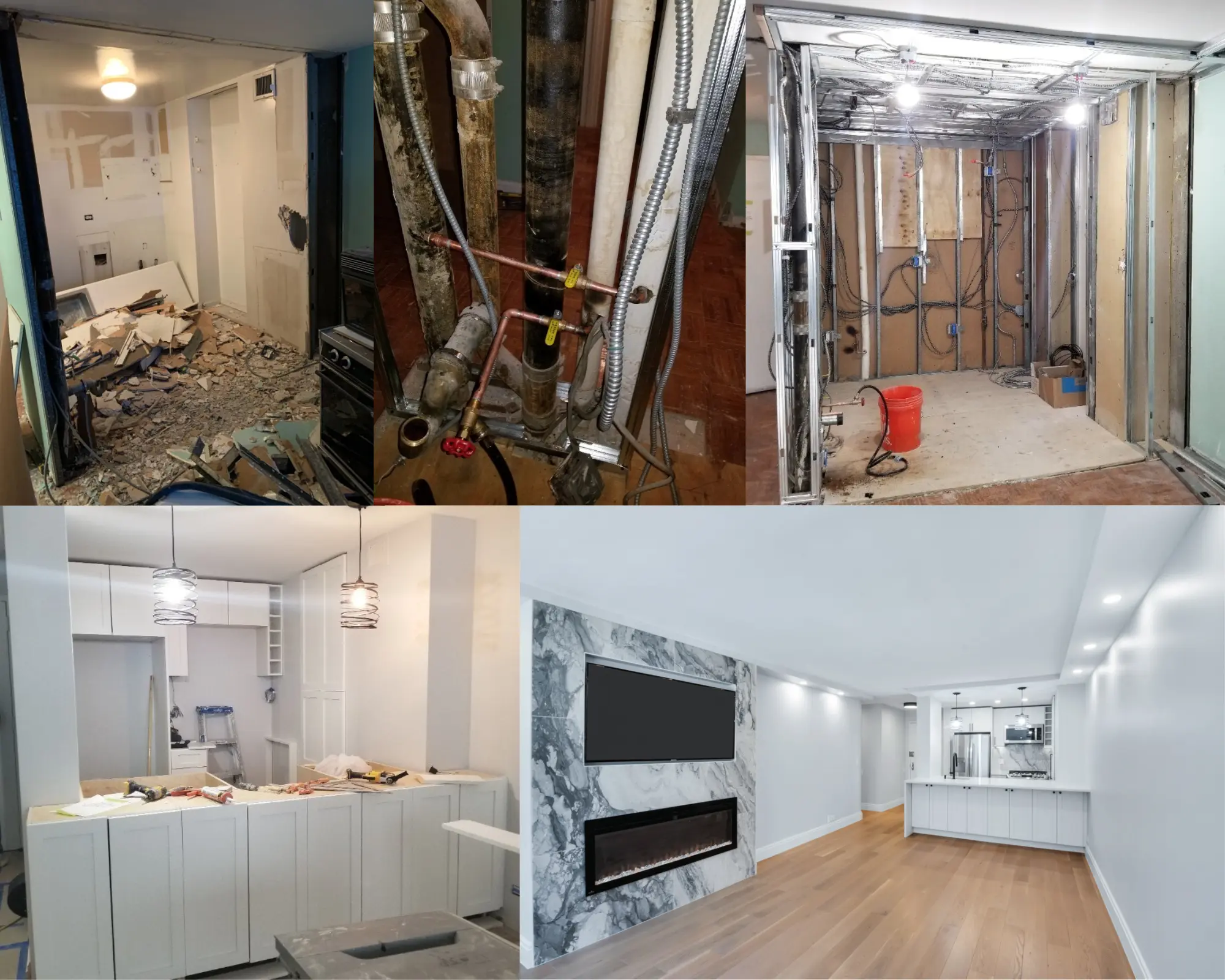
A gut renovation is the most comprehensive version of apartment remodeling. Everything is opened up. Systems are replaced. The space is rebuilt to current code with new bones, new infrastructure, and a completely fresh design.
Here is what the process looks like in sequence:
Phase 1 – Design and Engineering: Space planning, architectural drawings, engineering assessments, and full interior design development. This phase typically runs six to ten weeks.
Phase 2 – Approvals: Board submission, alteration agreement sign-off, DOB permit filing, and any required plan examination. Depending on your building and the DOB backlog, this can run four to twelve weeks.
Phase 3 – Demolition: Removal of all existing finishes, walls, flooring, and systems down to the structural shell. Typically one to two weeks.
Phase 4 – Rough Work: Plumbing, electrical, HVAC rough-ins, framing, and any structural modifications. This is the longest single phase, often six to ten weeks.
Phase 5 – Inspections and Sign-offs: DOB inspections for plumbing, electrical, and any other filed work. Scheduling inspections requires coordination and can add up to two weeks depending on DOB queue times.
Phase 6 – Finishes: Sheetrock, plastering, tile, flooring, cabinetry, millwork, painting, hardware, and fixtures. Eight to ten weeks depending on scope and material lead times.
Phase 7 – Punch List and Closeout: Final walkthroughs, snag corrections, DOB final sign-off, and delivery of all documentation. One to three weeks.
A well-run gut renovation feels surprisingly orderly. At Star Renovations NY, we use sequenced construction planning that maps every trade against the schedule so no one is waiting on someone else and nothing is installed before the inspection that needs to see it.
8. Upgrading Systems: Electrical, Plumbing, and HVAC in NYC Apartments
NYC apartments, especially pre-war co-ops and older condos built before the 1970s, often have electrical panels, plumbing stacks, and HVAC systems that are decades beyond their useful life. A gut renovation is the right moment to address them. Here is what to know:
Electrical
Many older apartments run on 60-amp service, which is inadequate for modern appliances, EV charging, smart home systems, and layered LED lighting. Panel upgrades to 100- or 200-amp service require a licensed electrician, DOB filings, a Consolidated Edison application, and building coordination. We manage all of it.
Plumbing
Relocating plumbing in NYC is regulated both by the DOB and by your building. Wet areas generally must stay stacked above existing drain lines, or a special variance is required. Adding a new bathroom, moving a kitchen sink more than a few feet, or rerouting waste lines all require permits and engineering review. We design around building constraints from day one so your plans do not get rejected late.
HVAC
New York apartments use a variety of systems, including PTACs, fan-coil units, ductless mini-splits, and central ducted systems in townhomes and larger units. Replacing or upgrading HVAC requires coordination with building management, compliance with noise restrictions, and sometimes DOB filing depending on the system type and any facade penetrations required. We engineer HVAC solutions that fit within building rules while delivering genuine comfort.
.webp)
9. Design and Finishes: What Luxury Renovation Looks Like in Manhattan and Brooklyn
Beyond the infrastructure, a full apartment renovation is a design project. The finishes, materials, and spatial decisions you make will define how you live in the home for years or decades to come.
At Star Renovations NY, our design process starts with how you want to feel in the space, not just how it looks in a mood board. We then build the finish palette around your building's character, your lifestyle, and your long-term investment goals.
Kitchen Design
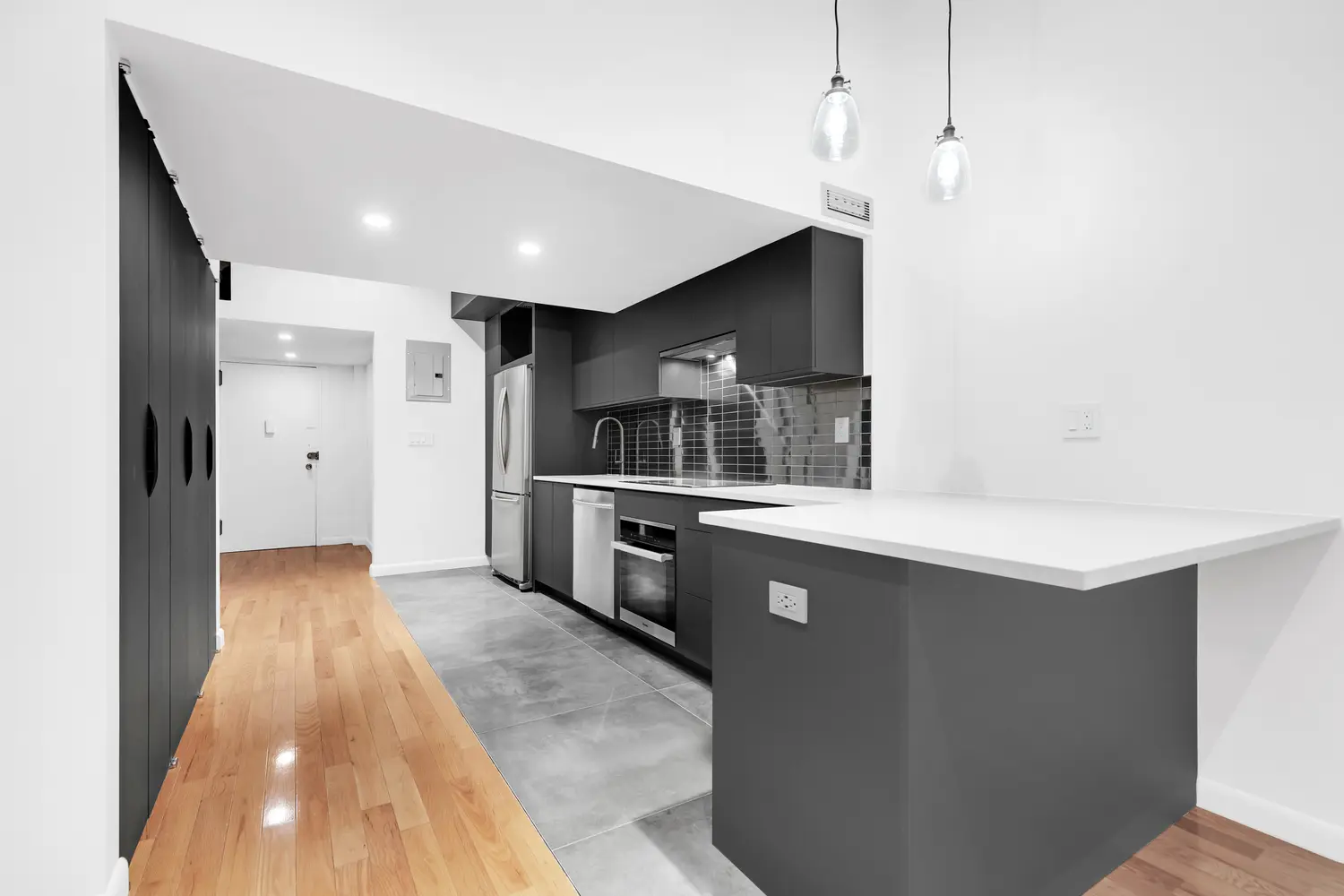
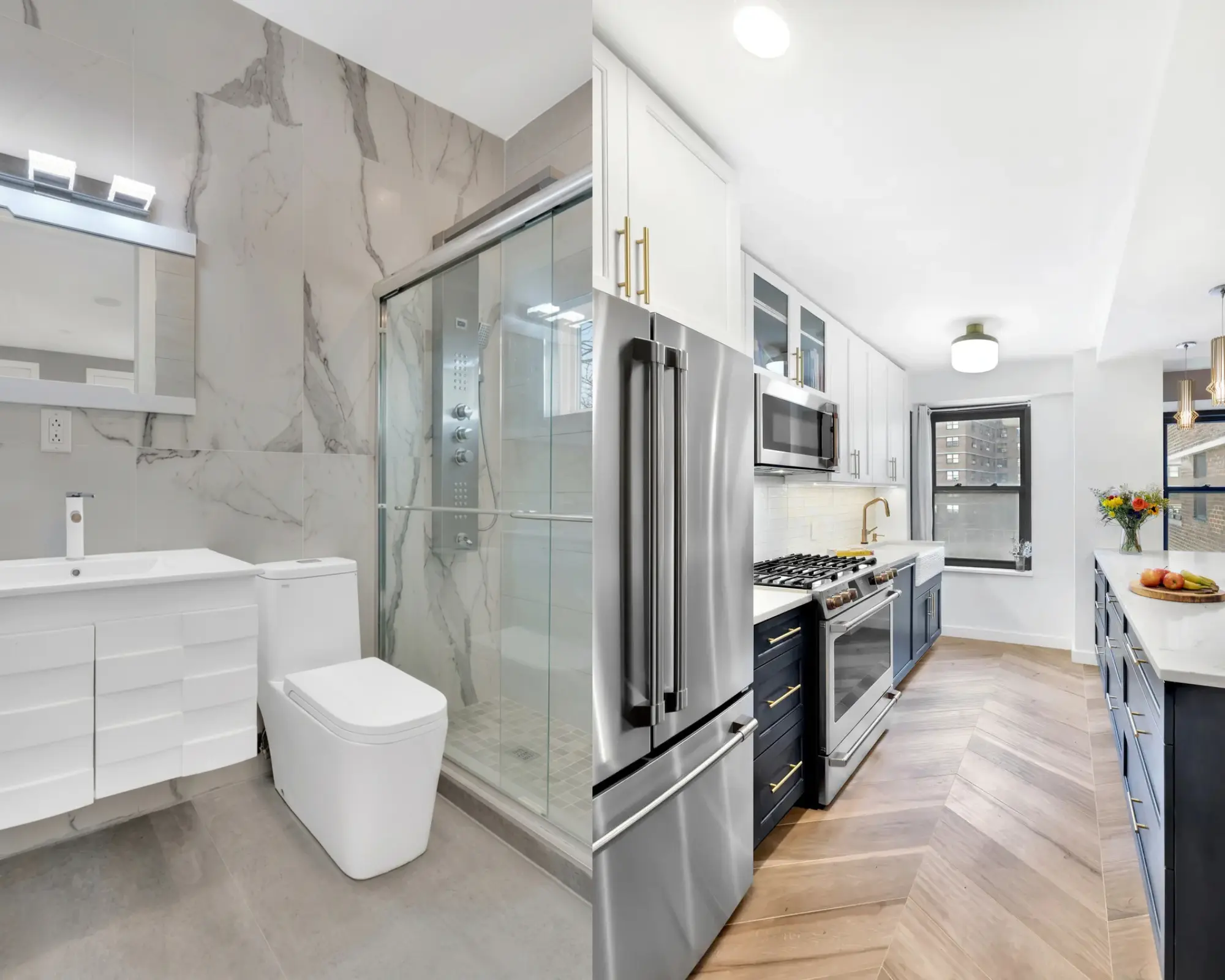
NYC kitchen renovations demand creativity in tight footprints. We specialize in custom cabinetry, imported stone countertops and backsplashes, integrated appliances, and lighting design that makes even compact Manhattan galley kitchens feel luxurious and functional.
Bathroom Design
Bathrooms in New York co-ops and condos often have constraints around wet walls and exhaust routes. Our design team works within those constraints to create spa-quality results: book-matched stone, custom vanities, radiant floor heating, and fixtures from the world's top suppliers.
Custom Millwork and Storage
Storage is everything in New York apartments. We design and build custom millwork throughout, from built-in closets and pantries to home office cabinetry, library walls, and entertainment built-ins, all designed as architectural elements rather than afterthoughts.
Brooklyn Brownstone and Pre-War Renovation
Brownstone and pre-war renovations require a particular kind of sensitivity. Original details, like plaster moldings, exposed brick, wide-plank floors, and decorative fireplaces, deserve to be preserved or thoughtfully restored. Our team has deep experience with landmarked and historic properties across Brooklyn neighborhoods including Park Slope, Cobble Hill, Brooklyn Heights, and Carroll Gardens.
10. How to Choose the Right NYC Renovation Contractor
The renovation industry in New York is large and varies enormously in quality. The stakes are high: a poorly managed renovation in a co-op can result in board violations, damage to neighboring units, and cost overruns that can exceed the original budget. Here is what to look for:
- NYC DOB license: Your contractor must hold a valid Home Improvement Contractor license (NYC License #2089170 for Star Renovations NY) and any required trade licenses for plumbing and electrical.
- References from buildings like yours: A contractor who has renovated in your building or similar buildings understands the logistics, the building management relationships, and the alteration agreement requirements.
https://srny.nyc/blog/how-to-vet-your-nyc-contractor
- Design-build capability: Unless you want to coordinate the architect, designer, and contractor yourself, look for a firm that can integrate all three under one roof.
https://srny.nyc/blog/manhattan-design-build-hiring-checklist-and-questions
- Transparent budgeting: Ask to see a sample line-item budget and change order process. If the contractor is vague about how costs are tracked, that is a warning sign.
https://srny.nyc/blog/how-much-does-a-gut-renovation-cost-in-nyc
- Communication structure: Understand who your project manager is, how often you will receive updates, and what the escalation process looks like if something goes wrong.
https://srny.nyc/blog/stress-free-manhattan-apartment-renovation-guide
Star Renovations NY has served Manhattan and Brooklyn clients since our founding and has received the Best of Houzz Service award every year from 2020 through 2026. Our track record is built on a process that is designed to protect your investment and reduce the stress of renovation, not add to it.
11. Manhattan vs. Brooklyn: Are There Renovation Differences?
Yes, and they matter more than most homeowners realize.
Manhattan
Manhattan renovations, especially in co-op buildings on the Upper East Side, Upper West Side, and Midtown, are typically governed by strict alteration agreements, formal board approval processes, and buildings with dedicated management staff. Logistics are also more compressed, freight elevators have narrow booking windows, street access for deliveries is limited, and debris removal must comply with building and DOT requirements.
Brooklyn
Brooklyn renovations, particularly in brownstones and smaller condo buildings in neighborhoods like Park Slope, DUMBO, Carroll Gardens, Brooklyn Heights, and Cobble Hill, often involve historic building considerations, landmarked building rules enforced by the NYC Landmarks Preservation Commission, and less formalized building management structures. Brownstone renovations require specific expertise in masonry, original detail restoration, and vertical access for materials.
At Star Renovations NY, our team is fluent in both contexts. We know the management companies, the LPC rules, and the DOB district offices that govern projects across Manhattan and Brooklyn, and we build that local knowledge into how we plan and execute every renovation.