
Manhattan Pre-War Co-Op Kitchen Renovation Constraints Guide
Manhattan Pre-War Co-Op Kitchen Renovation Constraints Guide
Transform Your Prewar Co-Op Kitchen Without the Headaches
Pre-war co-op kitchens in Manhattan have a special kind of charm. High ceilings, thick plaster walls, and original moldings give these apartments a character that newer buildings simply cannot replicate. But that same vintage construction comes with cramped layouts, aging pipes, and strict building rules that can turn a straightforward kitchen project into a logistical puzzle. A well-planned renovation respects that older structure while still delivering modern function, quiet comfort, and a refined, high-end finish — and the difference between a smooth project and a stalled one almost always comes down to who you hire to navigate it.
At Star Renovations NY, we’ve built our reputation on doing exactly that. As a Brooklyn-based, design-build firm serving Manhattan and Brooklyn, we’ve spent years inside prewar buildings that define neighborhoods like the Upper West Side, Carnegie Hill, Brooklyn Heights, and Park Slope. We know where the risers run, what your board will ask for, and how to deliver a kitchen that feels modern and luxurious without fighting the building’s history. This guide walks through the four issues that shape almost every pre-war co-op kitchen renovation: plumbing risers, gas and electrical limits, venting rules, and soundproofing, plus how our team manages each one from the first sketch to the final board sign-off.

Why Pre-War Co-Op Kitchens Are Different
A prewar co-op often has the kind of architectural character newer buildings try to copy. But the kitchen was rarely designed for how people cook and entertain today. Small work triangles, limited storage, and aging systems can make even a beautifully proportioned apartment feel impractical in the kitchen. At the same time, these buildings come with real constraints: plumbing fixtures usually need to stay near existing risers, gas work is tightly regulated, venting options are often limited, and co-op boards expect a polished, detailed application before anyone picks up a hammer.
We’ve renovated enough prewar co-ops to know that fighting those constraints leads to drawn-out approvals and costly redesigns. Our co-op apartment renovation team approaches every kitchen as a complete experience rather than a collection of finishes. From the first conversation, our integrated design-build process plans around the building’s reality, so the renovation feels smooth and predictable instead of stressful.
•One coordinated team from initial concept through final walk-through
•A single point of contact who manages building communication and board approvals
•Careful sequencing that minimizes downtime and disruption to you and your neighbors
•Clear expectations on scope, budget, and timeline before work ever begins
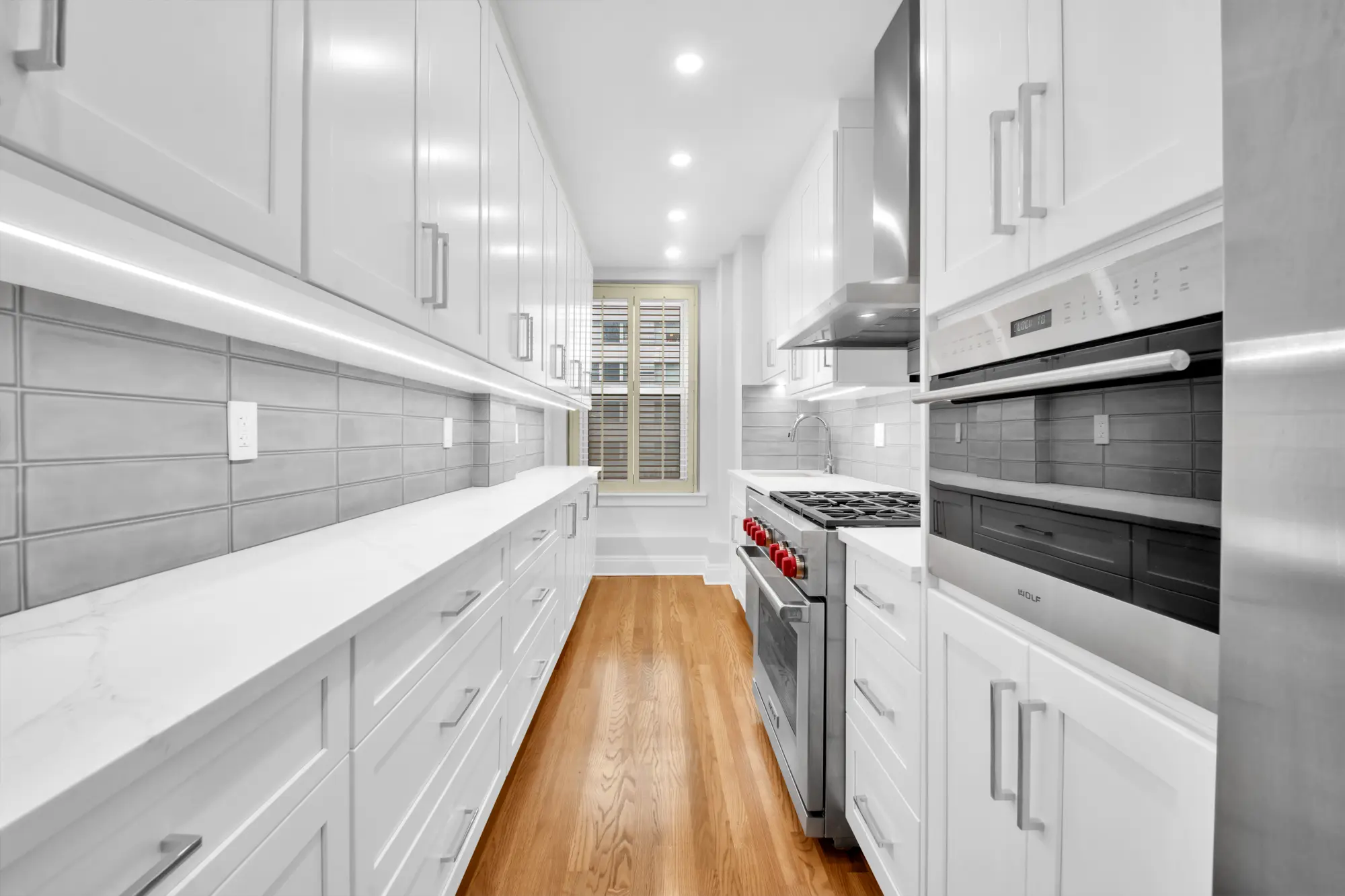
You can see this approach play out in our Carnegie Hill Co-Op Gut Renovation, where a full gut renovation transformed a dated prewar kitchen into a bright, cohesive space with Calacatta Sereno quartz countertops, a fully integrated backsplash, and custom white cabinetry, all while coordinating closely with the building.

Designing Around Plumbing Risers Without Sacrificing Luxury
In a prewar co-op, plumbing risers are vertical stacks that carry water and waste between floors. They are typically shared by multiple apartments and are almost never allowed to move. That single fact shapes where your sink, dishwasher, and other wet fixtures can realistically go.
Common challenges we see in Manhattan co-ops include:
•Wanting a sink in an island far from the existing riser
•Long horizontal waste line runs that are prone to clogging or backing up
•Noise from new plumbing lines traveling into bedrooms below or next door
Instead of forcing the building to bend to the design, our team tailors the layout to the building while still delivering a kitchen that feels custom and high-end. We solve riser-related issues by wrapping riser locations inside custom pantry walls or tall cabinetry so they read as deliberate, architectural elements rather than obstacles; by grouping sinks, dishwashers, and water-using appliances close enough to the riser for reliable, low-maintenance performance; and by planning storage, lighting, and sight lines so the layout still feels open and airy, even when fixtures can’t go exactly where you first imagined.
From the start, we coordinate directly with the building superintendent and our licensed plumbers to manage the behind-the-scenes details: required water shut-downs, Department of Buildings plumbing permits and inspections, and access needs for shared risers. To protect the calm, quiet feel a luxury kitchen should have, we also focus on acoustic performance — specifying quieter piping assemblies where building rules allow, adding sound-attenuating insulation in wet walls, and carefully sealing penetrations so water sounds don’t travel between apartments.
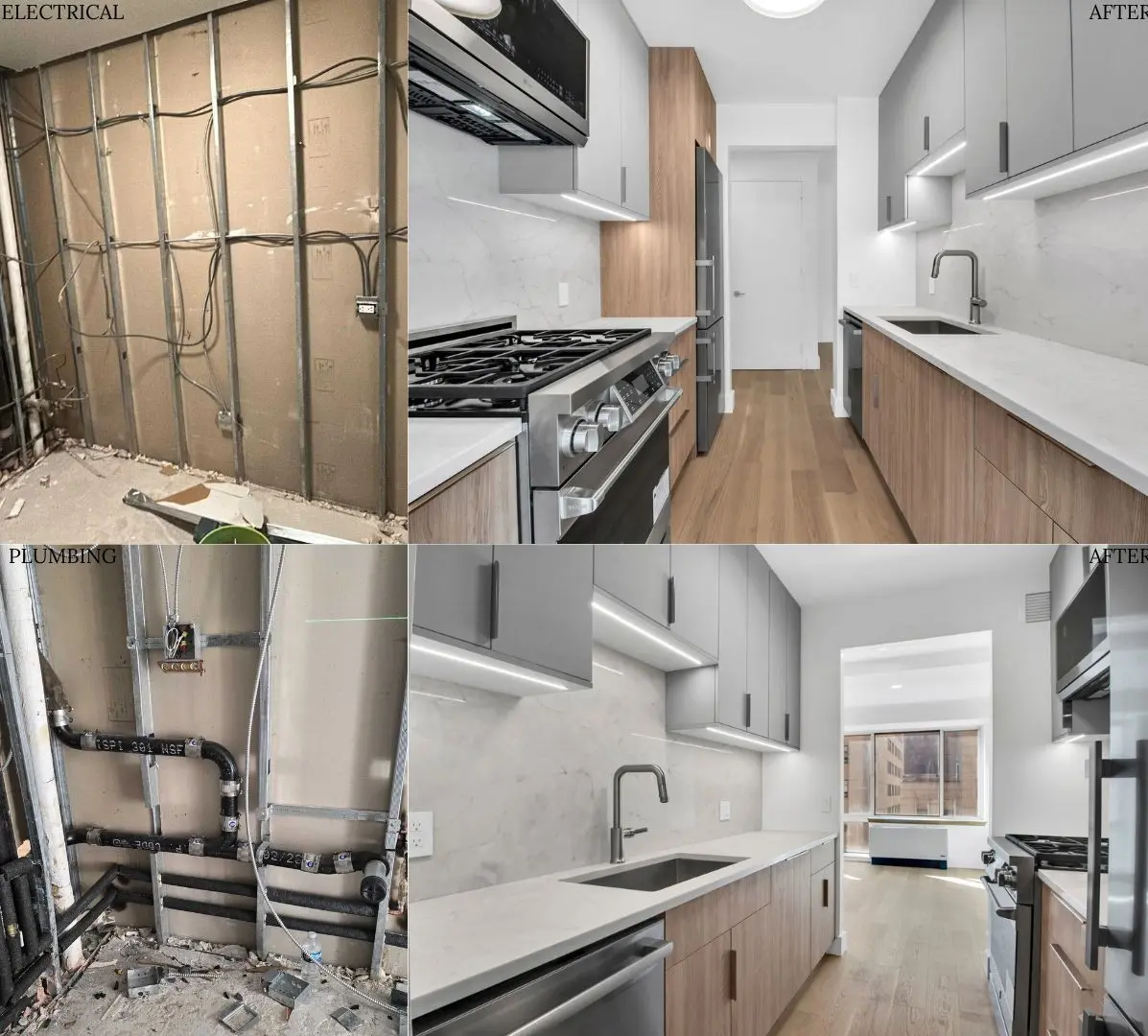
When design and plumbing strategy are developed together by one team, your Manhattan luxury kitchen renovation looks clean and seamless — showcasing custom millwork, stone, and lighting instead of looking like a set of compromises forced by old stacks. This is exactly the philosophy behind our West End Avenue Co-Op Gut Renovation, where a two-tone custom kitchen with a quartz waterfall island was built around the apartment’s existing risers and plumbing constraints, without ever feeling like a compromise.
Gas Lines, Electrical Upgrades, and Venting Limits
Many prewar co-ops have aging gas risers and conservative rules about altering gas lines. Electrical panels can also be undersized, which affects how many appliances you can safely run at once. All of this needs to be understood before you fall in love with a professional-style range or commit to an all-induction setup.
Typical goals we hear from clients include:
•Strong, responsive cooking performance for serious home chefs
•Panel-ready appliances that disappear into custom millwork
•A hood that actually clears smoke and odors without sounding intrusive
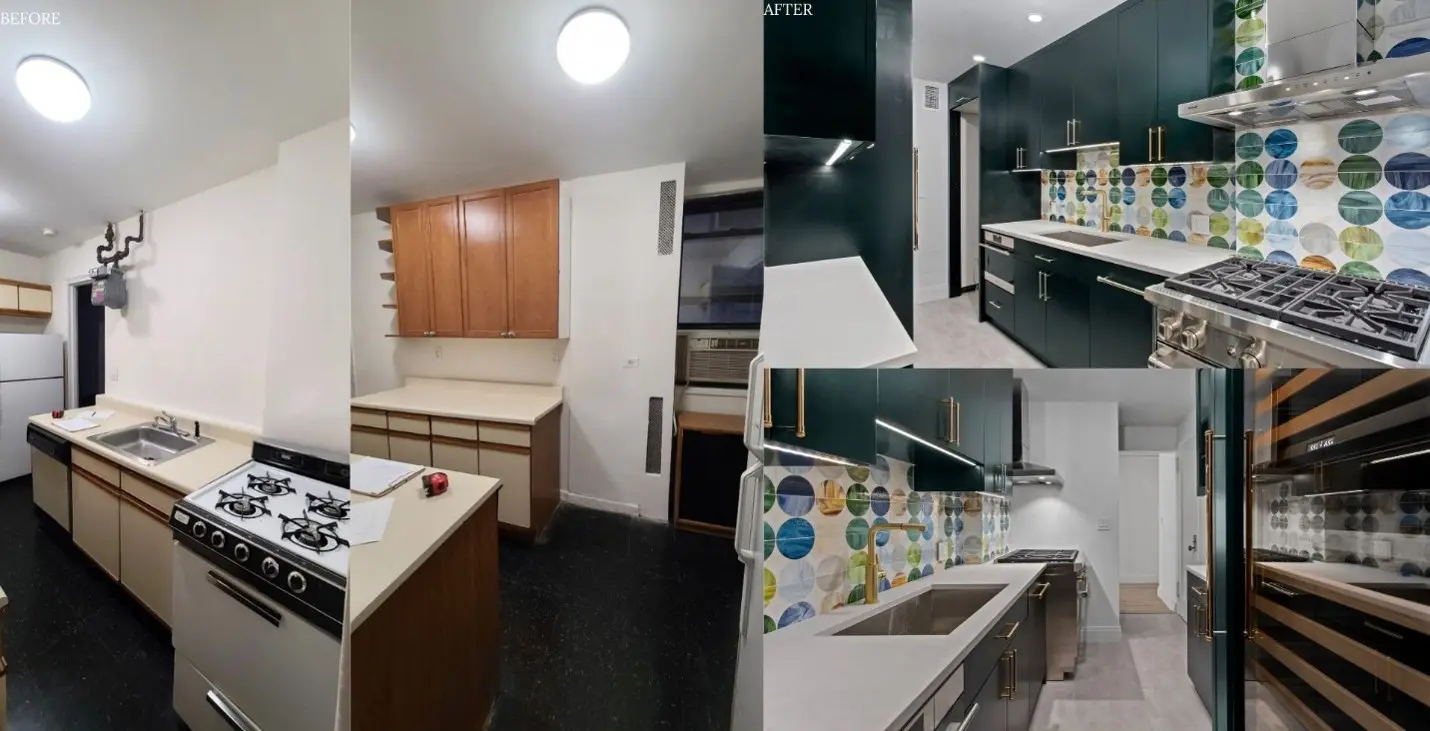
Our team starts with early site investigations alongside licensed trades to answer the key questions before you select specific appliances: Can the gas line be safely extended or relocated within the apartment? Is an all-electric or mostly electric kitchen more realistic given your panel and building rules? What are the building’s venting rules, and is there existing duct space we can use? For venting, we set clear expectations while protecting the premium look of the finished kitchen — whether that means a true ducted hood tied into approved building shaft space, or a high-performance recirculating hood with proper filtration when ducting isn’t allowed.
We also take on the coordination work that typically causes owners the most stress: working with Con Edison and building management on any required gas shut-offs, scheduling DOB gas inspections and filings, and sequencing the work so downtime stays as limited as possible. Because product selection, layout, and mechanical design are handled as one integrated conversation, you get a high-end cooking experience that works within strict building limits — without juggling multiple contractors or conflicting advice. Our blog on pre-war versus post-war Manhattan apartments goes deeper into how these mechanical differences affect renovation cost and timeline if you’re still comparing buildings.
Soundproofing, Neighbors, and Quiet-Luxury Kitchens
Prewar co-ops often carry sound more easily than people expect. Wood joists, old plaster, and thin party walls let footsteps, chairs, and appliance hum pass between units. A beautiful kitchen that feels loud, or that bothers neighbors, won’t feel luxurious for long.
Common pain points include:
•Downstairs neighbors hearing chairs or stools scraping on tile
•Sensitive neighbors reacting to ordinary construction noise
•Dishwashers, refrigerators, and hoods adding a constant background hum
We treat sound as a design priority rather than an afterthought, so the finished space feels calm and refined. Our quiet-luxury approach typically includes acoustic underlayment below stone or tile to reduce impact noise from walking or dropped items, wall assemblies with sound-attenuating insulation around plumbing and electrical lines, and careful sealing of outlets, switches, and penetrations so sound doesn’t leak around them.

Appliance choices and placement matter just as much. We often recommend quiet dishwashers and refrigerators engineered for low noise, soft-close drawers and doors to tame everyday use, and isolation methods for compressors so vibration doesn’t pass into floors and walls. Planning for sound control from the start protects your relationship with neighbors and makes it easier for a board to view your project favorably — a theme we explore further in our piece on renovating historic homes in NYC.
Mastering Co-Op Board Packages and Approval Timelines
A kitchen renovation in a Manhattan co-op is as much about paperwork and timing as it is about cabinets and stone. Boards often require a detailed alteration package before they’ll sign off on any work.
Typical board expectations include:
•Dimensioned drawings and finish plans
•Written scope descriptions explaining what is changing
•Structural and mechanical letters where needed
•Proof of insurance and licenses for all trades
•Work-hour restrictions, debris removal plans, and neighbor protection measures
For many owners, this part of the process feels confusing and time-consuming. Draft agreements, multiple review rounds, and seasonal work limits can delay a project that seemed simple at first glance. With a coordinated design-build process, our team handles this complexity directly: preparing complete, polished submission sets that clearly explain plumbing, gas, and venting plans; speaking directly with building management, architects of record, and building engineers to resolve questions before they become formal objections; and building realistic timelines around board meeting dates and DOB review so you can plan with confidence. Because one team is responsible for both what’s promised on paper and what gets built on site, there’s far less risk of mid-stream changes triggering new approvals or delays. Our license number (NYC #2089170) and Best of Houzz Service Award recognition for six consecutive years (2021–2026) reflect a track record boards have come to trust.
.webp)