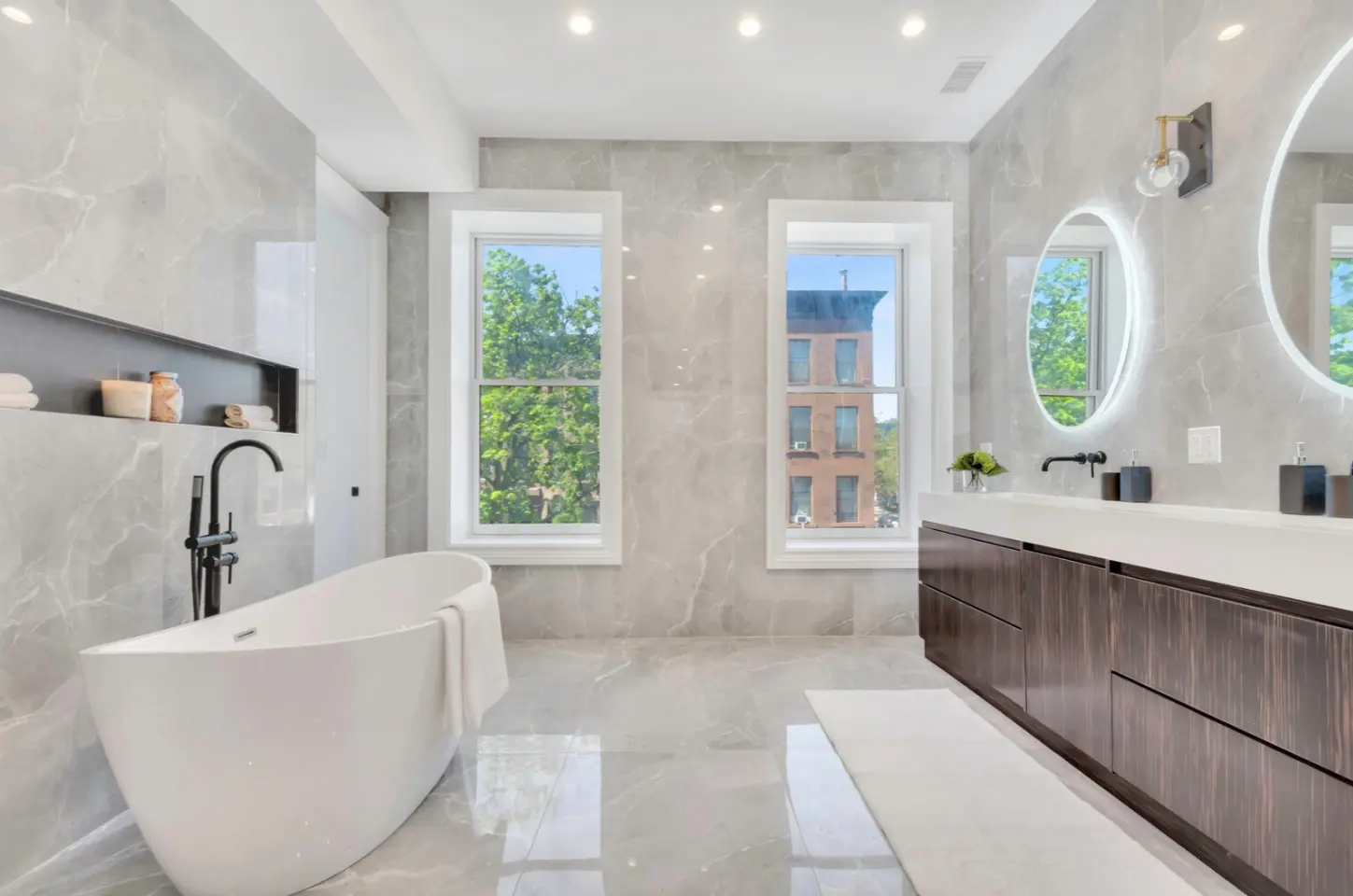
Manhattan Brownstone Gut Renovation
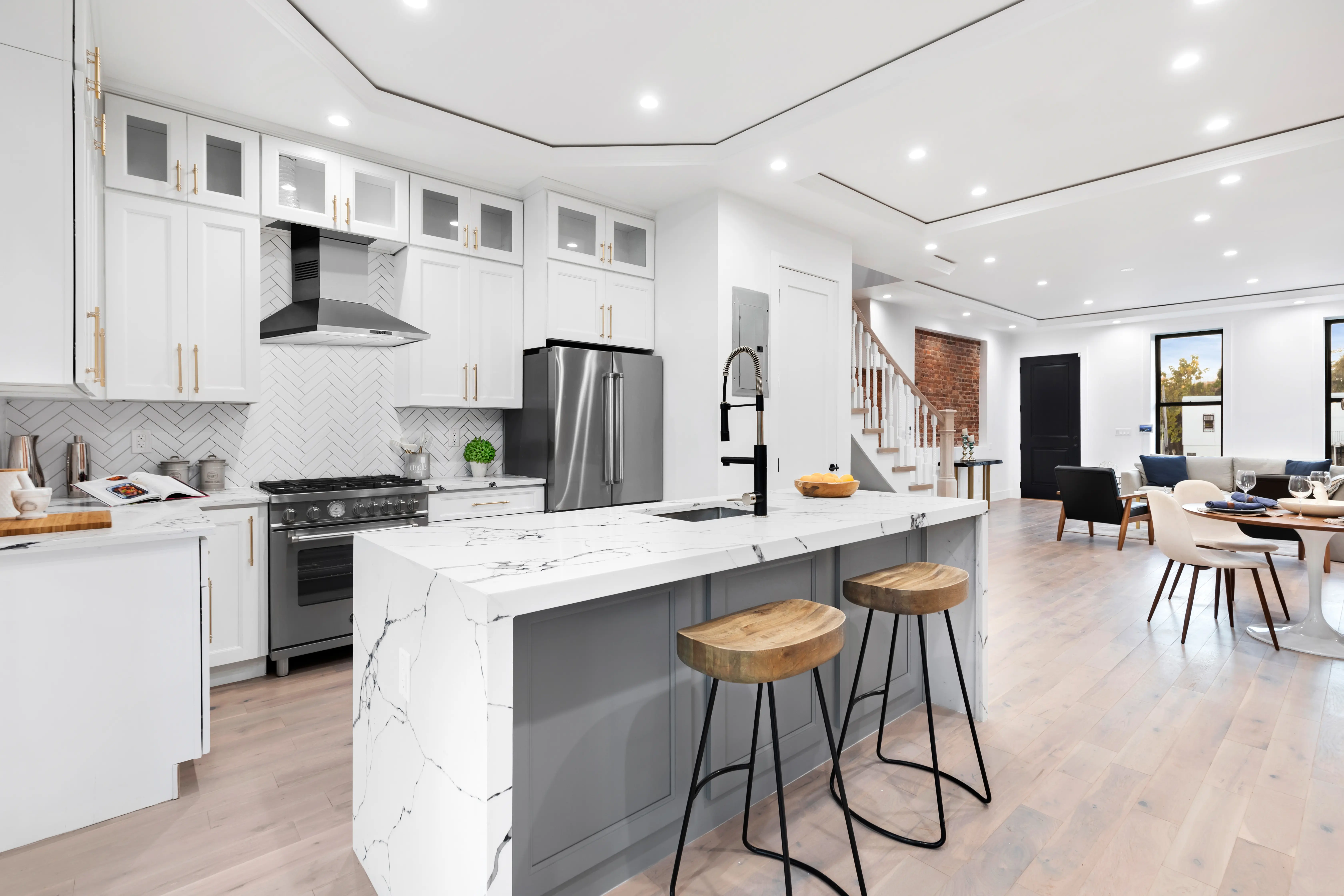
Manhattan Brownstone Gut Renovation: Timeline, Rules and Permits
The Complete Guide to a Manhattan Brownstone Gut Renovation
If you own a brownstone or townhouse in Manhattan, you already know what makes it special. The bones, the block, the autonomy. But when it comes time for a full gut renovation, the questions come fast: How long will this actually take? What permits do I need? What is this going to cost? And how do I protect what makes this building worth renovating in the first place?
At Star Renovations NY, we have guided dozens of brownstone and townhouse owners through gut renovations across Manhattan and Brooklyn. This guide will provide you a full breakdown of the process, from the first design meeting to the final walkthrough, written for owners who want the full picture before they commit.

Why Renovating a Brownstone Is a Completely Different Project Than an Apartment
There is no shortage of gut renovations happening across New York City at any given moment, but a brownstone gut renovation sits in its own category. Before we get into timelines and costs, it helps to understand why.
What Makes Brownstone Renovation More Complex
- You own the building, which means every system is your responsibility. Plumbing stacks, electrical panels, structural beams, roof membranes, and foundation drainage all fall on you, and in a pre-war building, many of these have not been touched in decades.
- Party walls are shared with your neighbors on both sides. Any structural work near those shared walls requires careful planning, sometimes formal party wall agreements, and always a respectful approach to neighbor relationships.
- Historic districts add a layer of review. A significant portion of Manhattan brownstones sit within Landmarks Preservation Commission (LPC) jurisdictions, which means exterior changes require LPC approval before DOB filings can proceed. https://srny.nyc/blog/navigating-nyc-landmark-renovation-approvals-with-ease
- Access is limited. You have one stoop, likely no loading dock, and a backyard that may only be reachable through the house or a narrow alley. Managing materials, debris, and subcontractors in that context takes real logistical coordination.
- The scope of a true gut renovation is much broader. In an apartment, the building takes care of the envelope, the lobby, and the major systems. In a brownstone, everything from the sill plates to the skylight is yours.

And Why It Is Worth Every Bit of It
Co-op boards, monthly maintenance fees, and building rules are not part of your life when you own a brownstone. You are not asking a board for approval to renovate your kitchen or combine two apartments. You make the decisions, you set the timeline within permitting constraints, and you build exactly the home you want.
Brownstone ownership in Manhattan also holds value in a way that apartments in larger buildings simply cannot match. The scarcity of intact brownstone blocks, the architecture, and the neighborhood character all contribute to long-term appreciation that is difficult to replicate in a co-op or condo.
And when a gut renovation is done right, the combination of a historic shell with a fully modernized interior is one of the most compelling residential experiences in New York. No compromises on ceiling height, natural light, floor plans, or finishes. It is your building, top to bottom.
Manhattan Neighborhoods Where We Renovate Brownstones and Townhouses
Star Renovations NY works with brownstone and townhouse owners across Manhattan. Our teams are experienced with the permit offices, historic district nuances, and contractor logistics that vary neighborhood by neighborhood. We regularly work in:
- Upper West Side (including the West End-Collegiate Historic District and Riverside Drive-West End Historic District)
- Upper East Side (including Carnegie Hill and the Metropolitan Museum Historic District)
- West Village and Greenwich Village (some of the most active historic districts in the borough)
- Chelsea and Hudson Yards
- Gramercy
- Murray Hill
- Tribeca and SoHo (cast-iron district knowledge applies to many of the same permitting principles)
Each neighborhood has its own LPC district rules, DOB borough office tendencies, and logistical realities. Knowing those nuances in advance is part of what keeps our projects moving.
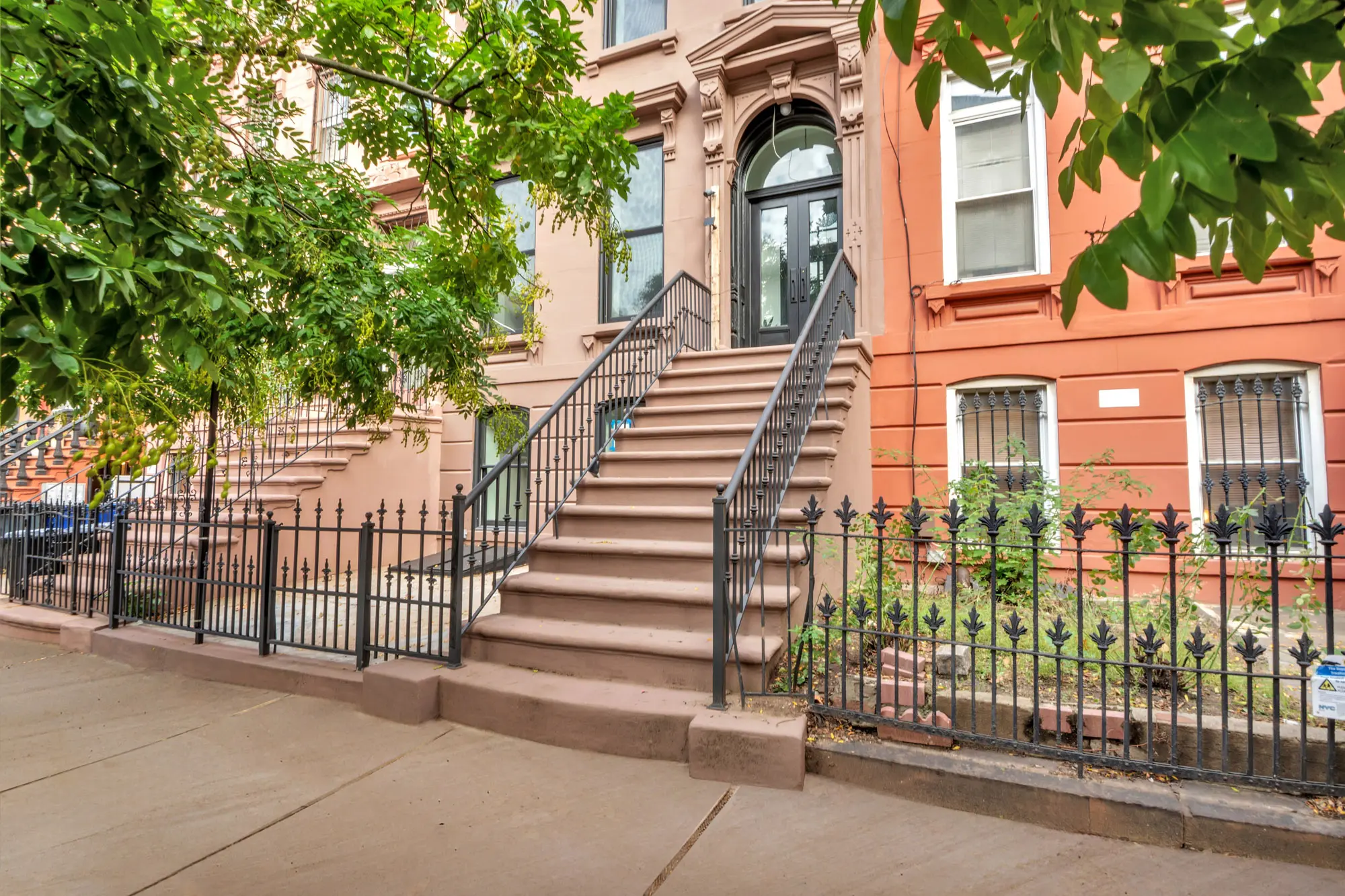
Realistic Timeline for a Manhattan Brownstone Gut Renovation
One of the most common questions we hear is: how long will this take? The honest answer depends on scope, landmark status, and how smoothly the approval process runs. Here is a realistic framework for a full gut renovation of a four- or five-story Manhattan brownstone or townhouse.
Phase 1: Pre-Design and Discovery (2 to 6 Weeks)
This is where the project gets shaped before a single drawing is produced. At Star Renovations NY, we start with a thorough assessment of the existing conditions, including structural review, MEP evaluation, and a detailed look at what the building is and what it needs. We also confirm the landmark status of the property and begin early conversations about what LPC will and will not approve for the exterior. This phase ends with a clear scope of work and a design direction that accounts for both your vision and the approval realities ahead.
Phase 2: Design and Documentation (6 to 12 Weeks)
Full architectural drawings, structural engineering, and MEP coordination happen here. For landmarked properties, LPC submissions are prepared during this phase so that the exterior design is locked before DOB filings begin. Interior design decisions including layouts, finishes, millwork, and fixture selections also happen in parallel. Getting design and documentation right at this stage is what protects the schedule downstream.
Phase 3: LPC Approval (if applicable) (4 to 8 Weeks)
If your brownstone is in a historic district or is individually landmarked, exterior changes require LPC review. Straightforward applications (like-for-like window replacements, matching masonry repairs) can move through staff-level review in four to eight weeks. More complex applications involving rear extensions, new rooftop additions, or facade alterations may go to a full Commission hearing, which adds time. Having drawings that are well-prepared and aligned with LPC precedent from the start is the single biggest factor in how quickly this phase moves.
Phase 4: DOB Filings and Permit Approval (4 to 12 Weeks)
Once LPC is cleared (or if LPC is not required), DOB filings are prepared and submitted. A full gut renovation typically requires a New Building or Alteration Type 1 or 2 filing depending on scope, along with separate filings for plumbing, electrical, and mechanical work. Plan examination can happen through standard review or, in some cases, through a professional certification pathway that can accelerate the process. DOB review timelines have improved in recent years, but plan examiner comments and back-and-forth are normal. A well-prepared filing with coordinated drawings substantially reduces the number of review cycles.
Phase 5: Construction (12 to 18 Months)
For a full gut renovation of a four- or five-story brownstone, construction typically runs between twelve and eighteen months depending on scope, complexity, and access conditions. A project involving structural changes, a rear extension, a full basement excavation, and high-end custom finishes throughout will be on the longer end. A renovation focused on interior gut work with selective system upgrades can move faster. Key construction phases include:
- Demolition and selective removal
- Structural work (new beams, floor systems, foundations if applicable)
- Rough MEP installation (plumbing, electrical, HVAC)
- Inspections and sign-offs at each rough phase
- Insulation, drywall, and plaster where applicable
- Finish carpentry, millwork, and flooring
- Finish plumbing and electrical
- Tile, stone, and specialty finishes
- Painting and final detailing
- Final inspections and certificate of occupancy
Total Project Timeline: 16 to 24 Months
From the first design meeting to the certificate of occupancy, a full gut renovation of a Manhattan brownstone or townhouse typically runs twelve to twenty-four months. Projects at the lower end of that range tend to involve less complex scopes, non-landmarked properties, and clean existing conditions. Projects at the upper end involve significant structural work, historic district review, and complex or highly custom finishes throughout.
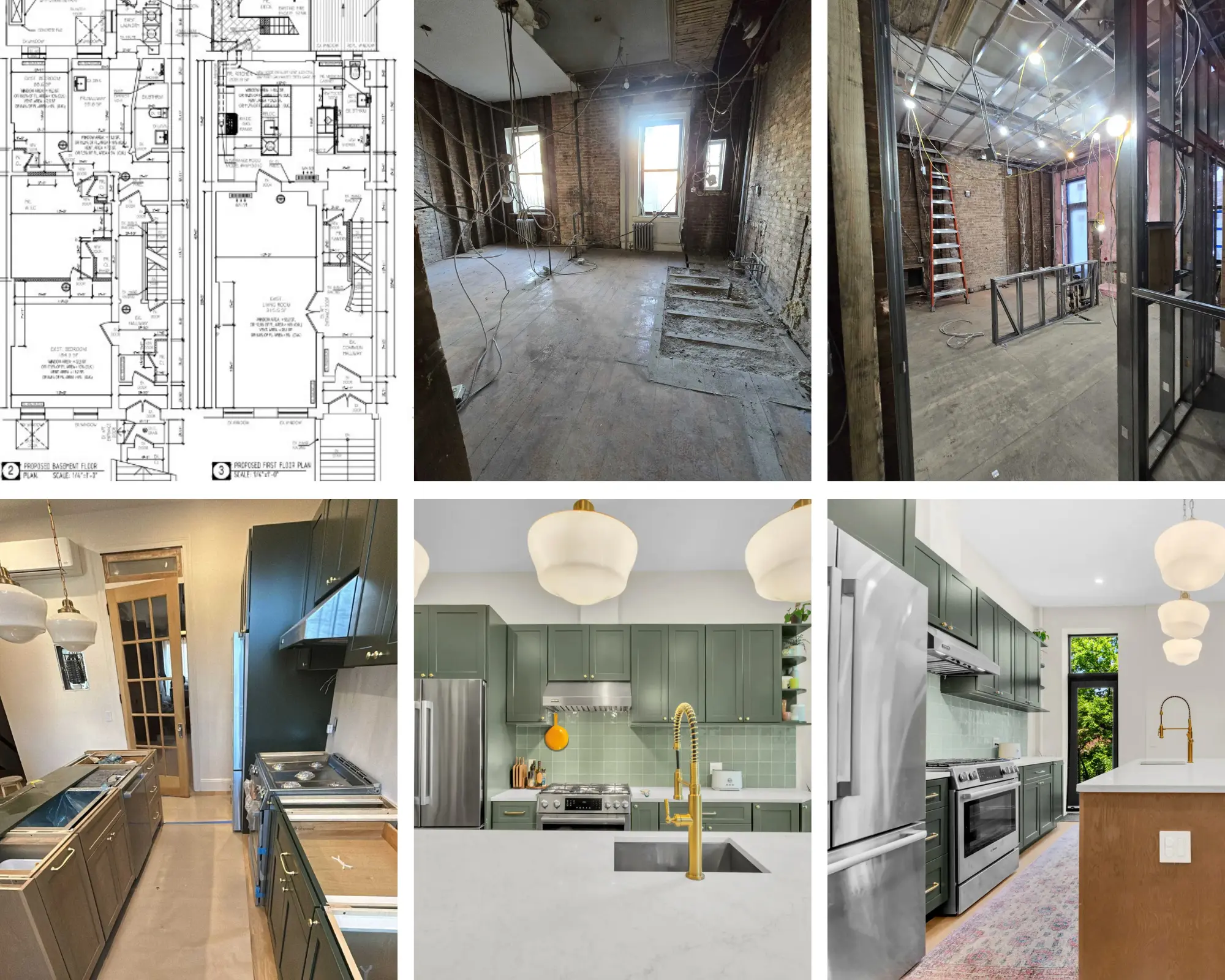
What Does a Brownstone Gut Renovation Cost in NYC?
Cost is the question everyone wants answered, and it deserves a straight answer rather than a vague range. Here is how we think about brownstone gut renovation costs in Manhattan.
General Cost Framework
A full gut renovation of a Manhattan brownstone or townhouse, including design, architecture, permits, and construction, typically falls in the following ranges depending on the level of finish and scope:
- Entrée level gut renovation (quality finishes, standard scopes): $400 to $600 per square foot
- Mid-range gut renovation (premium finishes, custom millwork, complex systems): $600 to $900 per square foot
- High-end / Luxury gut renovation (bespoke everything, structural complexity, full landmark compliance): $1000 to $1,600+ per square foot
For a 4,000-square-foot brownstone, a high-end gut renovation typically falls in the $2.5 to $4 million range for hard and soft costs combined. That includes architecture and engineering, permits, construction, and finishes. It does not include furniture, art, or landscaping. To learn more about timeline and cost reach out to us today and speak to one of our brownstone specialist
What Drives Cost in a Brownstone Gut Renovation
- Structural work: Adding or removing bearing walls, installing new steel beams, underpinning a foundation, or excavating a full basement are among the highest-cost line items in any brownstone renovation.
- Rear extensions: A ground-floor or multi-story rear extension adds usable square footage but involves new foundations, new structural systems, and often LPC review.
- Systems replacement: In a pre-war brownstone, fully replacing plumbing stacks, upgrading to modern electrical service, and installing new HVAC across four or five floors is substantial work.
- Finish level: Custom millwork, stone work, specialty tile, high-end kitchen and bath packages, and bespoke detailing all add meaningfully to cost but are often what defines the final result.
- Access and logistics: Limited street access, tight rear yard conditions, and party-wall requirements can add cost to demolition, materials handling, and specific phases of construction.
A Note on Cost Transparency
At Star Renovations NY, we provide detailed estimates. We do not believe in ballpark budgets that shift dramatically once construction begins. Our estimates are based on real scopes, real drawings, and real market conditions, and we hold to them as the project progresses.
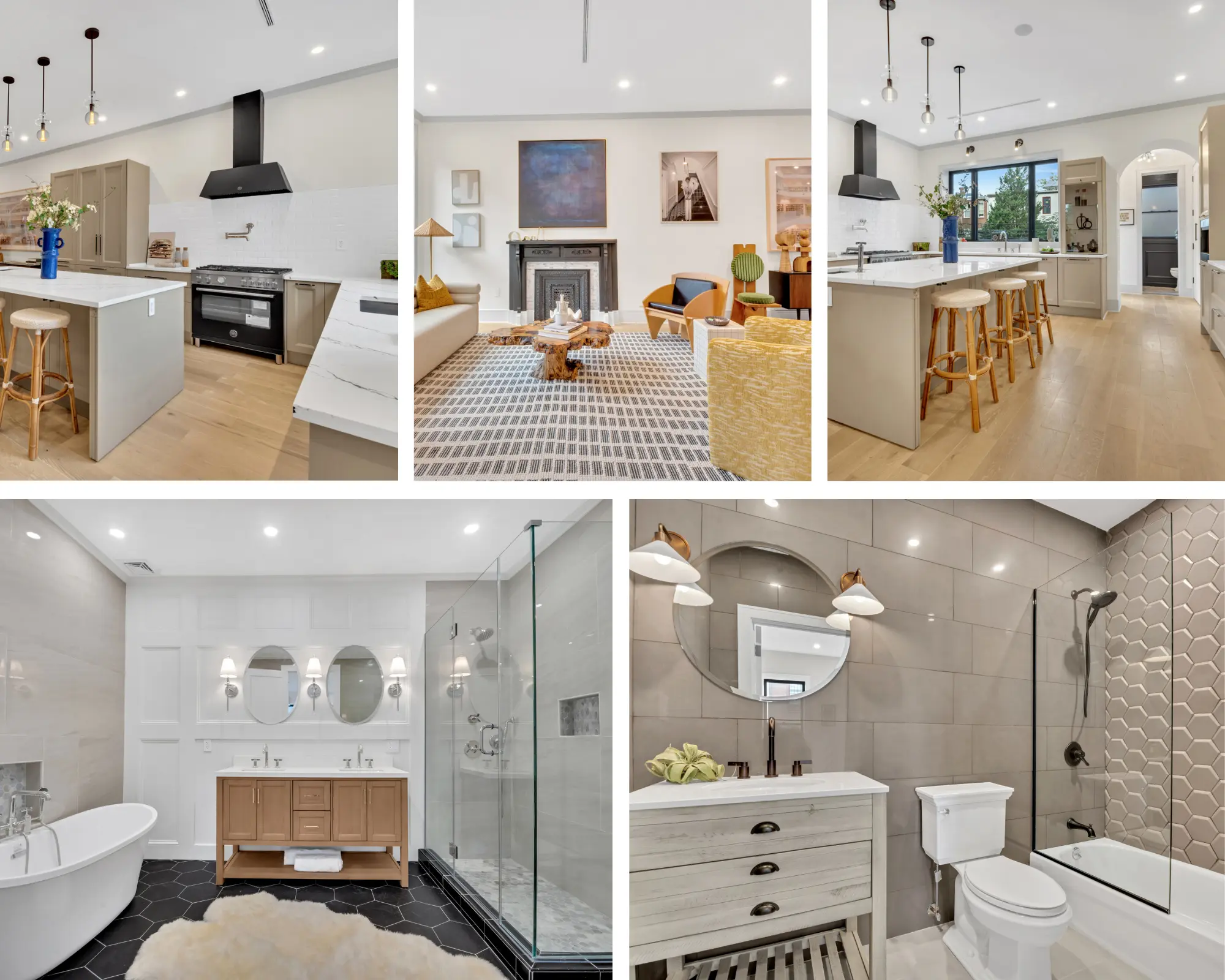
Navigating Landmarks and DOB: What Brownstone Owners Actually Need to Know
The permitting process for a Manhattan brownstone gut renovation is the part that most owners find least intuitive. Here is how it actually works.
Landmarks Preservation Commission (LPC)
If your brownstone is within a historic district or is individually designated, any changes to the exterior require LPC review. This includes facade repairs, window replacements, new storefront configurations, rear extensions, and rooftop additions. Interior changes are generally not subject to LPC review, which is an important point for owners worried about design constraints.
The LPC review process has two main tracks. Routine work that conforms to established LPC guidelines (like replacing windows with identical profiles in matching materials) can often be approved at the staff level without a public hearing. More substantial exterior changes go to a full Commission hearing, which happens on a monthly calendar. Getting into that calendar, and getting through it successfully, requires drawings and documentation that clearly demonstrate how the proposed work responds to the historic character of the building and the district.
Our design team has extensive experience working within LPC guidelines across Manhattan historic districts. We know what gets approved, what gets questioned, and how to present applications that move through the process with minimal friction.
Read our latest blog post Navigating NYC Landmark Renovation Approvals With Ease
Department of Buildings (DOB)
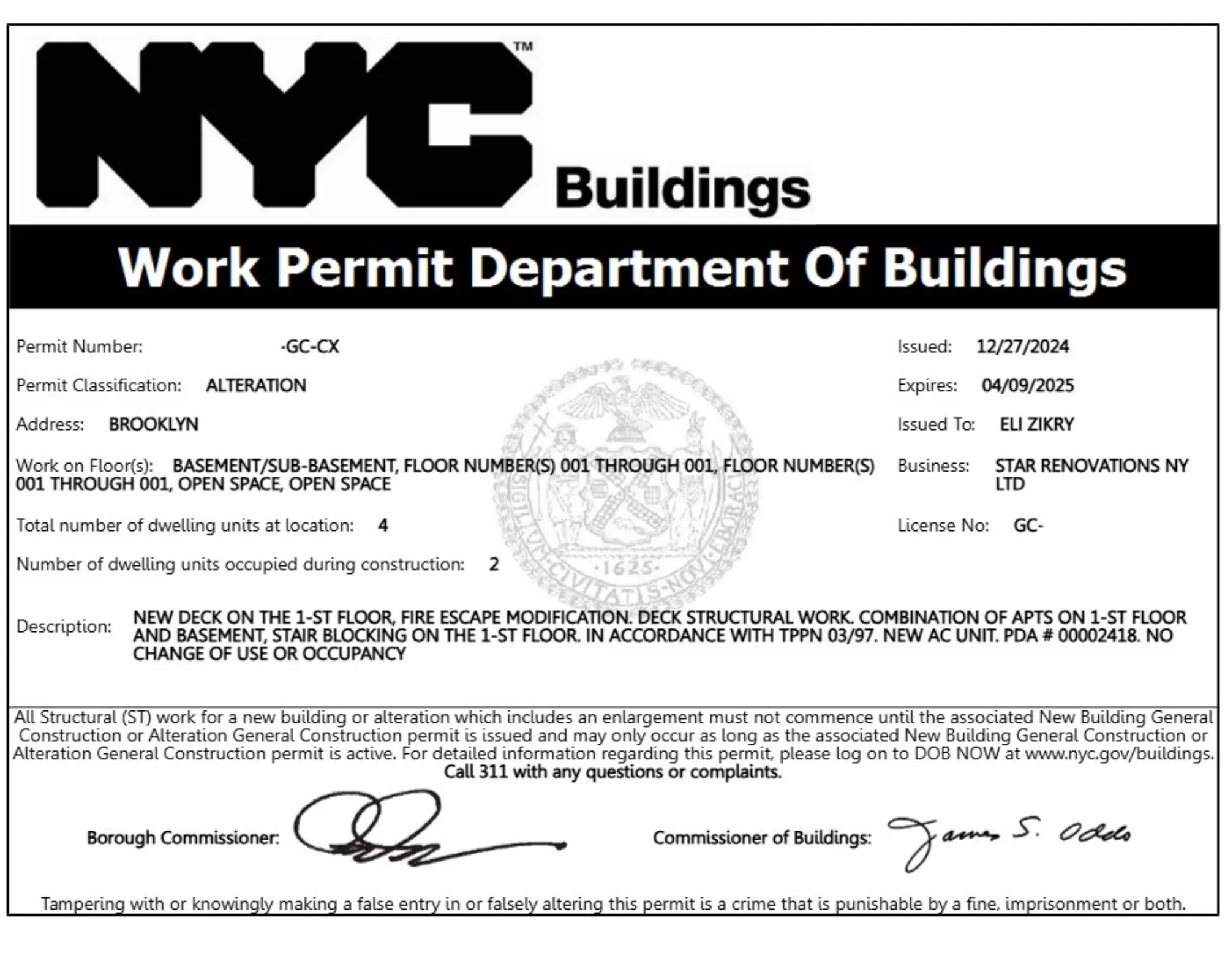
Every meaningful gut renovation in Manhattan requires DOB filings. For a full gut renovation of a brownstone, this typically means an Alteration Type 1 application, which covers work that changes the use, egress, or occupancy of a building, or an Alteration Type 2 for significant work that does not affect those elements. Separate filings cover plumbing, electrical, and mechanical systems.
DOB filings require coordinated architectural, structural, and MEP drawings. Gaps between those documents are the most common cause of plan examiner comments and delays. At Star Renovations NY, our design and engineering teams work within a single coordinated process, which means our DOB submissions go in clean and come back with fewer comments.
Inspections are also part of the DOB process. Rough plumbing, rough electrical, structural framing, and final inspections all need to be scheduled at the right moments in the construction sequence. We build inspection scheduling directly into the construction calendar rather than treating it as an afterthought.
Party Walls, Neighbors, and the Human Side of a Brownstone Renovation
Living in a dense Manhattan block means your renovation affects more than your own building. Party walls, limited street access, and close neighbors are realities of brownstone renovation that require thoughtful management.
On the party wall front, structural work near shared walls typically requires pre-construction surveys of neighboring properties, careful monitoring during demolition and framing phases, and post-construction documentation. For more significant work, formal party wall agreements with neighboring owners may be necessary. We manage this process directly, including neighbor communications, licensed survey documentation, and monitoring throughout construction.
Neighbor relations more broadly matter for the experience of everyone on the block. We notify neighbors before disruptive phases begin, establish consistent work hours, and provide a direct point of contact for any questions or concerns. This is not just courtesy; it actively reduces the risk of complaints, complaints to DOB, or access disputes that can slow a project down.
The Star Renovations NY Approach to Brownstone Gut Renovations
We are a white-glove design-build firm, which means design, architecture, permitting, and construction all live under one roof. For a brownstone gut renovation, that matters enormously.
When the team drawing your floor plans is the same team filing your DOB applications and managing your construction crew, there are no handoff gaps. Design decisions are made with full knowledge of what permits they require. Construction drawings match the architectural intent. Inspections are anticipated and scheduled, not scrambled for.
We specialize in high-end gut renovations of Manhattan and Brooklyn brownstones and townhouses, and we bring that specific experience to every project. We know the LPC districts, the DOB borough offices, the party wall protocols, and the materials suppliers and subcontractors who deliver at the level our clients expect.
Our clients are typically owners who have invested in a significant property and want a renovation that honors that investment, delivers a genuinely exceptional result, and does not consume years of their lives with stress, confusion, and surprises. That is exactly the experience we are built to provide.
What Our Clients Say
Why Owning a Manhattan Brownstone Beats a Co-op or Condo
Before we close out, it is worth stepping back and naming what makes all of this effort worthwhile. Brownstone ownership in Manhattan is fundamentally different from owning an apartment, and the advantages are substantial.
- No board approval. You do not need permission to renovate. You file with the city and you build. No co-op board interviews, no renovation committees, no waiting months for approval to replace your kitchen.
- No monthly maintenance. The money you would spend on co-op maintenance or condo common charges goes toward your building instead, building equity rather than covering someone else’s overhead.
- Rental income potential. A brownstone can house multiple units, which means the opportunity to offset carrying costs with rental income from floors you are not occupying.
- Complete design control. Your ceiling heights, your floor plans, your finishes, your mechanical systems. Nobody else has a vote on how your home is designed or built.
- Long-term scarcity value. Manhattan brownstone blocks are finite. The inventory does not grow. That scarcity, combined with the desirability of the architecture and the neighborhood character, supports values in ways that apartments in large buildings simply cannot match.
- Privacy and space. A full brownstone offers a quality of space and separation from neighbors that is nearly impossible to find in a multi-unit apartment building, regardless of price.