How to Fund an NYC Gut Renovation: Understanding Your Milestone Payment Schedule

How to Fund an NYC Gut Renovation: Understanding Your Milestone Payment Schedule
One of the first questions our team at Star Renovations NY hears from prospective clients is some version of, “how am I supposed to come up with all of this money at once?” It’s a fair worry, and it usually comes from a misunderstanding of how a professionally managed renovation actually gets funded. You do not need your entire construction budget sitting in an account the day you sign your contract. A full NYC gut renovation unfolds over months of design, approvals, and construction, and your payments are spread across that same timeline. By the time each installment comes due, you’ve had weeks, sometimes months, to plan for it.
Read our latest blog Full-Gut Manhattan Apartment Renovation | Timeline & Cost
At the same time, if you look closely at a typical design-build payment schedule, including Star Renovations NY’s, you’ll notice something that can look unusual at first glance: a significant share of the contract, often around half, is invoiced before demolition is even finished. To a homeowner comparing quotes, that can feel aggressive next to a contractor asking for a simple 20 or 30 percent deposit to get started. It isn’t. It’s actually the opposite, and understanding why is one of the most important parts of learning how to fund a renovation without it derailing your project halfway through. This guide walks through both sides of that question: how your funding is spread across a real renovation timeline, and why the upfront commitment in a properly run project is exactly what keeps that timeline from falling apart later.

You Don’t Need the Full Budget in Hand on Day One
Before a single wall comes down, a gut renovation moves through a planning and approval runway that can stretch two to four months on a typical Manhattan or Brooklyn project. None of that time is wasted, and none of it requires your full construction budget to be sitting in the bank. This stretch of the calendar is exactly where your funding plan should begin.
During this runway, your design-build team is typically handling:
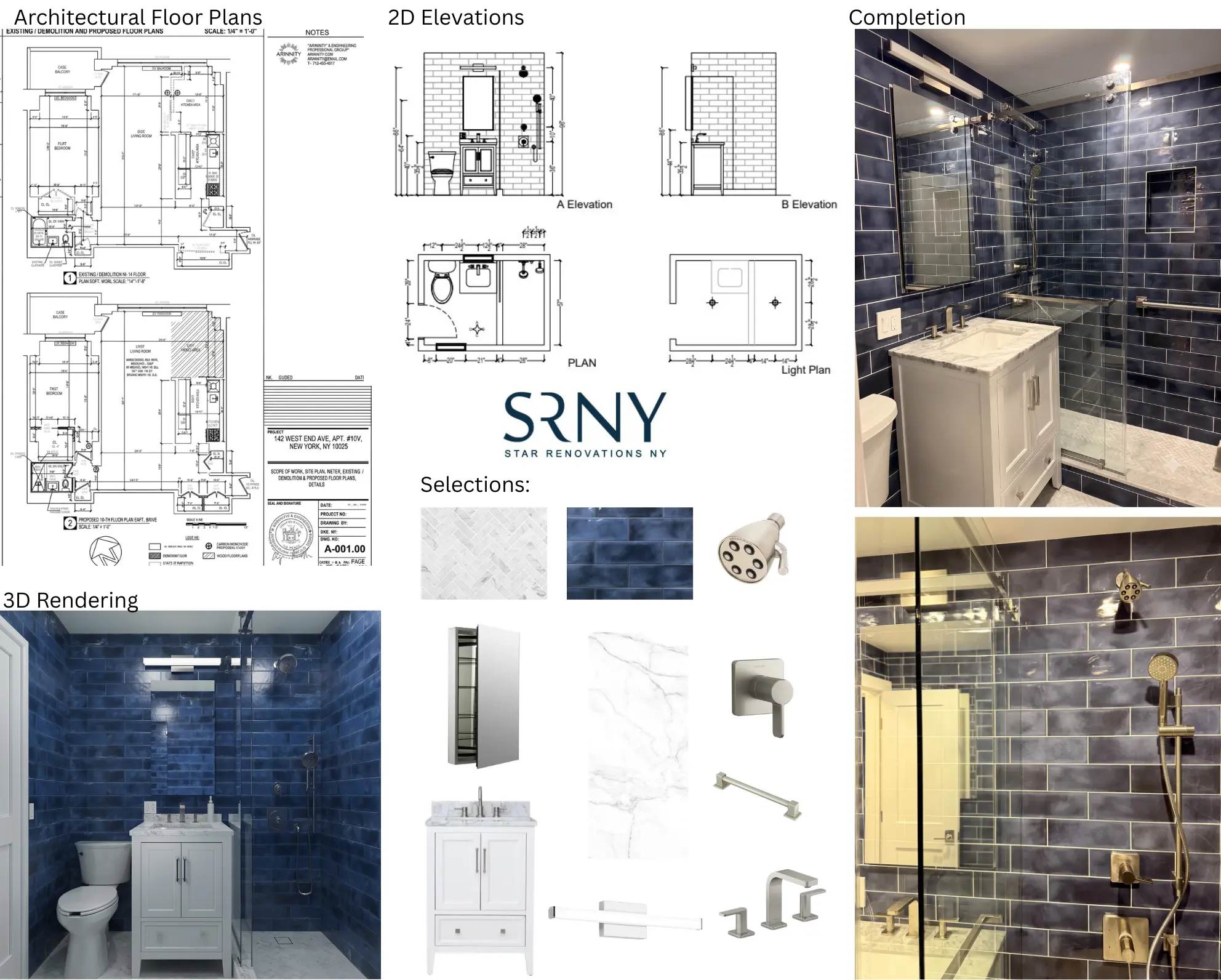
- Architectural drawings, 3D renderings, and a complete board-ready submission package
- Co-op or condo board review and building management sign-off (see our guide to the NYC building alteration agreement process for what that involves)
- Department of Buildings filings, permit approvals, and required inspections scheduling
- Selection, ordering, and securing of cabinetry, fixtures, tile, stone, and finishes well ahead of when they’re needed on site, a process we break down further in our guide to Manhattan kitchen remodel lead times and backorders
Each of those steps takes real weeks on the calendar. That gap between signing your contract and the first swing of a demolition hammer is also the gap you can use to line up savings, financing, or a renovation loan draw before larger payments come due, rather than trying to fund everything on day one. It’s also, not coincidentally, the same window where the upfront portion of your payment schedule is being put to work, which is where a lot of homeowners want more detail before they sign.
How Star Renovations NY Structures a Milestone Payment Schedule
Rather than a single lump sum or a simple deposit-and-balance structure, Star Renovations NY uses a schedule of values: a payment schedule tied to specific, verifiable milestones. You pay for work as it’s actually completed, and you can see exactly what’s finished before the next payment is due. This is the structure many of our clients use to plan their renovation cash flow month by month instead of all at once.
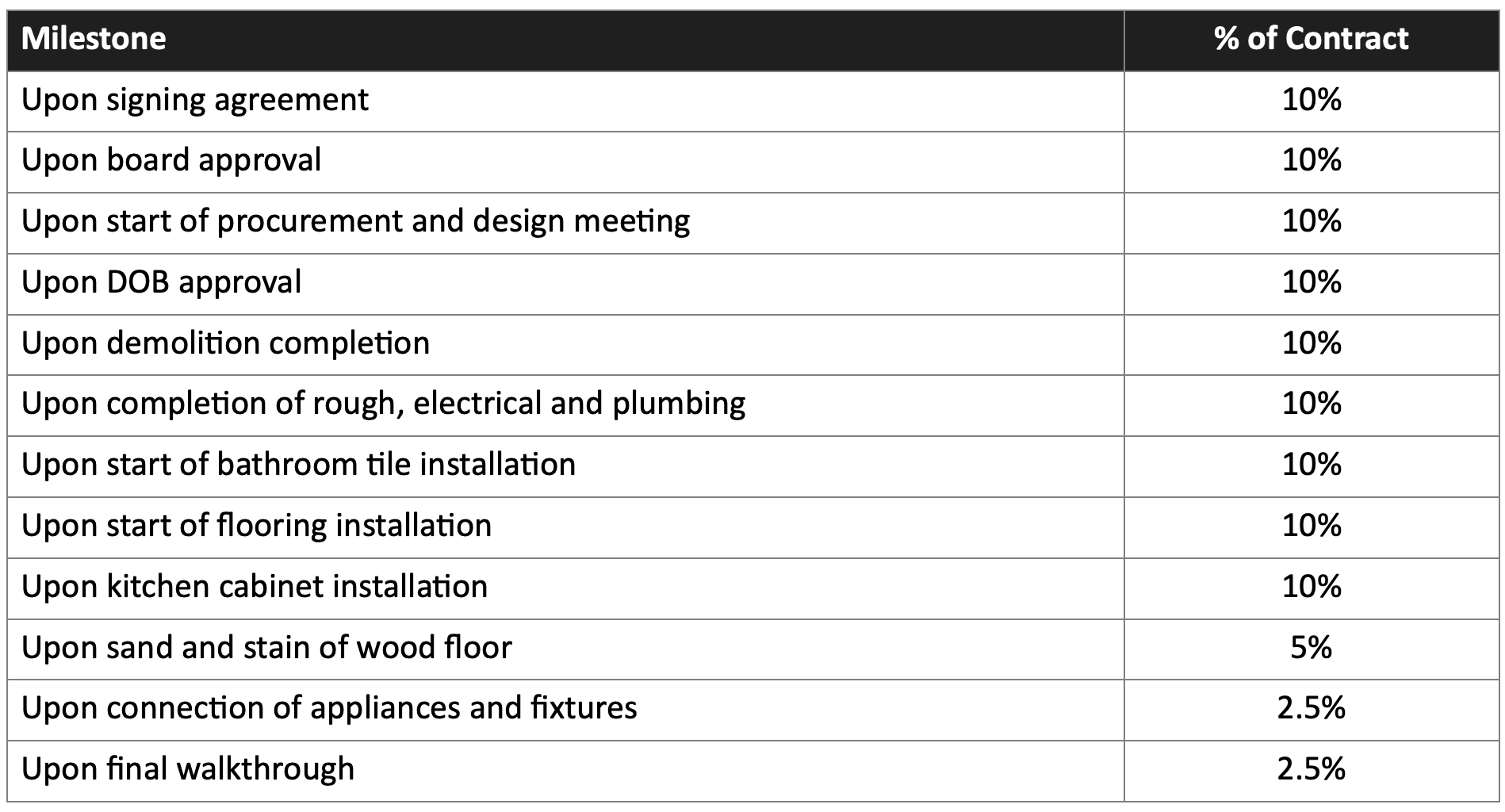
This schedule reflects a typical structure for many of our projects, and it’s meant as a general guide rather than a fixed rule of thumb. The exact percentages, dollar amounts, and number of milestones in your proposal will be tailored to the size, scope, and complexity of your specific renovation.
Why Roughly Half Your Investment Is Committed Before Demolition Is Finished
Add up the first four milestones in the schedule above, deposit, board approval, procurement and design meeting, and demolition, and you land at 55 percent of the contract. That means by the time demolition wraps, more than half of your total investment has already been invoiced. We understand why that number gets a homeowner’s attention. It can look extraordinary next to a contractor who’s willing to start swinging a hammer for a 20 or 30 percent deposit. But those two numbers aren’t measuring the same thing, and the difference between them is exactly what separates a renovation that runs on schedule from one that stalls out somewhere in the middle.
That 55 percent isn’t sitting as profit while you wait for construction to catch up. By the time demolition is complete, that money has already been converted into real, committed deliverables: completed architectural drawings and engineering, a board-approved package, filed and approved permits, and, critically, materials. Before we ever open a wall, Star Renovations NY’s procurement process has already selected, ordered, and placed deposits on the cabinetry, custom millwork, natural stone, tile, plumbing fixtures, and appliances your project needs. Nothing about your renovation starts until the things it depends on are already on order and secured
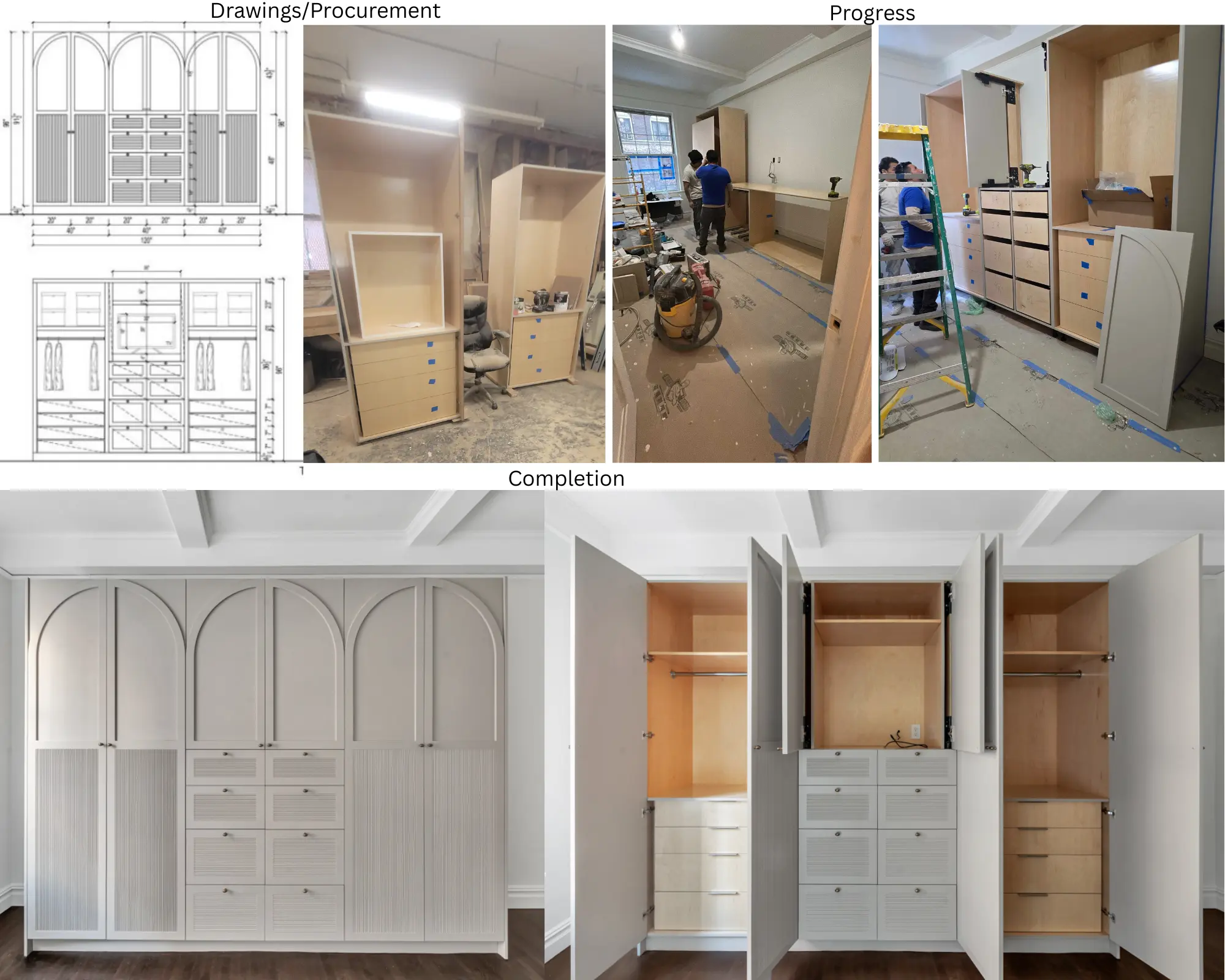
That last part is the piece that’s easy to overlook, and it’s the reason our planning and procurement process is the backbone of how we deliver projects on time. Custom cabinetry commonly runs 10 to 14 weeks from order to delivery. Natural stone can take 6 to 10 weeks depending on the quarry and fabrication schedule. Specialty tile, imported fixtures, and certain appliance packages carry their own lead times, often 6 to 12 weeks. None of those clocks start running on their own. Somebody has to select the materials, finalize the order, and pay the deposit that actually reserves them, and that has to happen well before the crew doing rough plumbing and electrical is ready to hand the space off to the trades installing tile, cabinets, and flooring.
It helps to think of that upfront percentage less as a fee for getting started and more as a deposit on certainty. Every dollar of it is tied to something you can point to: a set of stamped drawings, an approval letter from your board, a purchase order for the exact cabinets going into your kitchen. None of it is speculative, and none of it is waiting around for construction to justify itself later.
This is where a lot of contractors, and a lot of well-meaning homeowners comparing bids, run into trouble. A firm that only collects 20 or 30 percent upfront often hasn’t built procurement into that number at all. Demolition starts, rough construction moves forward, and only partway through the project does it become clear that cabinetry, stone, and fixtures still need to be selected, ordered, and paid for, on top of the deposit already collected. At that point, a homeowner is being asked for additional funds under time pressure, in the middle of an open, half-finished apartment, to place orders that should have gone in months earlier. Decisions that deserved careful thought, cabinet finishes, hardware, stone selections, get rushed because the lead times are now working against the schedule instead of ahead of it.
The result is predictable: rough-in work finishes, and then the project sits. Walls stay open longer than planned while everyone waits on a cabinet order placed too late. Trades that finished their portion of the work get pulled onto other jobs and have to be rescheduled once materials finally arrive, which can mean another two to three week wait just to get them back on your site. Temporary housing or a stay with family runs longer than budgeted. What looked like a lower-cost, lower-commitment start on paper often ends up costing more time, more stress, and, in many cases, more money once delays, rescheduled trades, and rushed decisions are factored in. If this sounds like a project you’re already living through with another contractor, our guide to auditing your NYC renovation and choosing full-service help walks through how to get back on track.
Structuring the payment schedule so that design, approvals, and procurement are substantially funded before demolition is finished is what allows Star Renovations NY to avoid that outcome entirely. When our crews open your walls, we already know exactly what is going into that space, and it is already sitting in a warehouse or confirmed with a fabricator, not still being chosen. That is the entire premise behind a true design-build process, and it is why we describe our design-build approach as a single, integrated system rather than a series of separately funded stages. The upfront percentage isn’t a bigger ask for the sake of it. It is what funds the exact groundwork that keeps your project moving without gaps once construction begins, and it is a major part of how we protect your timeline, your temporary housing budget, and your peace of mind for the months that follow.
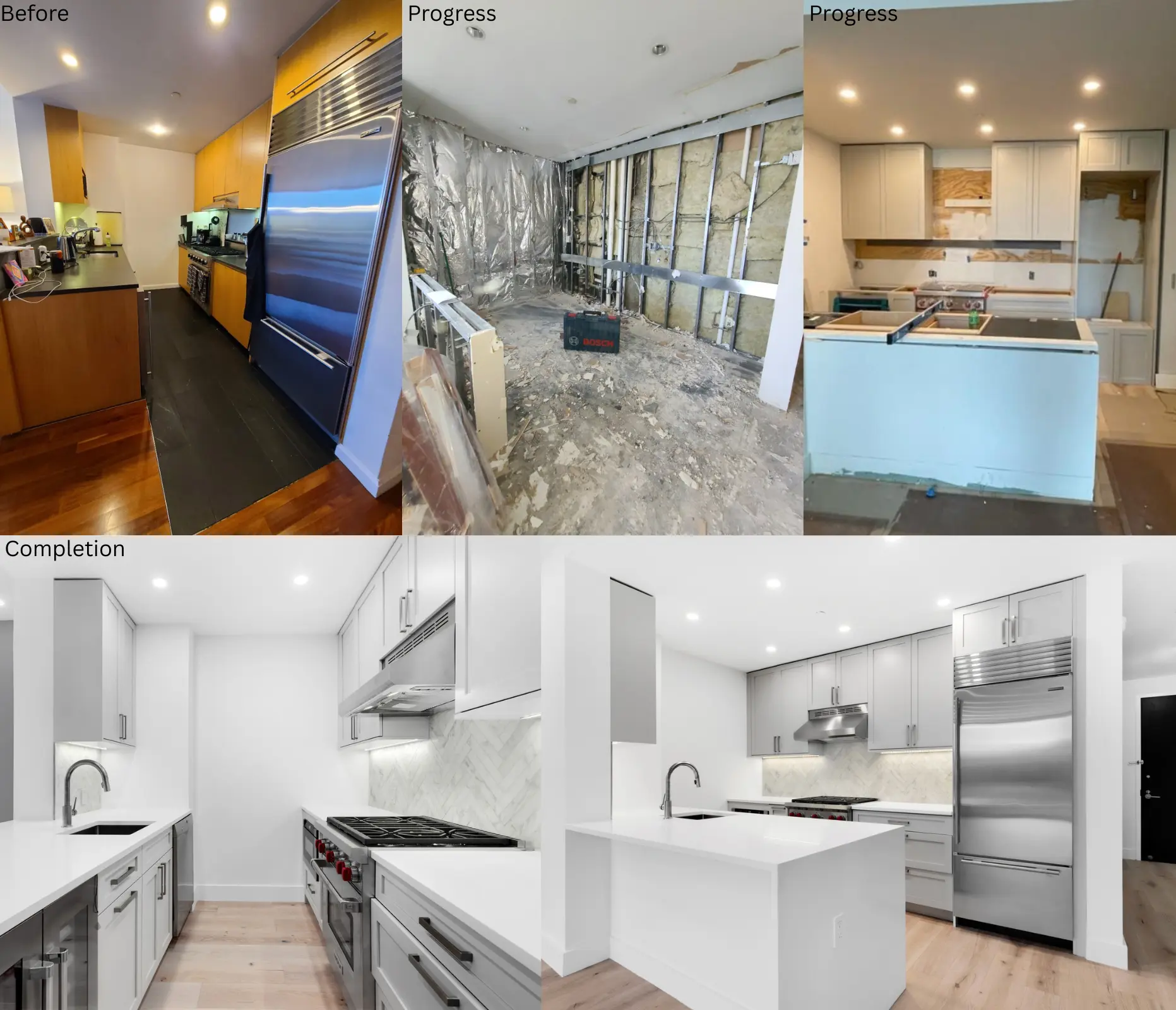
Matching Your Payments to a Real Renovation Timeline
Laid over an actual calendar, the schedule spreads naturally across the life of your project. Your deposit is due at signing, month one, and it’s what puts your architect, engineer, and design team to work immediately. Your board approval payment typically lands one to two months later, once your package has cleared your co-op or condo board, and it’s at this point that final selections firm up so procurement can begin in earnest. Your procurement and design meeting payment follows shortly after, and this is the milestone that actually places your cabinetry, stone, tile, and fixture orders, starting those 6 to 14 week lead-time clocks while your team is still finishing permit approvals and pre-construction logistics in the background.
By the time your demolition payment comes due, your materials are already weeks into production or already delivered to secure storage, which is exactly why that milestone can represent the halfway point of your funding while construction itself is just getting started. From there, the remaining milestones, rough plumbing and electrical, tile installation, cabinet delivery, floor installation, and final completion, track the visible, physical progress of construction, arriving in the same sequence your Star Renovations NY project manager is actively coordinating on site.
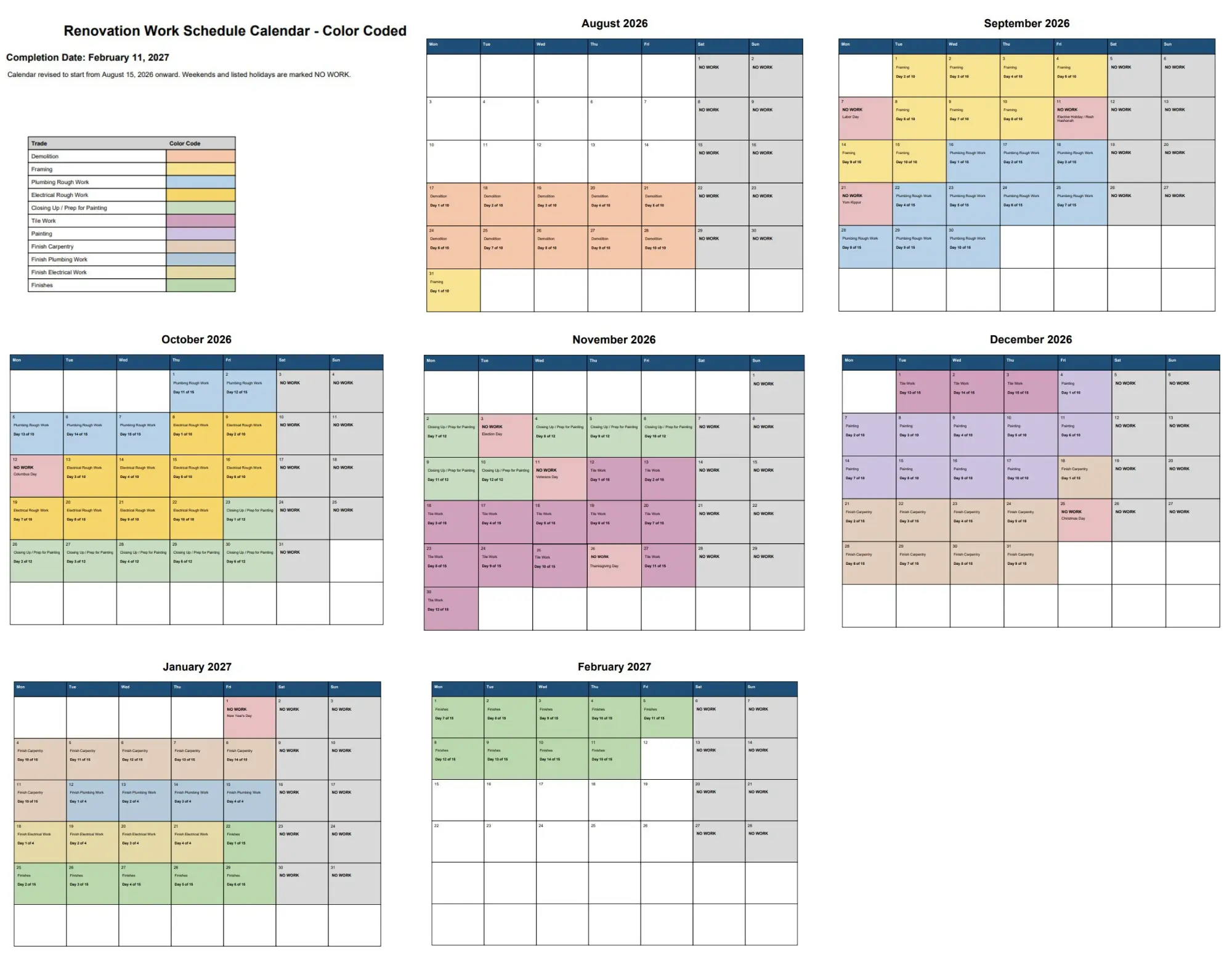
That means a project with a four to eight month construction window can easily represent six to nine months from signed contract to final walkthrough, with your nine milestone payments distributed across all of it. Homeowners commonly use that runway to:
- Line up each payment with an expected draw from savings, an investment account, or a renovation loan
- Coordinate a HELOC or construction loan draw schedule against the same milestones your project manager is tracking
- Time larger payments around a bonus cycle, a closing on another property, or other predictable cash flow events
Because payments are tied to visible, completed work and to materials that are already ordered and secured, rather than to arbitrary dates, you always know what’s finished, what’s next, and how much lead time you have before the following payment is due. Just as important, you’re not the one absorbing the risk of a contractor who started construction before the materials it depends on were ever committed.
What This Looks Like on Real NYC Projects
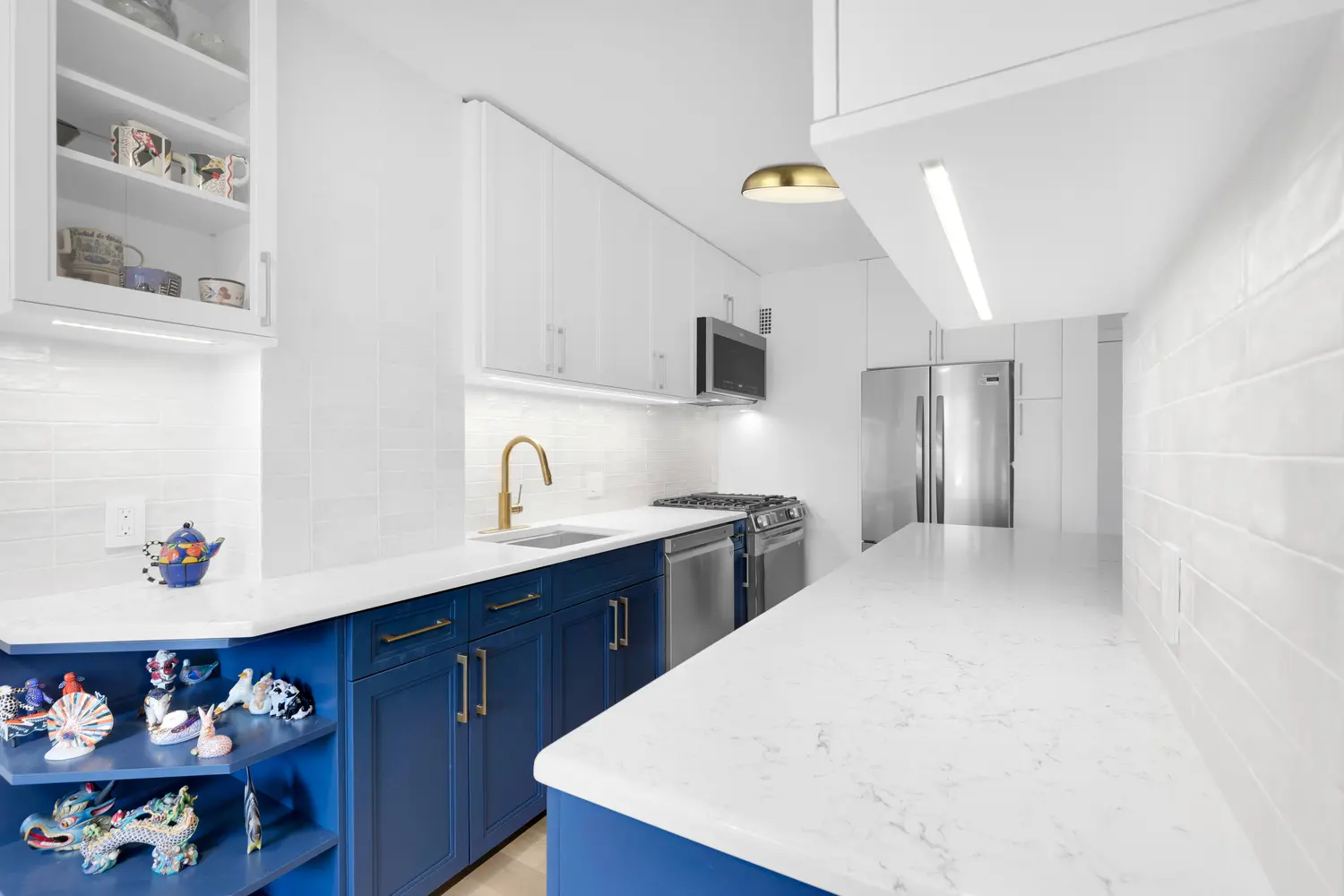
This is exactly how funding works across the renovations in our project portfolio, whether it’s a condo kitchen renovation in Manhattan or a co-op gut renovation in Brooklyn. On a full renovation in the $200,000 to $500,000 range, the kind we regularly complete in neighborhoods like Kips Bay and the Upper West Side, that procurement milestone is what allows cabinetry, stone, and custom millwork to be on order before the crew ever picks up a sledgehammer, instead of becoming a mid-project scramble. Clients aren’t writing one giant check; they’re funding a series of milestones over a timeline they can see coming weeks in advance, with the materials for each stage already accounted for by the time that stage arrives. You can see more of why homeowners choose Star Renovations NY for their NYC gut renovations on our site.
“Working with Eli and his team was my first experience with NYC Co-op Construction and it was truly a great experience. Construction is intimidating and then you add the NYC co-op factor on top and it can seem overwhelming. Eli and his team are so responsive, so helpful, so organized and so knowledgeable about construction that the process was painless. I am overwhelmingly pleased with the end result, the kitchen is beautiful. The final product speaks for itself. Eli and his team are problem solvers and they work with you until you are happy with your selections. The system they use and their process is fantastic and I was able to undergo full kitchen renovation while living in another country during the entire design and construction process!”
Jessie R.
You can read more experiences like these on our client reviews page.
Building in Contingency Without the Stress
A milestone payment schedule covers your known scope, the design, materials, and labor already accounted for in your proposal. Contingency covers what you can’t see yet, especially in older buildings and prewar co-ops, where outdated wiring, aging plumbing, or unpermitted past work sometimes surfaces once walls open up. It’s worth being clear that contingency is a separate reserve from the procurement funding described above; one pays for what you’ve already decided on, the other stands ready for what nobody could have decided on in advance. Treating contingency as a reserved part of your overall funding plan, rather than money you hope you won’t need, means a surprise becomes an informed decision instead of a scramble that competes with money already committed to cabinetry, stone, or fixtures on order.
For more on how Star Renovations NY helps clients set realistic ranges read our blog on NYC renovation budget and cost control guide.
Plan Your NYC Renovation Funding With Confidence
You don’t need to have every dollar of your gut renovation sitting in an account before you sign a contract, and you shouldn’t need to be talked into believing that a lower upfront number is automatically the safer choice. What you need is a clear picture of the timeline, a milestone payment schedule tied to real, visible progress, and a partner whose procurement process is funded early enough that materials never become the reason your project stalls. That’s the design-build approach we use on every project at Star Renovations NY: one team managing design, approvals, procurement, and construction under a single contract, so the money you commit upfront is doing real, visible work well before demolition is even finished.
If you’re weighing a gut renovation and want to understand what your own milestone payment schedule and funding timeline would look like, Star Renovations NY is ready to walk you through it. We’ll review your scope, your building’s approval process, and a payment structure built around how your project will actually unfold, including exactly how and when your materials get ordered and secured, so funding your renovation never becomes a single overwhelming number due on day one.
Funding a gut renovation shouldn’t feel like a leap of faith, and with the right partner, it doesn’t have to. Contact Star Renovations NY today for a private consultation, email us at info@srny.nyc, or call us directly at (718) 521-2879. Let’s build a milestone payment schedule and funding plan around your project, your building, and your peace of mind.