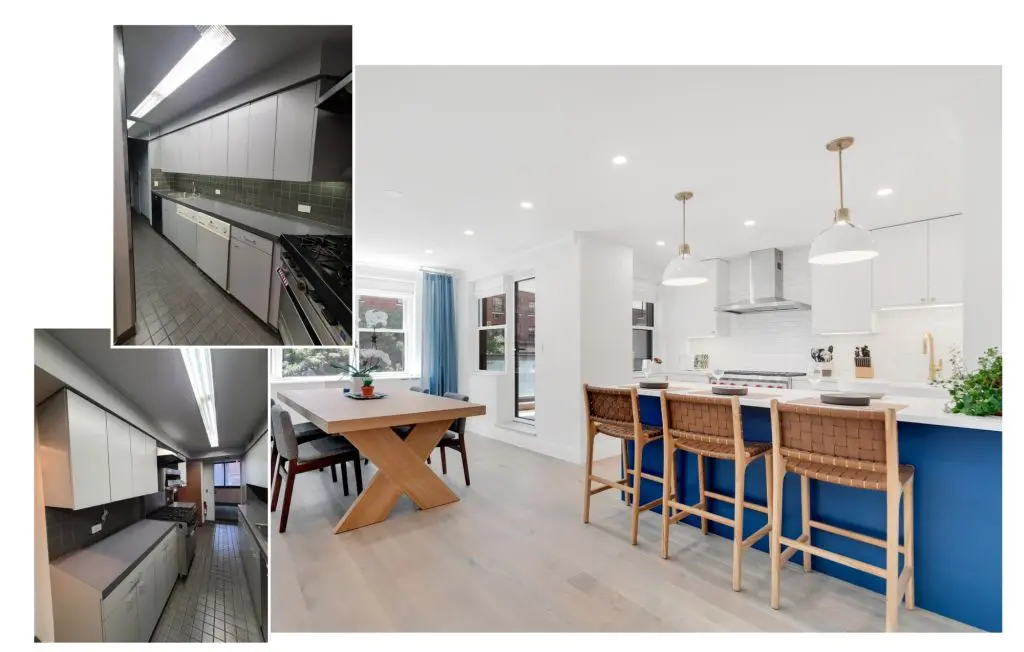
NYC Kitchen and Bath Remodeling Made Effortless
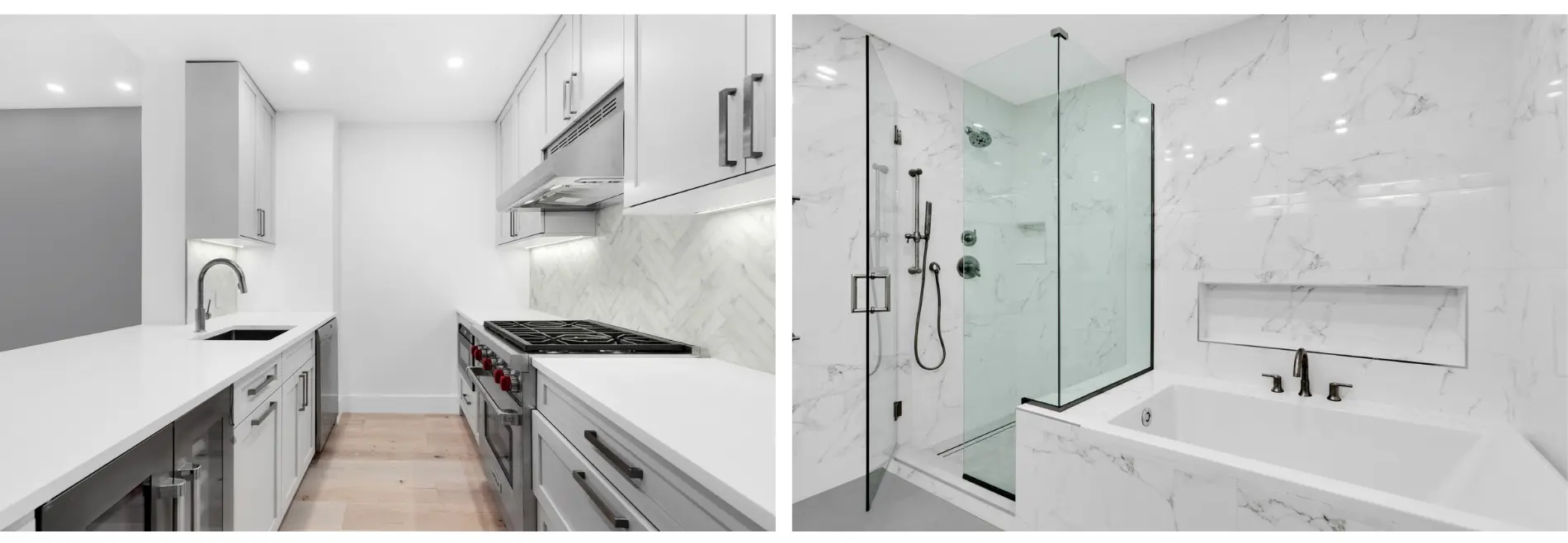
NYC Kitchen and Bath Remodeling: How to Do It Right Without Losing Your Mind
Most people don't realize how complicated a New York City renovation actually is until they're already in one. The building rules, the board approvals, the DOB permits, the service elevator scheduling — none of it comes up in the mood board phase. And by the time it does, you're already committed.
This guide is for homeowners thinking about a kitchen or bath renovation in Manhattan or Brooklyn who want to go in with clear eyes. We'll cover what actually makes NYC remodeling different, what a well-run process looks like, and how to choose the right team for the job. If at any point you want to talk through your specific building and project, our design consultation is a good place to start.

What Makes NYC Kitchen and Bath Renovations So Complicated
Renovating in New York isn't harder because New Yorkers are difficult — it's harder because of genuine structural complexity. A project that's straight forward in a suburban house can involve four separate approvals, two city agencies, and a very particular building super in Manhattan.
Here's what homeowners regularly run into that they didn't anticipate:
Building-Side Rules and Logistics
• Work hours are often restricted to weekdays 9 to 5, sometimes only 9:30–4, which affects how long your project actually takes.
• Service elevator access is shared and scheduled. Large deliveries need to be coordinated in advance with the building super and management.
• Contractor insurance and licensing requirements vary building by building and need to be confirmed before work starts.
• Debris removal has its own rules: where it can stage, how it moves through the building, when it can leave.
What's Behind the Walls in Older Buildings
Manhattan and Brooklyn are full of pre-war buildings with mechanical systems that haven't been fully updated since the1950s. Opening walls for a kitchen or bath renovation can reveal:
• Plumbing that needs to be brought up to current code before any new fixtures go in.
• Electrical panels that can't support modern appliances without an upgrade.
• Floors and walls that are genuinely out of level —which affects everything from cabinetry to tile installation.
• Space constraints that require custom solutions rather than off-the-shelf products.
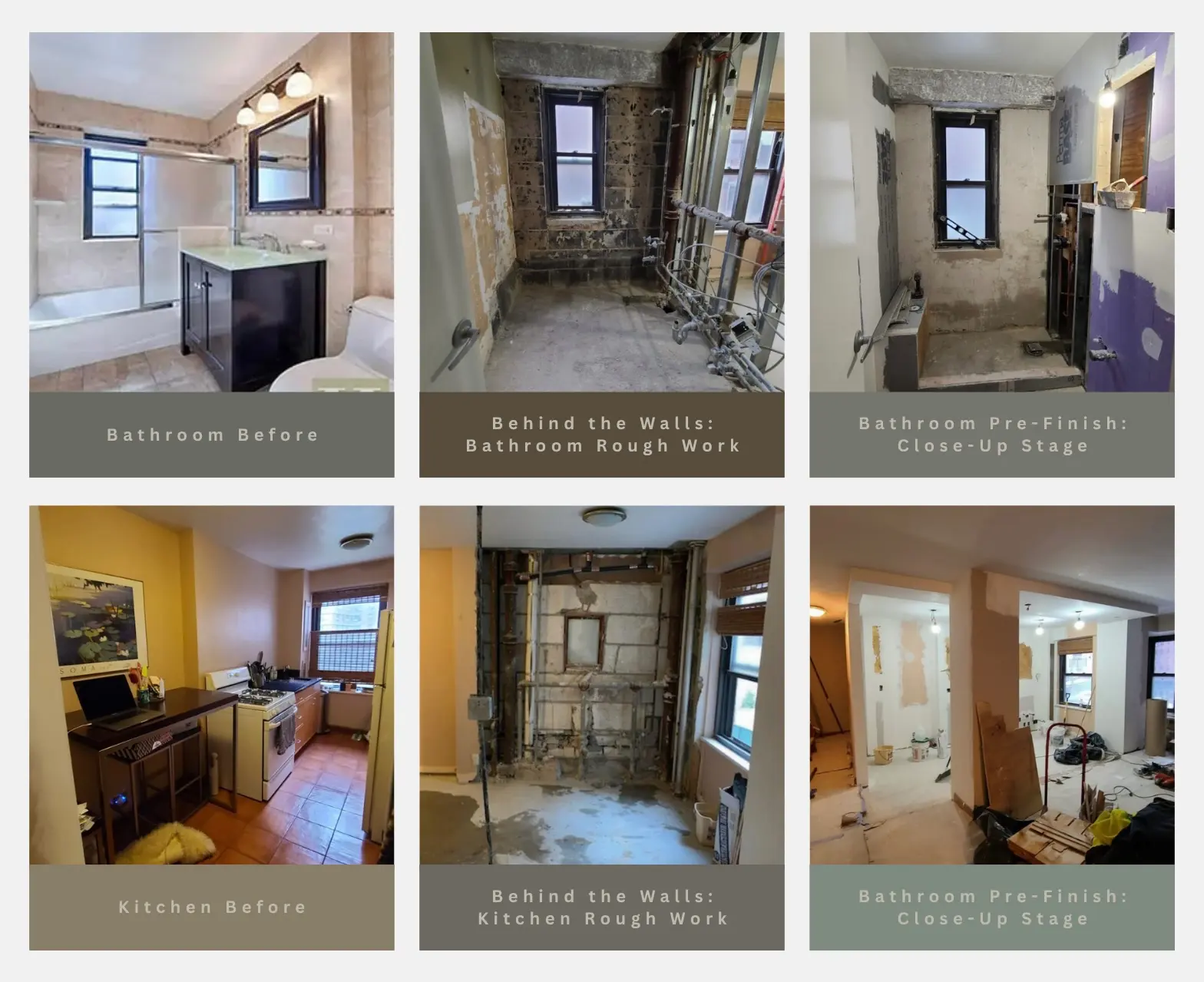
None of these are deal breakers, but they're the kinds of things that add cost and time when discovered mid-project rather than planned for upfront. A team that works specifically in NYC buildings — like Star Renovations NY — has seen enough of these conditions to plan for them before breaking ground.
If your building is a co-op specifically, there's an additional layer of board approvals, alteration agreements, and management company coordination that isn't required for townhouses. Our co-op renovation page covers what that process typically involves.
Why a Design-Build Approach Makes Sense in NYC
The traditional model — hire a designer, then separately hire a contractor, then manage the relationship between them — works fine in environments with simpler logistics. In Manhattan, it's a recipe for finger-pointing.
When the designer and contractor are separate companies, there's no single person accountable for whether the design is actually buildable in your specific building, or whether the schedule accounts for your co-op board's review timeline. You end up managing that gap yourself.
A design-build model puts one team in charge of the whole picture:
• Design decisions are made with construction realities already in mind — no surprises when you get to the build phase.
• Approvals, permits, and board submissions are handled by the same people managing the project, not handed off.
• When something unexpected comes up behind a wall, you get one call with a solution — not a conference between your designer and contractor about whose responsibility it is.
• One point of contact means you're not relaying information between parties or wondering who has the latest plans.
At Star Renovations NY, our design-build process is also supported by an online project platform where clients can see real-time updates, review progress photos, approve design elements, and communicate with the team — all in one place. It's one of the things clients consistently say made the experience feel less stressful than they expected.
Read what our clients say aboutus: https://srny.nyc/reviews
"I used Star Renovations for a full kitchen remodel and floor refinishing. Eli and his team did an excellent job managing the process and delivering a great result. They have very good attention to detail and client service orientation. We are very pleased with our renovations and would highly recommend Star to others."
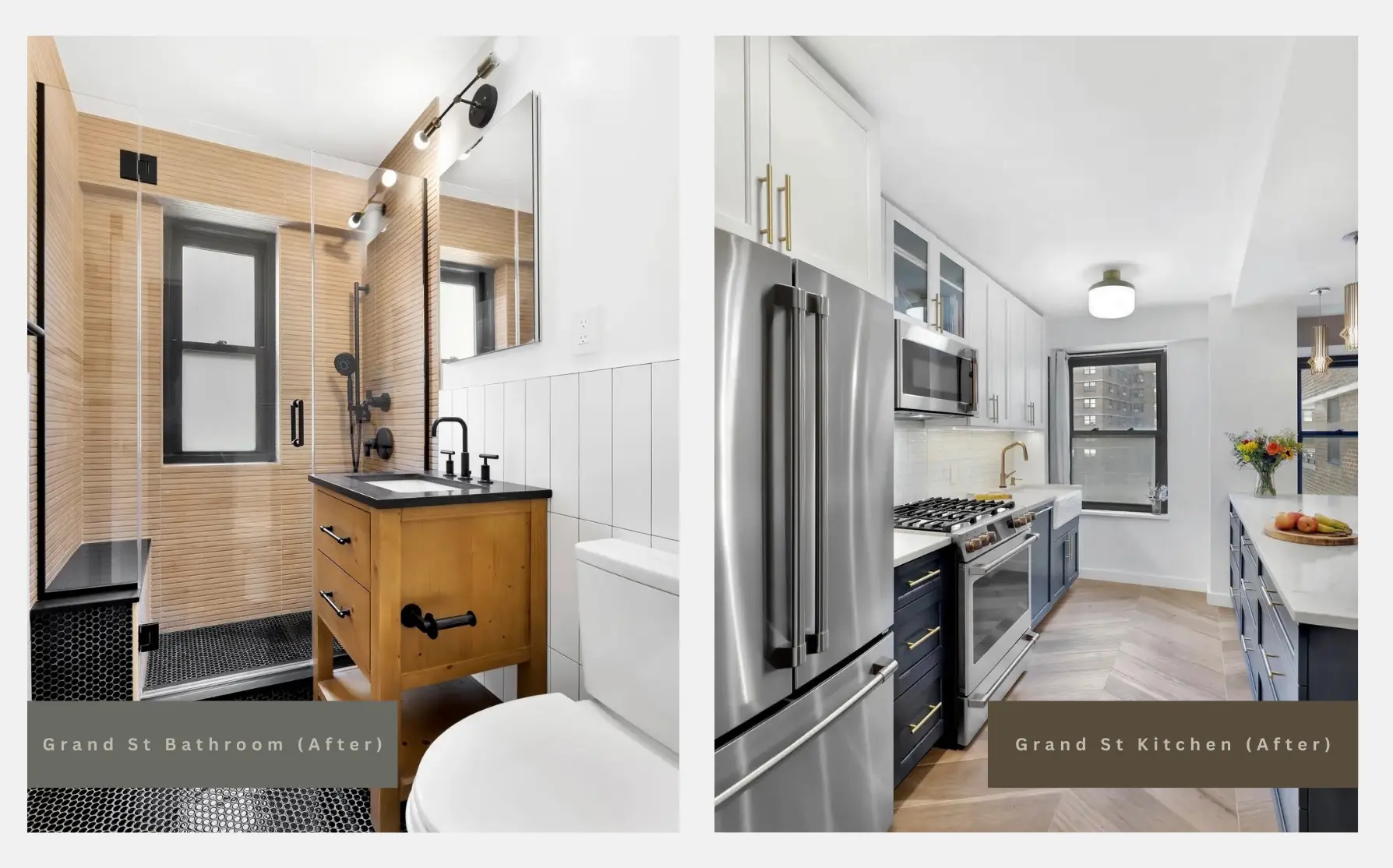
What the Process Actually Looks Like
Here's how a well-run kitchen or bath remodel in Manhattan or Brooklyn typically unfolds with a full-service team:
1. In-Home Consultation
We visit your apartment to understand how you actually use the space — not just the square footage, but the daily routines, the storage frustrations, what you'd change first if you could. We also review your building's alteration agreement and any specific rules that will shape the design. This step matters more than most homeowners expect: the constraints and opportunities are different in every building.
2. Design and Planning
Floor plans, 3D renderings, material selections, lighting plans. For a kitchen or bath renovation, this phase is where the real value of design-build shows up — because the team designing your space already knows what's buildable, what materials work in your building's conditions, and what lead times look like for the fixtures you want.
3. Approvals and Permits
We prepare and submit everything: board packages, alteration agreements, DOB permits where required. We also coordinate with your managing agent and building super — the people whose cooperation actually keeps a project on schedule. This isn't glamorous work, but it's where projects either stay on track or fall apart.
4. Construction and Site Management
Our team oversees all trades on-site. Hallways and common areas are protected from day one. Deliveries are scheduled within the building's service window. Work happens within the allowed hours. Neighbors aren't surprised by what's happening in the apartment next door.
At the end, we manage punch lists, final inspections, and sign-offs so the project is genuinely complete —not just "mostly done."
Kitchen Design: What Actually Matters in a Manhattan Apartment
A luxury kitchen remodel in a Manhattan apartment is not the same exercise as designing a kitchen in a house. The constraints are real, and the best results come from designing around them rather than pretending they don't exist.
Layout First, Materials Second
The most common mistake is choosing countertops before solving the layout. Layout decisions — where the island goes, whether a wall opens up, how the refrigerator relates to the prep counter — affect how you live in the space every day. Materials affect how it looks.
Common layout moves that work well in Manhattan:
• Opening or widening a pass-through between kitchen and living room to improve flow without a full gut renovation.
• Converting galley layouts into more efficient work triangles with better appliance placement.
• Adding a peninsula where a full island isn't possible —seating, storage, and visual separation in one element.
• Using full ceiling height for custom cabinetry — most Manhattan apartments have 8–9 foot ceilings that are almost never fully used for storage.
Materials Worth the Investment
• Custom millwork: Off-the-shelf cabinetry doesn't fit Manhattan kitchens well because Manhattan kitchens aren't standard dimensions. Custom means you're not losing six inches here and there to fillers.
• Stone countertops: Marble is beautiful and requires maintenance. Quartzite is more durable. Engineered quartz is low-maintenance. None of these is the universal right answer — it depends on how you cook.
• Panel-ready appliances: The visual calm of a refrigerator that disappears into cabinetry is especially impactful in smaller spaces.
• Layered lighting: Ambient, task, and accent. Under-cabinet lighting is one of the highest-return additions in any kitchen renovation.
For a deeper look at our kitchen work, visit our kitchen renovations page or browse the project portfolio for recent examples.
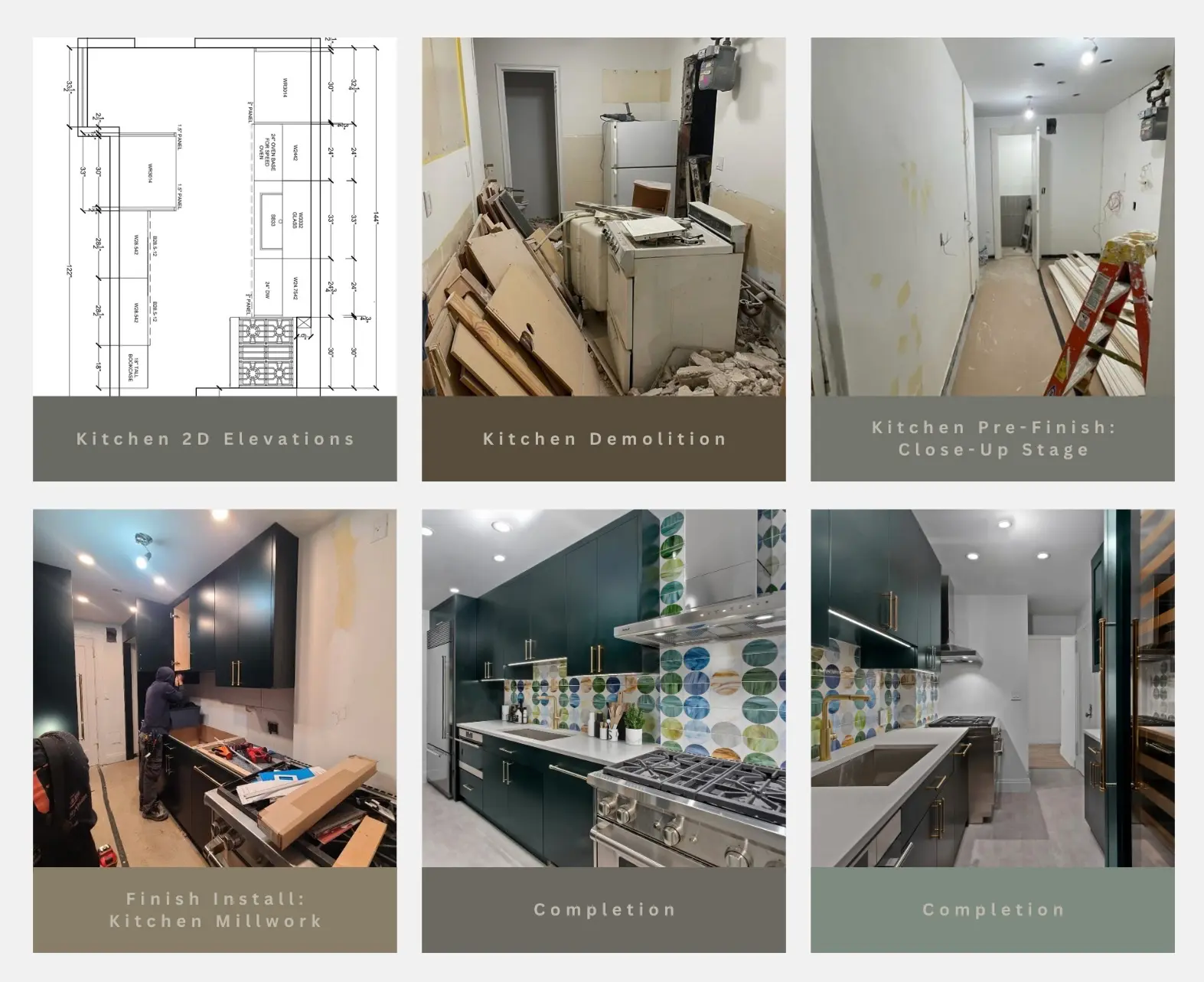
Photos West End Ave Pre-War Project
Bathroom Design: From Functional to Genuinely Restorative
New York apartments tend to have bathrooms that were designed for utility, not comfort. Small footprints, low ceilings, one small window if you're lucky. The goal of a high-end bath renovation isn't to pretend the space is bigger than it is — it's to make what's there feel considered and calm.
What that typically involves:
• Layout: Sometimes a small shift in fixture placement — moving the vanity, recessing the toilet, or changing the shower configuration — can dramatically change how spacious a bathroom feels without touching the walls.
• Storage: Recessed medicine cabinets, niches in the shower wall, and custom vanity millwork all recover storage without eating floor space.
• Materials: Large-format tile makes small bathrooms read bigger. Consistent material across floor and walls (called a wet area) is a signature of high-end bath design.
• Fixtures: Thermostatic shower controls, wall-hung toilets, and well-chosen faucets are the details that separate a renovation from a replacement.
• Lighting: Backlit mirrors and carefully placed sconces do more for a bathroom than almost anything else at a similar price point.
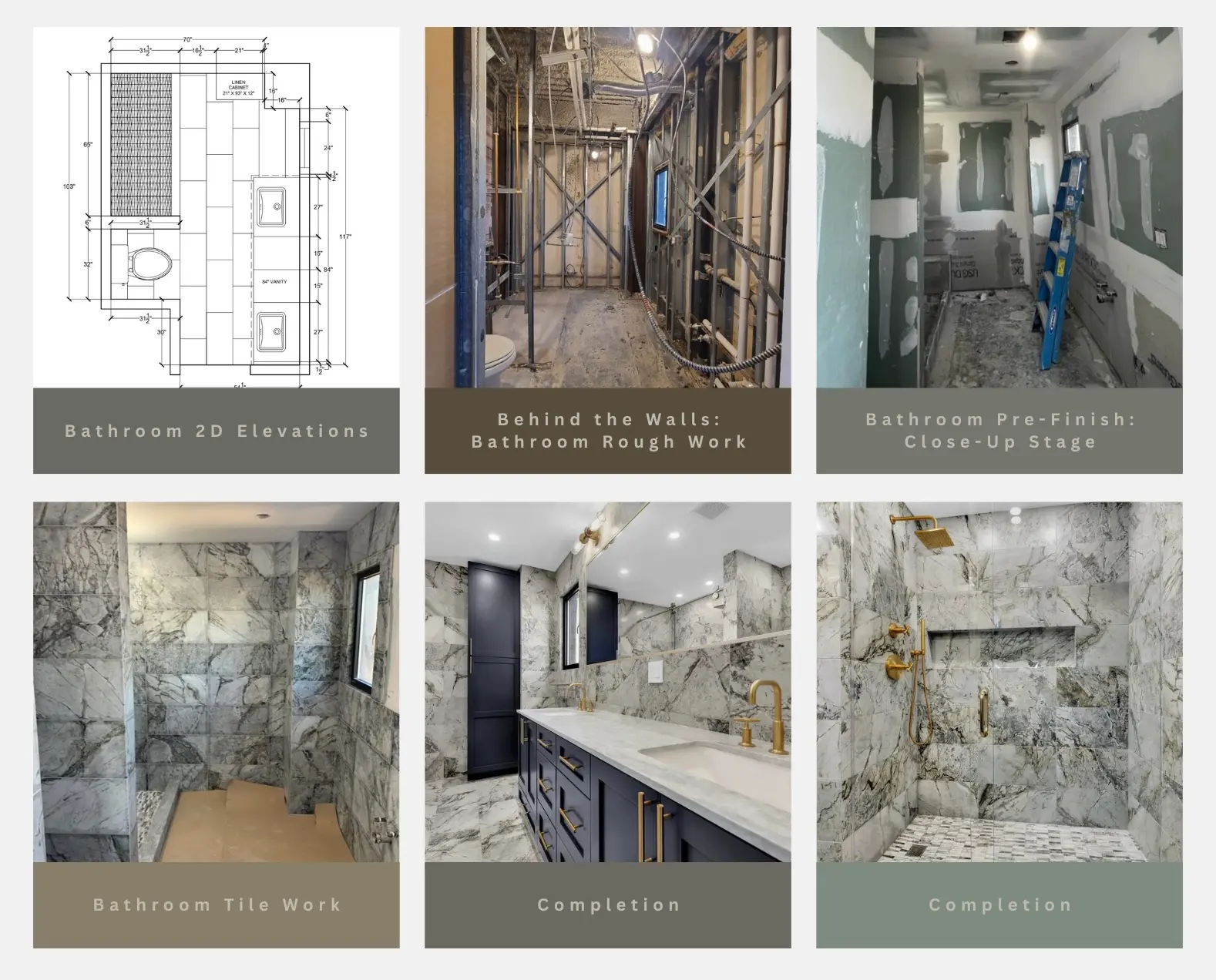
Read more about our ManhattanBathroom renovation page https://srny.nyc/master-bathroom
How to Evaluate a Contractor for Your NYC Remodel
Not everyone who renovates kitchens and bathrooms in New York has real experience navigating co-op boards and DOB filings. It's worth asking direct questions before you sign anything:
• Who specifically handles board submissions and alteration agreements — and have they done it in buildings like mine?
• Who is my single point of contact from design through construction, and how often will I get updates?
• How do you handle something unexpected behind the wall— what's the communication process and how does it affect the budget?
• How do you protect the hallways, elevator, and common areas — and what happens if there's building damage?
• Can I see examples of comparable projects — similar building type, similar scope?
At Star Renovations NY, we're a full-service design-build firm founded by Eli Zikry. We specialize in mid- to high-end renovations in Manhattan and Brooklyn apartments, co-ops, condos, and brownstones. Every project has an assigned designer, project coordinator, and dedicated project manager. We're licensed, insured, and experienced specifically in the building types and board processes that make NYC renovation genuinely complicated.
Learn more on how to vet your contractor https://srny.nyc/blog/how-to-vet-your-nyc-contractor
We serve neighborhoods across Manhattan and Brooklyn — from the Upper West Side and Upper East Side, West Village, Tribeca to Park Slope, and Cobble Hill. See our full service area for details.
Ready to Start Planning Your Kitchen or Bath Renovation?
If you're thinking about a kitchen or bathroom renovation in Manhattan or Brooklyn, the best first step is a real conversation about your specific building, space, and goals. We'll walk you through what the process typically involves for your building type, what realistic investment ranges look like, and what a timeline could look like if you want to be done by a certain date.
Reach us at (718) 785-9402 or schedule a design consultation online.You can also explore our work through our kitchen renovations page, our co-op renovation guide, or our full service areas page.