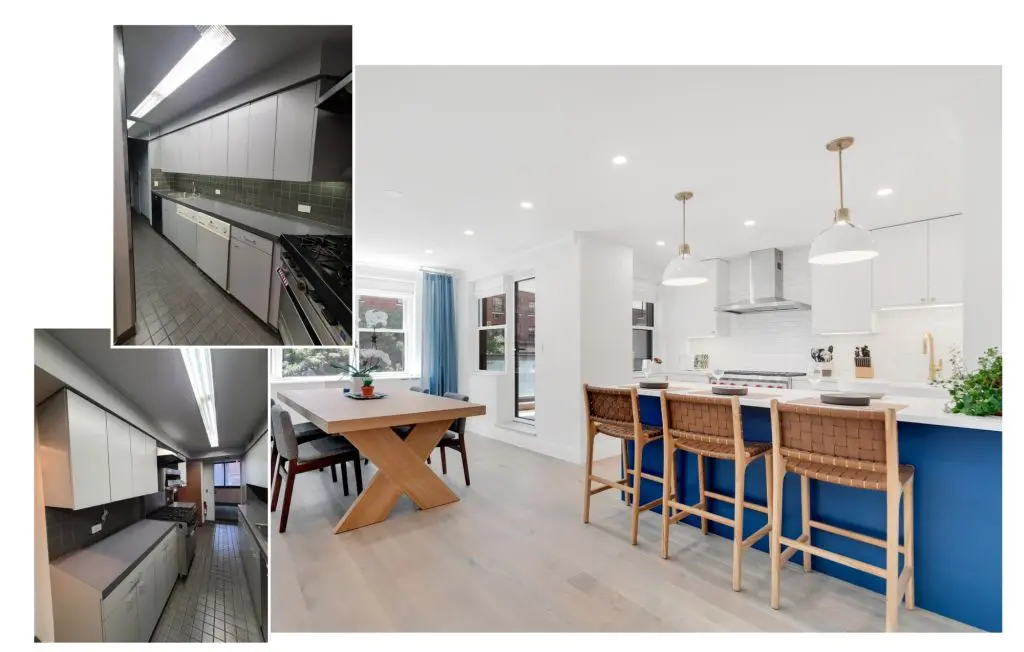
Manhattan Bathroom Renovation Rules Approvals & Real Costs

Manhattan Bathroom Renovation Rules Approvals & Real Costs
A Manhattan bathroom renovation is one of the most technically demanding projects you can undertake in a New York City apartment. Between aging plumbing infrastructure, co-op and condo board rules, wet-over-dry restrictions, and New York City Department of Buildings requirements, even a bathroom that looks straightforward on paper can involve layers of approvals, inspections, and required scope that surprises most homeowners the first time around.
At Star Renovations NY, we've guided hundreds of Manhattan and Brooklyn homeowners through every stage of this process — from the first design conversation through the final punch list. This guide is our attempt to give you a clear, honest picture of what a gut bathroom renovation in Manhattan actually involves: the rules, the required work, the inspections, the approvals, and the real costs. If you are planning a bathroom renovation in Manhattan contact us today and speak to one of our Bathroom specialists.

1. Building Rules: Board vs. City — Understanding Both Layers
When clients ask about Manhattan bathroom renovation rules, the first thing we clarify is that there are two distinct regulatory bodies — and they both have a say in your project.
Your co-op or condo board controls what happens within the building: work hours, elevator usage, floor protection, insurance requirements, wet-over-dry policy, materials approved for common walls, and the overall alteration agreement you sign before a single wall comes down. These are private rules set building by building.
Read our latest blog post NYC APARTMENT RENOVATION 101 – EVERYTHING YOU NEED TO KNOW
The NYC Department of Buildings (DOB) governs everything related to structural, plumbing, electrical, and mechanical work that falls under the New York City Building Code. This includes filing architectural drawings, obtaining plumbing permits, scheduling required inspections, and signing off on completed work.
What this means practically: You need both layers of approval to proceed. A DOB permit does not satisfy your board, and board approval does not replace DOB filing. Our team manages both simultaneously, so nothing falls through the cracks.
Before we propose a single layout, we review your building's alteration agreement, house rules, and any existing drawings on file. That early research is what allows us to tell you upfront what is achievable — not after you've fallen in love with a layout that your building will never approve.

2. Wet-Over-Dry Restrictions & Bathroom Enlargements
Wet-over-dry is one of the most misunderstood rules in Manhattan bathroom renovation. Many co-op and condo buildings do not permit a wet space — a bathroom, laundry area, or kitchen — to be positioned directly over a dry space in the apartment below, such as a living room or bedroom.
The Reality: It's Case-by-Case, Building-by-Building
There is no universal rule here. Some buildings prohibit any expansion of the wet zone entirely. Others will allow it with enhanced waterproofing, an engineering review, or board approval of specific construction details. A handful of newer condos treat it primarily as a technical requirement rather than an absolute prohibition.
What we tell every client: do not assume a limitation until we've read your alteration agreement and confirmed the building's position. Over the years Star Renovations NY have found creative solutions in buildings with restrictive policies — and we've had to redirect clients in buildings with seemingly lenient rules where practical constraints made expansion unworkable.

Bathroom Enlargements: The Hidden Cost Most Contractors Don't Disclose
Enlarging a bathroom is one of the most common requests we receive from Manhattan homeowners, and one of the most frequently underestimated in terms of cost and timeline.
When you enlarge a bathroom footprint — even by just a few feet — you are almost always moving fixtures to new locations. A shower moves. The toilet shifts. A double vanity replaces a single. And the moment fixtures move to new locations, you need new drain lines to serve them.
Important — What Most Contractors Won't Tell You Upfront
In 9 out of 10 bathroom enlargements we undertake in Manhattan, we cannot simply run new branch lines from existing drain locations to new fixture positions. The existing underground plumbing — the drain lines buried below the concrete floor slab — was designed around the original fixture layout.
Moving fixtures to a new configuration requires us to demo the concrete floor slab, remove the existing below-slab plumbing, and install an entirely new underground drain system designed around the new layout.
This is scope most homeowners — and frankly some contractors — don't anticipate. It adds cost, it adds time, and it requires an open-floor inspection before the slab is poured back. Skipping this step and tying branch lines into old drain locations creates chronic drainage and odor problems that surface months or years later. We do not cut corners here.
The good news: when the underground work is done right, you are starting with a clean, code-compliant plumbing infrastructure designed specifically for your bathroom. That is the foundation for a bathroom that functions flawlessly for decades.
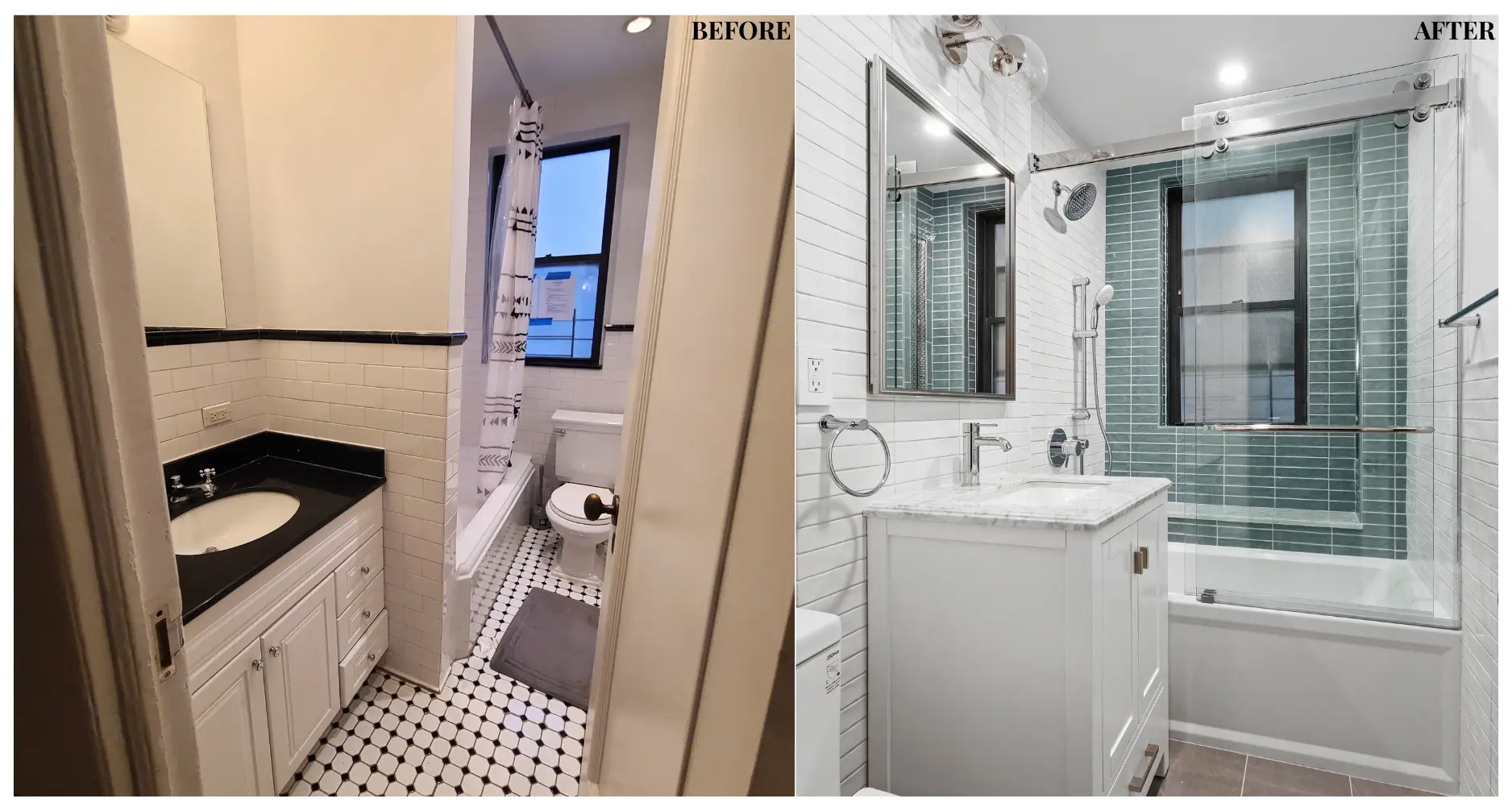
3. Adding a Washer & Dryer in a Manhattan Bathroom Renovation
Adding an in-unit washer and dryer is one of the most sought-after upgrades in a Manhattan gut renovation apartments. But it comes with requirements that go well beyond carving out space for the machines.
First, your building has to allow in-unit laundry — many co-ops and older condos do not, or place significant restrictions on it. Here's what's typically required:
- Board or building approval is required in almost every co-op and most condos before rough-in work begins
- A dedicated cold-water supply line and proper drain connection are required — laundry cannot tie into an undersized drain
- A ventless condenser or heat-pump dryer is often required where new duct penetrations through the building envelope are not permitted
- A floor drain or washing machine pan is typically required by your building's alteration agreement as a leak-protection measure
- Electrical requirements for a washer/dryer combo or stacked units need to be confirmed and may require a dedicated circuit
We coordinate the laundry approval as part of the overall board package so it doesn't become a separate, later conversation that stalls your project mid-construction.
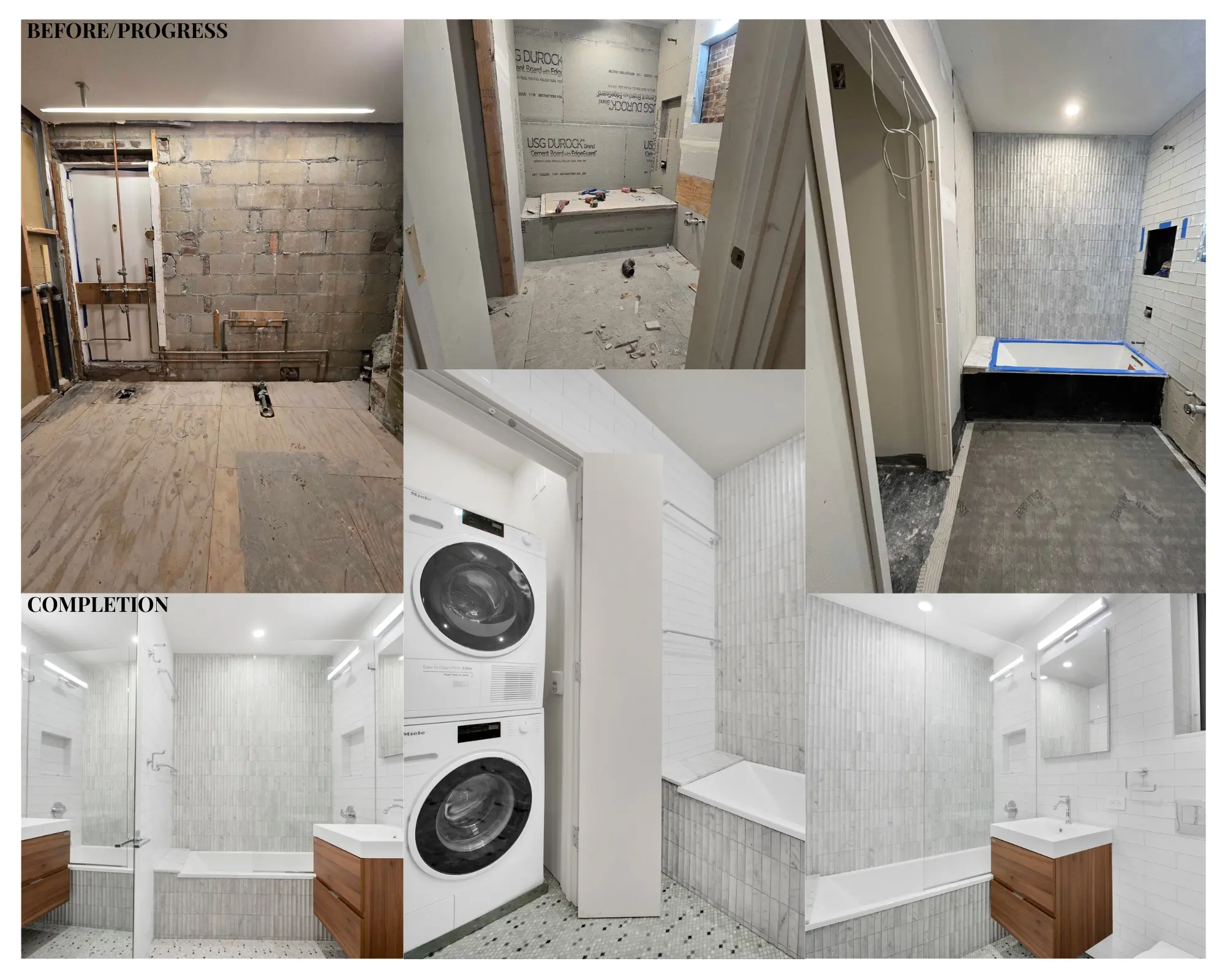
4. Non-Negotiable Plumbing Requirements
Certain plumbing requirements are non-negotiable in any properly executed Manhattan bathroom gut renovation. These are required by the New York City Building Code, mandated by responsible construction practice, or both.
Running New Plumbing Back to the Risers
In a full gut renovation, all supply lines are replaced — not patched, not spliced, replaced. Hot and cold supply pipes run from the building's supply risers to each fixture location with new materials, proper slope, and code-compliant connections. We do not reuse deteriorated galvanized or aged copper supply lines because a pinhole leak behind a tile wall after a renovation is a warranty nightmare and a liability issue for everyone involved.
Hammer Arrestors on Every Fixture
Hammer arrestors are pressure-absorbing devices installed on the supply lines serving each fixture. When a solenoid valve in a washing machine closes abruptly, or when a toilet fill valve shuts off, it creates a pressure wave in the supply line — the banging sound called water hammer. Over time it stresses joints, fittings, and valves throughout the system.
Every fixture in a properly executed Manhattan bathroom renovation gets a hammer arrestor. This is both good practice and increasingly required under the NYC Building Code for fixtures with rapid-closing valves.
Branch Line Insulation
All hot water supply branch lines within the bathroom are insulated. This reduces heat loss so you get hot water at the faucet faster, and it prevents condensation on cold supply lines, which can contribute to moisture buildup inside walls. Insulating branch lines is standard in a quality Manhattan bathroom renovation and required on certain line types under energy code provisions.
5. Waterproofing & Floor Sound Attenuation
Waterproofing Systems
Premium waterproofing is not an upgrade in a Manhattan bathroom gut renovation — it is the baseline. When you are one floor above a neighbor's bedroom or living room, the integrity of your waterproofing system is what stands between your renovation and a catastrophic leak claim.
We install a full, continuous waterproofing membrane throughout the shower enclosure — floor, walls, and curb, extending well beyond the wet zone. All seams, corners, and penetrations (drains, niches, fixtures) receive reinforced treatment because those transitions are where failures occur. The membrane is rated for continuous water exposure, not just splash resistance.
Floor Sound Attenuation
Many Manhattan co-ops and condos require an Impact Insulation Class (IIC) rating of 50 or above for floor assemblies in renovated wet areas. Hard tile and stone floors transmit impact noise downward with very little natural attenuation. To meet the IIC requirement, we install an acoustic underlayment membrane beneath the tile substrate — a decoupled floor assembly that absorbs impact energy before it transmits into the structure below.
Pro tip: Some buildings require a sound test and certification from a licensed engineer after the floor is complete. We account for this in the project schedule so it doesn't become a last-minute surprise that delays your close-out.
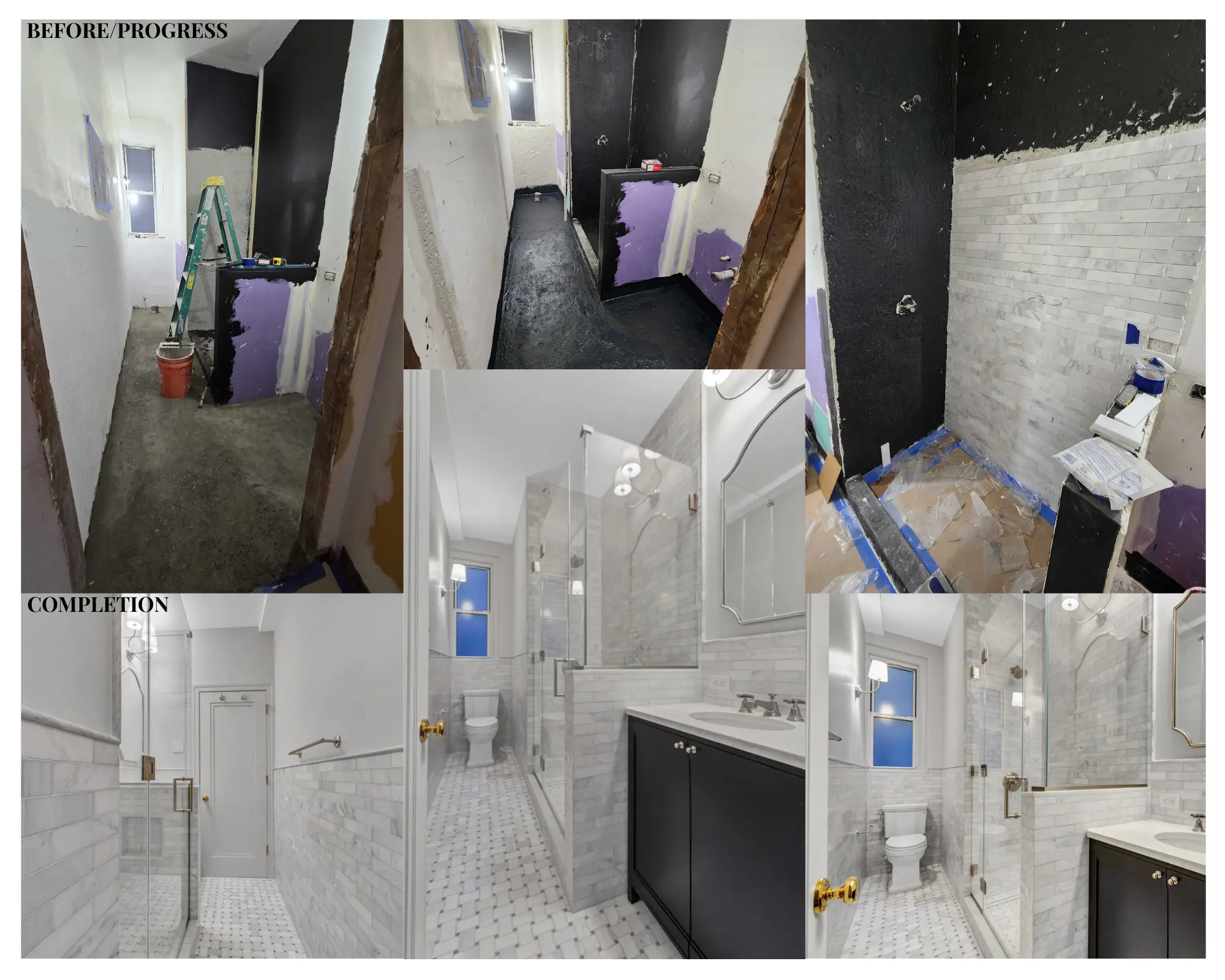
6. Open-Wall Inspections: The Required Sign-Off Sequence
Before any walls are closed, before cement board goes up, before the waterproofing membrane is applied, the rough-in work must be inspected and signed off. This is a multi-step process that happens in a specific order.
Stage One
Building Super & Property Manager Review
Before the building's architect can sign off, the super or property manager typically walks the open job site to confirm that work was done in accordance with the approved scope — no unauthorized penetrations, riser connections properly done, common-area protection maintained. This visit is informal but important. A building that doesn't get this courtesy walk becomes uncooperative very quickly.
Stage Two
Building Architect or Engineer Sign-Off
Most co-ops and many condos require the building's architect or engineer to inspect the rough-in work before walls close. They confirm that the plumbing, structural, and mechanical rough-ins match the approved drawings and comply with the alteration agreement. Any deviations from the approved plans — even minor ones — need to be disclosed and potentially re-approved before this sign-off is granted.
Stage Three
DOB Plumbing Inspection
Once the building sign-off is complete, we schedule the NYC DOB plumbing inspection. The licensed plumber of record is present. The DOB inspector reviews the rough-in plumbing against the filed drawings: drain locations, supply lines, venting connections, trap configurations, and code compliance. Only after this inspection is passed can walls be closed. Work closed without a passed DOB rough-in inspection will need to be reopened.
Stage Four
Close Walls & Continue Finish Work
With all three sign-offs in hand, we close the walls and proceed to waterproofing membrane, substrate installation, and tile work. This is the phase where your bathroom starts to look like a bathroom.
We build this inspection sequence into every project schedule from day one. Boards and DOB do not operate on contractor timelines. Our project managers account for scheduling realities so inspections don't create idle time that extends your overall schedule unnecessarily.
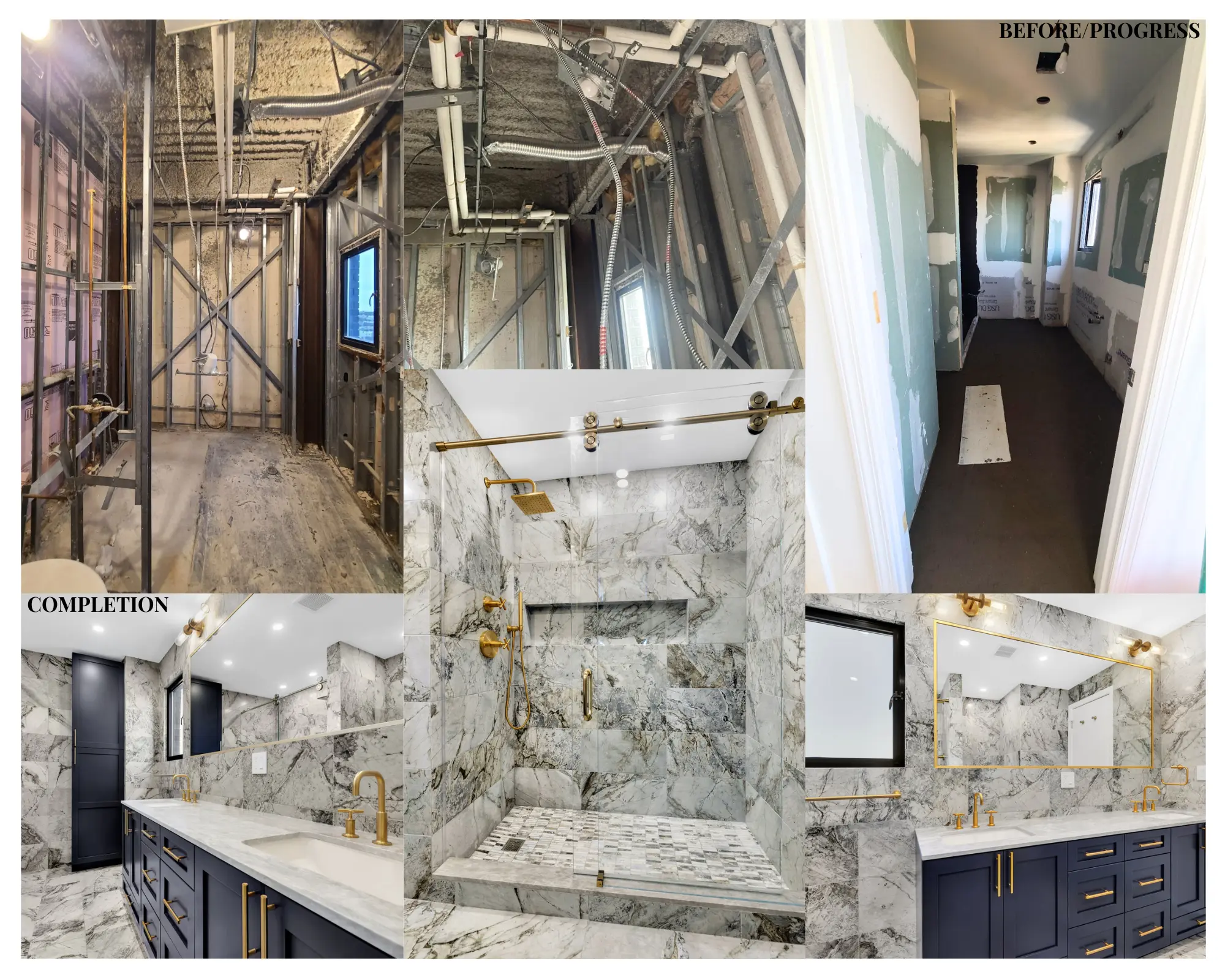
7. The Approval Process & DOB Permitting Timeline
The approval process involves two parallel tracks that must be managed simultaneously. Many renovations run late because teams treat board approval and DOB permitting as sequential steps. We run them together.
Board Approval Package
Your co-op or condo board typically requires a comprehensive alteration package before approving a gut bathroom renovation: architectural drawings showing existing and proposed layouts, a specification sheet listing all materials and products, proof of contractor insurance and licensing, and a signed alteration agreement covering work hours, elevator protection, and noise restrictions.
We prepare the board package in-house. Having design and construction under one roof means the drawings, specs, and construction narrative are coordinated and complete on the first submission — which matters because boards that receive incomplete packages often take weeks to request what's missing.
DOB Filing & Permits
Most Manhattan bathroom renovations involving plumbing work require a DOB plumbing permit filed by a licensed master plumber. If the scope includes structural work, wall removals, or changes to mechanical systems, additional filings and a licensed architect or PE of record may be required. Work that requires permits cannot legally begin before those permits are issued and posted at the job site.
Approval & Permit Timeline — What to Expect
Board package preparation: 2–4 weeks to produce complete drawings and specifications
DOB plumbing permit: 5–15 business days after a complete filing is submitted
Total pre-construction timeline: 5–10 weeks from the point drawings are complete to permit in hand and board approval granted
This is why we begin the approval and permitting process the moment the design is finalized — not after you've selected tile and fixtures.
Final DOB Sign-Off & Letter of Completion
When construction is complete, we schedule the final DOB inspection. The inspector confirms that the work matches the filed drawings and all required inspections have been passed. Once the final inspection is passed, the permit is closed and a letter of completion is issued. Your building will typically require this letter before releasing your alteration deposit.
.webp)
8. Renovation Timeline & Real Costs
We are always direct with our clients about costs and timelines. Surprises in construction are almost always more disruptive than honest numbers up front.
Overall Timeline by Phase
Weeks 1–4
Design & Specifications
Space planning, fixture selection, material sourcing, and production of permit-ready architectural drawings. This phase includes site visits to measure existing conditions, evaluate riser locations, and assess building-specific constraints.
Weeks 3–10 (overlapping)
Board Approval & DOB Permitting
Board packages are submitted as soon as drawings are complete. DOB filings are made simultaneously. Long-lead materials — specialty tile, custom vanities, fixtures — are ordered during this window so they arrive in time for installation.
Weeks 1–2 of Construction
Demolition, Underground Plumbing & Rough-In
Tile, fixtures, and wall assemblies are demolished. If the bathroom is being enlarged or fixtures are relocated, concrete floor slab is opened for below-slab plumbing work. New supply and drain rough-in is installed, including hammer arrestors, branch line insulation, and all blocking for wall-hung fixtures.
Mid-Construction
Inspections & Wall Close-Up
Building super walkthrough, building architect sign-off, and DOB plumbing inspection are completed in sequence. Walls are closed after all three sign-offs are in hand.
Weeks 2–6 of Construction
Waterproofing, Tile, Fixtures & Finishes
Waterproofing membrane installation, acoustic underlayment, substrate work, tile installation, fixture setting, vanity installation, custom millwork, lighting, hardware, and final punch list.
Final Week
Final Inspection & Closeout
Final DOB inspection, punch list completion, cleaning, and delivery. Alteration deposit return paperwork initiated with the building.
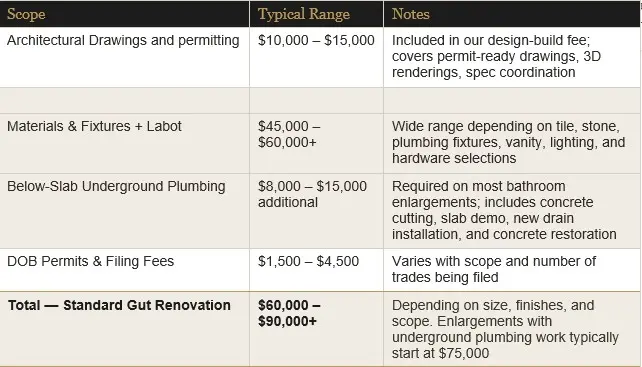
Total construction duration: 4–6 weeks for a standard bathroom gut renovation. 6–8 weeks for a bathroom enlargement with below-slab plumbing work. These ranges assume permits and approvals are in hand before construction begins — which is precisely why we start that process early.
Real Costs: Manhattan Bathroom Gut Renovation
The following ranges reflect full gut renovations with high-quality finishes, proper permitting, and licensed trades. This is the only way we work.
"The question is never just what does it cost. The question is what does it cost to do it right — with proper permits, proper plumbing, and a renovation that holds up for the next 20 years."
We are transparent about costs from the start. Our proposals break down every line item — labor, materials, permits, and design — so you know exactly what you are getting. There are no broad allowances that blow up mid-project, and no surprises from undisclosed scope.
Read our client testimonial https://srny.nyc/reviews
9. The Star Renovations NY Approach
We are a design-build firm, which means design, architecture, permits, and construction are managed by one team under one contract. When the team drawing the plans is the same team pulling the permits and doing the construction, information doesn't get lost between handoffs.
- We review your building's alteration agreement and house rules before we propose a layout — so we never design something your board will reject
- We handle all DOB filings, permit coordination, and inspection scheduling in-house through our licensed architect and master plumber
- We build the full inspection sequence — building walkthrough, architect sign-off, DOB rough-in inspection — into your project schedule from day one
- We install full waterproofing systems, acoustic underlayment, hammer arrestors, and branch line insulation on every project — not as upgrades, but as standard
- We are transparent about below-slab plumbing scope on enlargements before construction begins — not after demo reveals what's under the floor
- Our project managers track board and DOB timelines in parallel so material lead times, approvals, and construction start all align
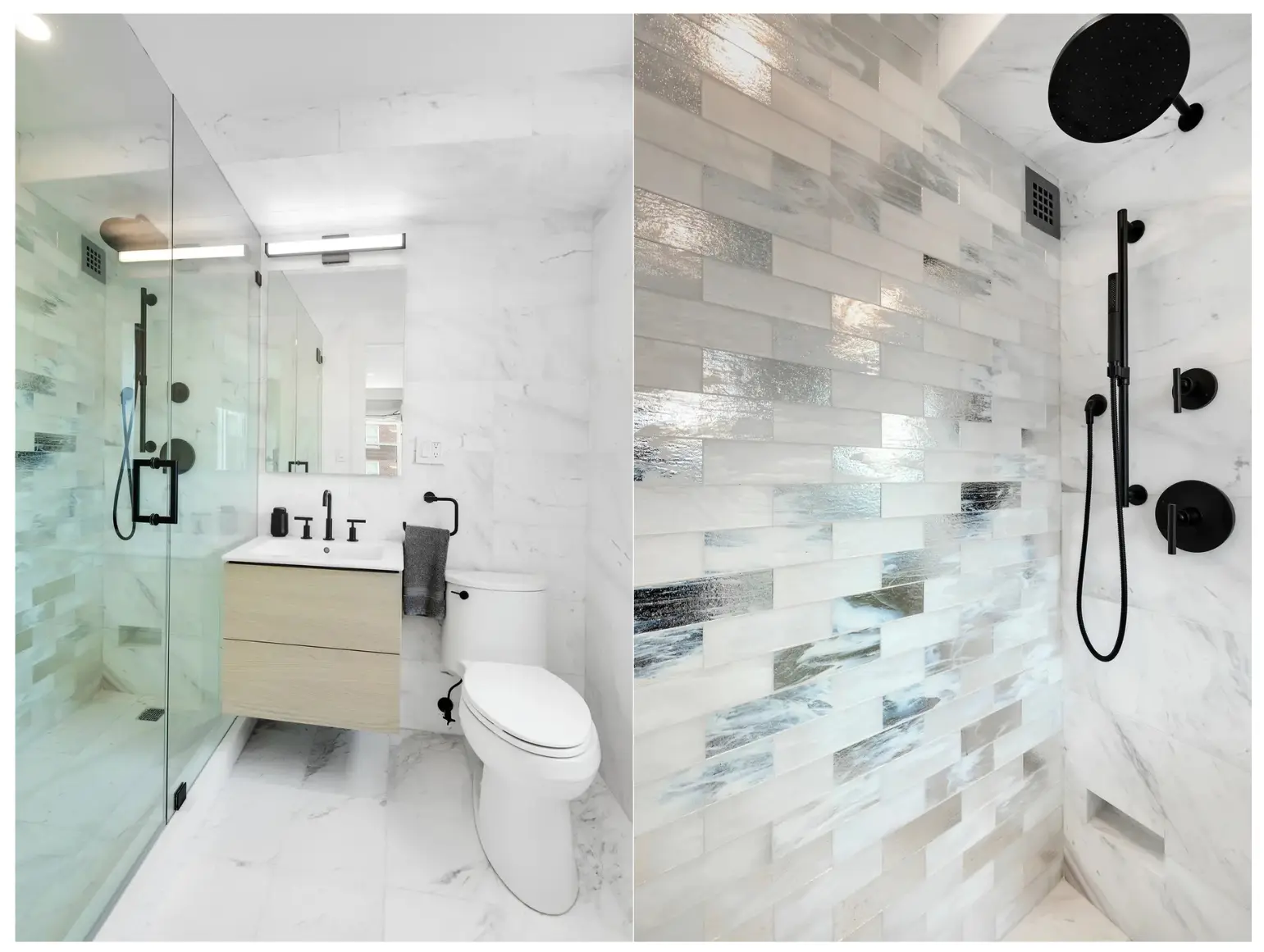
Our work spans Manhattan and Brooklyn — including co-ops, condos, pre-war buildings, and townhomes. You can explore our completed projects in our bathroom renovation gallery at https://srny.nyc/project-gallery?category=Bathroom+Renovations#portfolio, or read more about why clients choose a design-build approach at https://srny.nyc/why-design-and-build-star-renovations-ny
If you are planning a bathroom renovation in Manhattan and want a direct conversation about what your specific project involves — rules, scope, timeline, and budget — we're easy to reach. We'll tell you what's realistic, what's required, and what's possible within your building before you make any commitments.
Ready to Talk Through Your Bathroom Project?
Let's review your building's requirements, discuss your layout goals, and give you a clear picture of scope, timeline, and budget — before you commit to anything.
Website: srny.nyc
Phone: (718) 785-9402
Schedule a Consultation: srny.nyc/contact-us
Bathroom Renovation Gallery: https://srny.nyc/project-gallery?category=Bathroom+Renovations#portfolio