Cost Guide 2026: NYC Apartment Renovation
Cost Guide 2026: NYC Apartment Renovation
Renovating an apartment in New York City is never “just a kitchen.” Between co-op and or condo rules, tight deliveries, DOB permitting, and the realities of working in occupied buildings, NYC renovations demand real planning—and a budget that accounts for both hard costs (labor + materials) and soft costs (design, filings, approvals, and project management).
Read our latest blog Everything You Need To Know About Your NYC Renovation Approval Package

This 2026 cost guide is built for NYC homeowners who want a clear, all-in framework—especially if you’re comparing a traditional “separate architect + separate contractor” approach versus a design-build team that takes you from concept to completion under one coordinated plan.
Below, we’ll share the average NYC renovation budget benchmark many owners use when planning a full apartment remodel:
• $450 per square foot for a full apartment remodel (typical design-build scope, while keeping exiting layout)
• $550 to $650 per square foot when your project includes HVAC work (new or major modifications)
These figures align with recent NYC market guidance that commonly places mid-to-upper renovation ranges in the $400–$600+/sq ft bracket depending on finishes, building constraints, and scope.
Quick 2026 NYC Renovation Cost Snapshot (Per Square Foot)

1) Standard full renovation (Design-Build): ~$450/sq ft
Commonly includes:
• Full interior demolition (as needed)
• New kitchen + bathrooms
• Flooring, paint, carpentry, doors/trim
• Electrical + plumbing updates (within typical apartment scope)
• Basic layout adjustments (non-structural where feasible)
• Project management, scheduling, coordination and material procurement
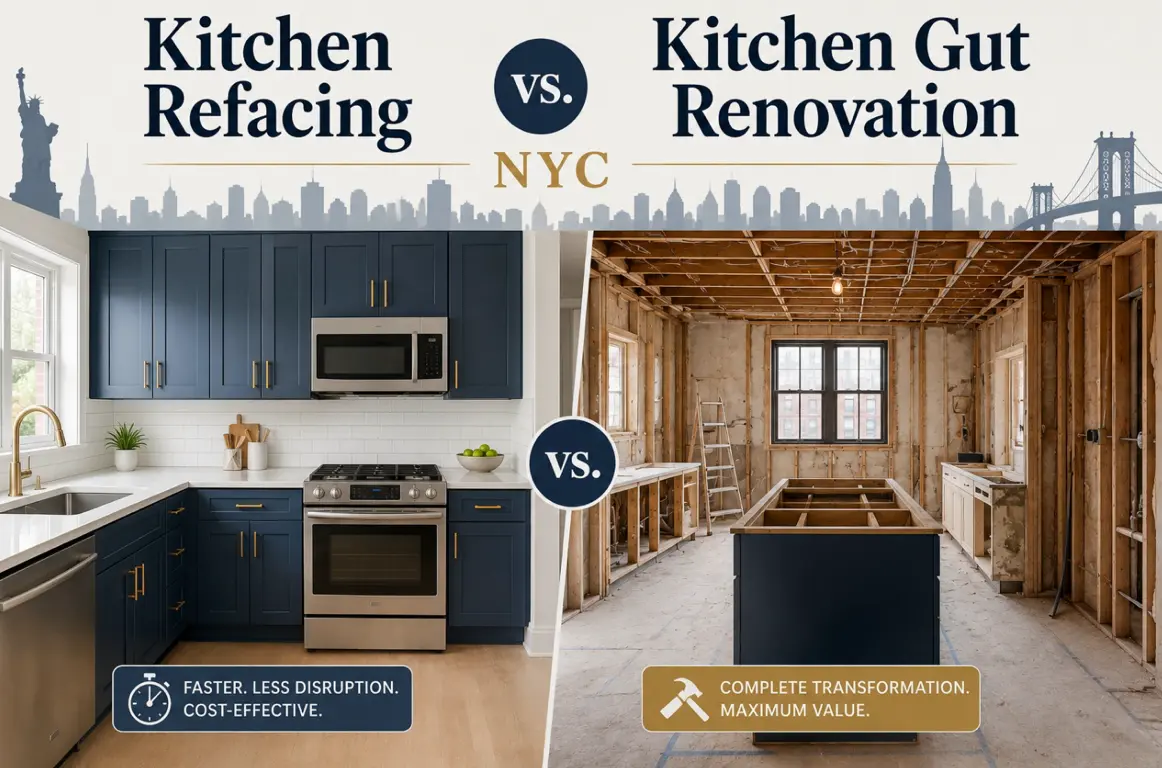
If you're exploring your options, you can start by visiting our Apartment gut renovations services page here: srny.nyc/apartment-gut-renovations-in-manhattan

2) Full renovation + HVAC: ~$550/sq ft
Includes everything above plus HVAC scope such as:
• New apartment layout that suites your need – Full gut renovation
• New ducted systems or significant duct modifications
• New condensers/air handlers where applicable
• Mechanical design coordination + required compliance steps
• More complex access, soffits, bulkheads, and patch/finish work related to HVAC routes
Reality check: HVAC work in NYC can shift the entire construction strategy (ceiling drops, mechanical chases, penetrations, DOB filings), so it’s normal to see a meaningful increase when HVAC is included.
“What’s Included?” The Design-Build Approach (Star Renovations A-to-Z)
A big reason homeowners choose design-build in NYC is that it creates one continuous roadmap—from the first measure to the final punch list—without the gaps that can happen when design and construction are handled by separate parties.
In a true design-build scope, your budget can include:
1) Architectural services + feasibility
• Existing conditions review (measurements, constraints, building rules)
• Early layout concepts that match your lifestyle and your building limitations
• Coordination to avoid common NYC surprises (risers, wet-over-wet rules, venting limits)
2) Board approval package (co-op/condo)
NYC buildings often require a renovation submission package that can include:
• Drawings, schedules, scope narrative
• Contractor insurance, licenses, filings
• Work hours, elevator protection, deposit requirements
• Electrical load assessment
• Alteration agreement compliance
Board approval can be detailed and building-specific; many boards require an architect/engineer package and may involve review by the building’s own professionals.
Helpful external references:
• Overview of co-op/condo approval expectations:
• A step-by-step board approval guide (condo/co-op):
3) Design services (the part that protects your budget)
Design isn’t only “how it looks.” It’s how you avoid change orders.
• Finish and fixture selections aligned to your target budget
• Kitchen and bath layouts that respect NYC plumbing and venting realities
• A materials plan that considers lead times, deliveries, and substitutions
• Lighting plans, reflected ceiling plans where needed
• Coordination of millwork details and site conditions
Read our latest blog How to Avoid Budget Blowouts And Overspending On Your Renovation
4) Permits + DOB filings (when required)
Not every apartment renovation needs DOB permits, but many do—especially when plumbing/electrical scope expands, layouts change, or mechanical work is involved.
DOB references:
• NYC DOB project categories (Alterations)
• NYC311 overview of construction/alteration permits + DOB NOW
(And yes—DOB processes can affect your timeline, so it’s best to plan for filings early rather than “after design is done.”)
5) Construction execution + project management
This is the part most people think of as “the renovation,” but it’s only successful when the first 80% is done right:
• Site supervision, quality control, safety compliance
• Trade coordination (demo, framing, MEP, tile, millwork, paint, flooring)
• Building coordination (delivery schedules, protection, work hours)
• Inspections, punch list, closeout documentation
2026 Sample Budgets Using the $450 / $550 Benchmarks
Here’s how the math typically plays out at a planning level:

Important: This is planning guidance—not a substitute for a site walkthrough and building document review. NYC budgets are highly sensitive to:
• Building type (prewar vs postwar, landmark restrictions, etc.)
• Elevator access and delivery rules
• Co-op requirements (insurance limits, deposits, work-hour restrictions)
• Plumbing riser locations and “wet-over-wet” constraints
• Finish level (stock vs custom, premium stone, integrated appliances)
• Whether your scope includes HVAC, structural, or significant electrical upgrades
What Drives NYC Renovation Costs Up (and How to Plan Around It)
Building rules + logistics
Many NYC buildings require:
• Limited work hours
• Soundproofing rules
• Waterproofing requirement
• Dust control plan
• Electrical and plumbing upgrades
• Elevator reservations
• Hallway protection and deposits
• Contractor insurance minimums
Those aren’t “nice-to-haves”—they’re real time and labor costs.
Soft costs are real
Soft costs can include design, board submissions, engineering, permits, and special inspections. Some NYC cost guides explicitly call out soft costs as a distinct budget category—especially in co-ops/condos.
Kitchens and bathrooms are expensive per square foot
Wet areas (tile, waterproofing, plumbing, electrical, ventilation) carry higher trade density. Even if your apartment is 1,000 sq ft, your kitchen + baths might drive a disproportionate share of the cost.

HVAC changes ripple through everything
HVAC often impacts:
• Ceiling heights and soffits
• Electrical loads and panel upgrades
• Condenser placement rules
• DOB filings and mechanical inspections
• Sound/vibration concerns in shared buildings
Design-Build in NYC: Pros vs Cons (and Why It Helps “True A-to-Z” Pricing)
The biggest PRO: one coordinated plan = fewer surprises
In traditional delivery, homeowners often experience a gap:
• Architect designs → contractor prices later → budget shock → redesign → delays
In design-build, design decisions are made with construction reality in mind earlier, helping you align scope, selections, and feasibility sooner.
Industry resources commonly highlight design-build advantages such as streamlined communication and a single point of responsibility.
External reads:
• Procore’s overview of design-build
• DBIA (Design-Build Institute of America)
Other PROs
• Faster decision-making: fewer handoffs, fewer delays
• More accurate pricing earlier: selections and scope can be budgeted in real time
• Fewer change orders: design is coordinated with existing conditions and building rules
• Accountability: one team owns the outcome
The main CONs (and how to handle them)
• You must choose the right team. A “design-build” label isn’t enough—your partner needs deep NYC apartment experience (board packages, DOB coordination, tight logistics).
• Less “competitive bidding” on paper. Some owners like pricing multiple contractors. In practice, many NYC homeowners trade that for a more controlled process and fewer budget surprises.
• Design taste alignment matters. You want a team whose portfolio and process fits your aesthetic and expectations.
Bottom line: If your goal is a realistic, start-to-finish budget (not just a construction quote that grows later), design-build is often the cleanest way to get there—because design, approvals, and execution are priced and coordinated together.
Read our latest article The Pros And Cons of Working With a Design And Build Firm
How to Use This Cost Guide to Plan Your Next Steps
Step 1: Confirm your building requirements early
Before finalizing layout ideas, request:
• Alteration agreement
• Insurance requirements
• Work hours and delivery rules
• Any “wet-over-wet” or mechanical limitations
• Filing expectations (architect/engineer stamp, DOB filings)
Board processes can be detailed—especially in co-ops.
Step 2: Decide if HVAC is part of your “must-have” scope
If comfort, air quality, and noise control are priorities, HVAC planning should happen early (not after finishes are selected).
Step 3: Build a contingency (because NYC)
Even with great planning, older buildings reveal surprises.
A typical planning range is 5–10% contingency, depending on building age and scope complexity.
Step 4: Align finish level to budget reality
Stone, custom millwork, specialty tile, and imported fixtures can move costs quickly. A strong design-build team will help you choose where to invest and where to simplify.
Helpful External Resources (Real Estate + Construction)
If you want to explore the NYC market context and renovation education, here are a few useful third-party sites:
Real estate / apartment market context
• StreetEasy (NYC listings + neighborhood trends): https://streeteasy.com/
• Zillow (broader market + property research): https://www.zillow.com/
Renovation + construction education
• NYC Department of Buildings (permits/alterations): https://www.nyc.gov/site/buildings/index.page
• NYC311 permit overview + DOB NOW pointers: https://portal.311.nyc.gov/article/?kanumber=KA-02104
• Design-Build Institute of America (delivery method): https://dbia.org/what-is-design-build/
• Procore’s design-build explainer: https://www.procore.com/library/design-build-construction
FAQ: NYC Apartment Renovation Costs (2026)
Is $450/sq ft realistic in 2026 for NYC?
For many full-apartment renovations, $450/sq ft is a practical planning benchmark—especially for an upper mid-tier scope with coordinated design-build management. Market guides often show NYC full renovation ranges stretching from the mid $400s into $600+ depending on finishes and complexity.
Why does HVAC push the budget to ~$550/sq ft?
Because HVAC isn’t just equipment—it affects design, ceilings, electrical loads, permits, and installation complexity, especially in NYC multi-unit buildings.
Do I always need DOB permits?
Not always, but many renovations do—particularly if you’re changing layouts, moving plumbing lines meaningfully, adding mechanical scope, or doing certain categories of electrical work. Start your planning by reviewing DOB guidance and your building’s alteration agreement.
What’s the #1 reason budgets blow up?
Scope changes after construction starts—often caused by incomplete design, unclear selections, or surprises from building constraints. That’s exactly what design-build is meant to reduce.
Planning a Renovation? Get a Real A-to-Z Budget (Not a Guess)
If you’re considering an NYC apartment renovation in 2026, the smartest first step is not demolition—it’s clarity: building requirements, design direction, mechanical feasibility, and a scope that matches your investment goals.
A design-build approach (like the one Star Renovations offers) is built to give you one coordinated path through:
• Architectural services + board approval
• Design + selections
• Permits/filings (when required)
• Construction execution + project management
So your renovation budget reflects the full reality of NYC—from day one to final sign-off.
Ready to Plan Your NYC Apartment Renovation? Get a Free Consultation
Planning an apartment renovation in New York City doesn’t have to feel overwhelming—or unpredictable. Whether you’re early in the planning phase or already reviewing layouts and budgets, speaking with an experienced like Star Renovation NY- design-build team can help you understand what’s realistic, what’s required by your building, and how to create a clear A-to-Z cost roadmap.
Star Renovations offers a complimentary renovation consultation where we review:
• Your apartment size, layout, and goals
• Your building’s co-op or condo requirements
• Early budget expectations using real NYC benchmarks
• Whether a design-build approach is the right fit for your project
• Timeline, approvals, and potential cost drivers (before construction begins)
If you’re aiming for a well-planned, fully coordinated renovation—from architectural services and board approval through final construction—we’re here to help guide the process from start to finish.
👉 Contact Star Renovations today to schedule your free consultation and take the first step toward a smarter, better-planned NYC apartment renovation in 2026.